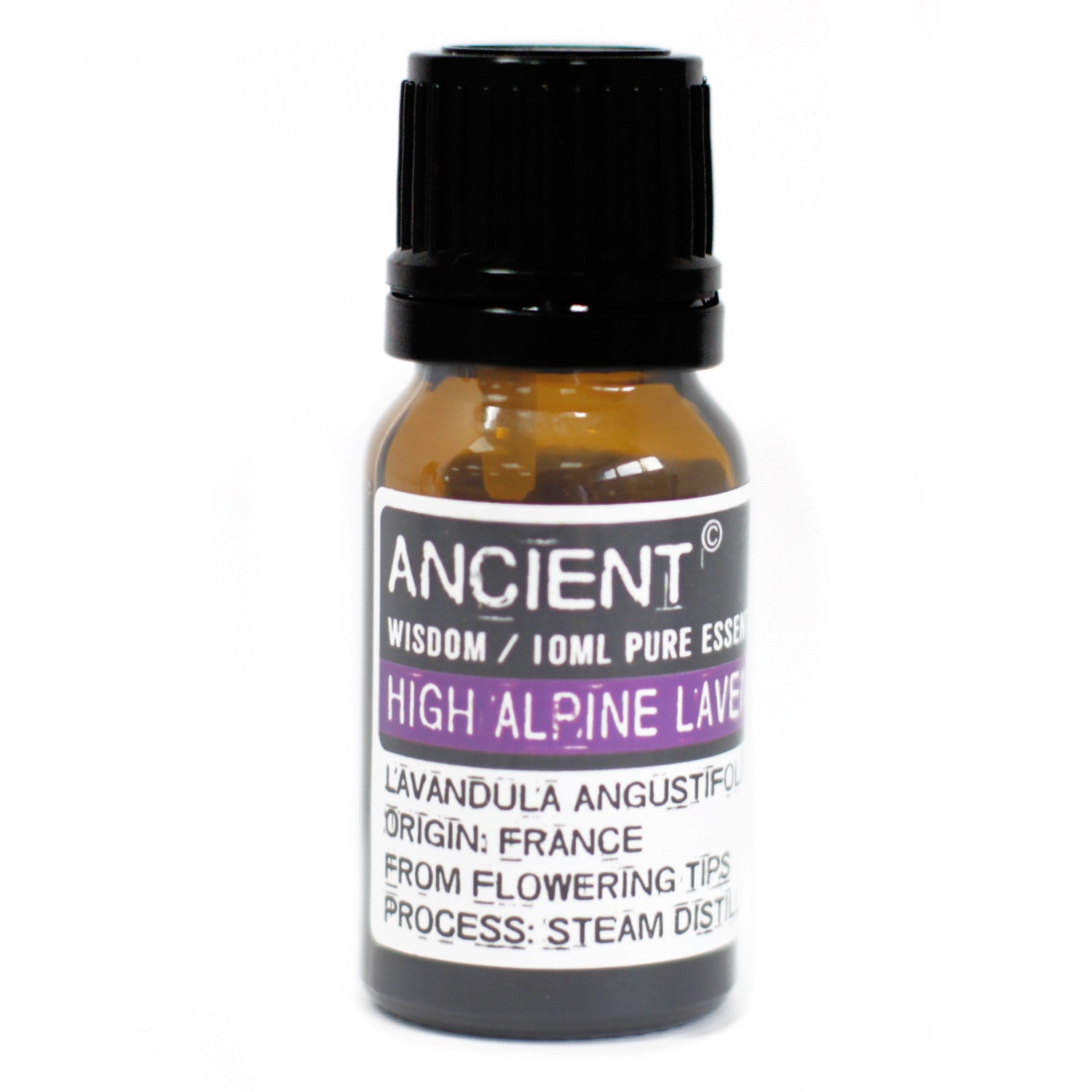
Latin Name: Lavandula angustifolia (High Alpine).
Part of Plant: Flowering tops.
Source: High-altitude regions (selected European alpine farms).
Extraction: Steam distillation.
Why High Alpine Lavender?
Grown at altitude and distilled for exceptional quality, High Alpine Lavender Essential Oil carries the clean, airy character lavender is loved for — with a fresher, more delicate floral note. It’s the classic go‑to for creating a calm, restorative atmosphere at home, in evening wind‑down routines, or whenever you want gentle clarity without heaviness.
Aroma Profile
- Top: bright, herbaceous lavender
- Heart: soft floral, lightly sweet
- Overall: clean, reassuring, quietly uplifting
How People Use It (Aromatic Traditions)
- Evening unwind: a few drops in a diffuser to soften the day
- Bedroom calm: subtle background scent before sleep
- Focus without stimulation: light clarity for reading and study
These uses reflect traditional aromatic practice and are not medical claims.
Blends Well With
- Cedarwood for cosy, grounding evenings
- Bergamot or Sweet Orange for an uplifting daytime blend
- Frankincense for quiet reflection and depth
Skin & Body Care Notes
When properly diluted, High Alpine Lavender is a versatile choice in body oils, bath blends, and pillow sprays. Patch test before use. For aromatic use unless guided by a qualified professional.
Safety
- Always dilute before topical application
- Discontinue use if irritation occurs
- Keep away from eyes and children; store cool and dark
Shop with a quick QR
Tap, click, or scan below to go straight to the product (first‑order discount link applied). T&Cs apply.

- Solid Shampoo vs Liquid Shampoo: Which Is Better for Your Hair and the Environment?
 Switch to a more sustainable hair care routine with our premium solid shampoo bars , designed to cleanse, nourish, and protect your hair—without the waste of tr… Our solid shampoos are carefully crafted using… Read more: Solid Shampoo vs Liquid Shampoo: Which Is Better for Your Hair and the Environment?
 - Basil Essential Oil: The Clarifying Oil for Focus, Fatigue, and Muscle Relief
 Basil essential oil is one of the most underrated oils in aromatherapy. While it is universally recognised as a culinary herb, its essential oil has a distinct … Basil essential oil is steam-distilled from… Read more: Basil Essential Oil: The Clarifying Oil for Focus, Fatigue, and Muscle Relief
 - Lavender Essential Oil: The Complete Guide
 Lavender is where most people begin their aromatherapy journey — and for good reason. It is the most researched, most versatile, and most widely used essential … Lavender essential oil is steam-distilled from the… Read more: Lavender Essential Oil: The Complete Guide
 - Fennel Essential Oil: The Digestive Oil for Bloating, Hormones, and Detox
 Fennel has been used medicinally for thousands of years — by the ancient Egyptians, Greeks, Romans, and Chinese — primarily for its remarkable digestive propert… Fennel essential oil is steam-distilled from the crushed seeds… Read more: Fennel Essential Oil: The Digestive Oil for Bloating, Hormones, and Detox
 - Patchouli Essential Oil: The Earthy Oil for Grounding, Skin, and Sensuality
 Few essential oils provoke as strong a reaction as patchouli. Its deep, earthy, slightly sweet scent is immediately recognisable — and deeply divisive. Those wh… Patchouli essential oil is steam-distilled from the dried, fermented… Read more: Patchouli Essential Oil: The Earthy Oil for Grounding, Skin, and Sensuality
 - Peppermint Essential Oil: Energise, Focus, and Refresh
 If lavender is the oil of calm, peppermint is the oil of clarity. Sharp, cool, and instantly recognisable, peppermint essential oil is one of the most effective… Peppermint essential oil is steam-distilled from the… Read more: Peppermint Essential Oil: Energise, Focus, and Refresh
Really helpful guide, thank you — looking forward to more like this!
Really helpful guide, thank you – looking forward to more like this!