
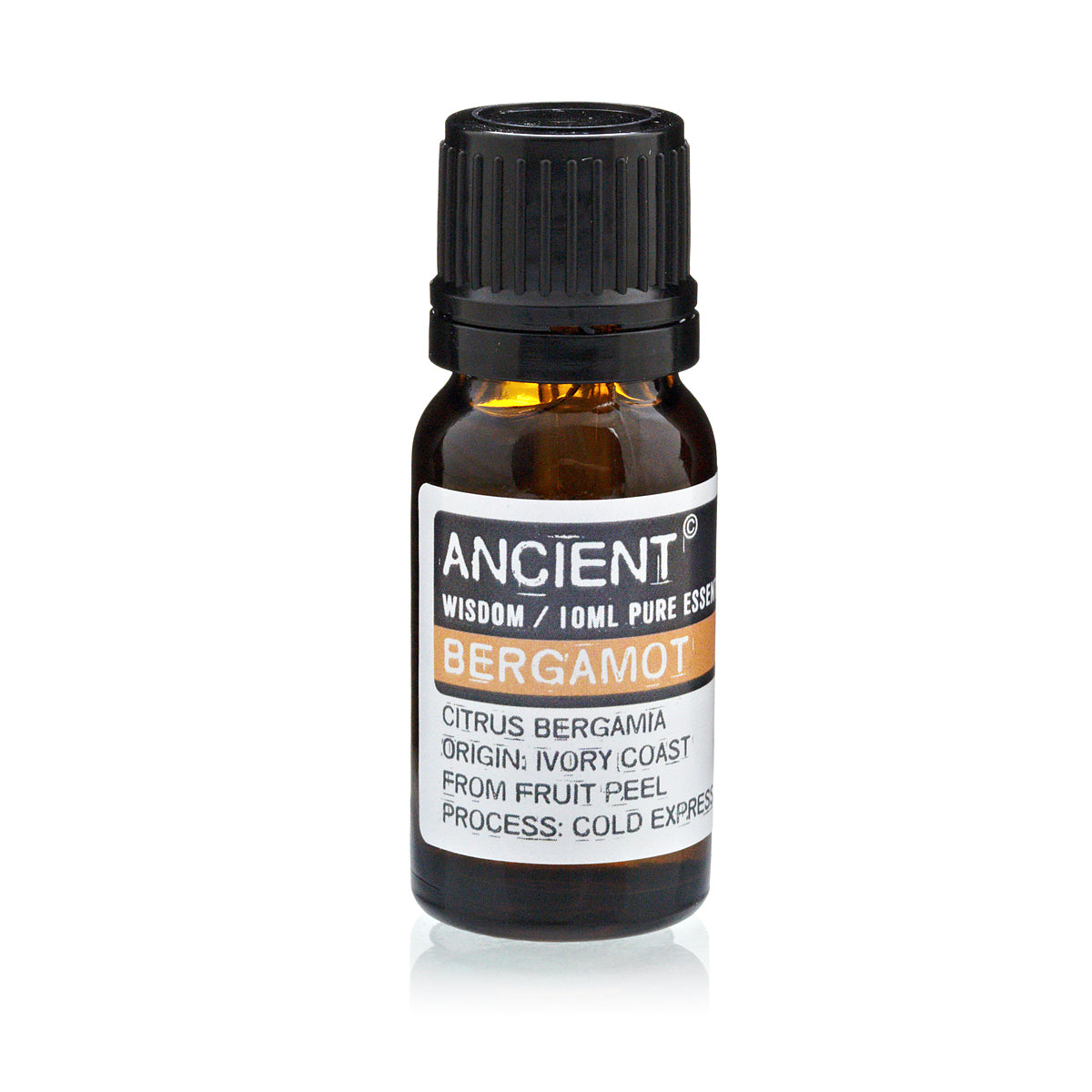
Bergamot Essential Oil (Citrus bergamia) is known for its crisp, sparkling citrus with a soft floral-green undertone. It’s bright without harshness, making rooms feel open, tidy, and welcoming. This guide explores its aroma behavior, easy home uses, simple blends, safety, and FAQs.
Quick Facts
- Latin name: Citrus bergamia
- Plant part: Peel (expressed)
- Extraction: Cold-pressed; FCF type removes most bergapten for light-safe use
- Aroma: lively citrus with soft floral-green nuance
- Strength: medium-bright; diffuses quickly and cleanly
Where It Comes From
Bergamot is a citrus fruit cultivated around the Mediterranean. The oil is pressed from the peel, and its character varies with region, season, and processing. FCF (furanocoumarin-free) types are designed for light-safe topical use; for room scenting, both standard and FCF offer the same bright, airy profile.
Aroma Profile (How It Behaves)
- Opening: sparkling citrus; crisp and refreshing
- Heart: soft floral-green; gently rounded
- Dry-down: clean, uplifting, not sugary
- Pairs well with: Lavender, Grapefruit, Sweet Orange, Cedarwood, Frankincense
As a top note, bergamot lifts blends and freshens the room quickly. It pairs beautifully with gentle florals and warm woods for balance.
How to Use It (Ambience Ideas)
- Morning clarity: 3–4 drops Bergamot + 2 drops Grapefruit
- Open house: 3 drops Bergamot + 2 drops Lavender
- Kitchen reset: 3 drops Bergamot + 2 drops Sweet Orange
- Light study blend: 3 drops Bergamot + 1 drop Frankincense
Tip: to keep it bright, avoid overloading the diffuser. Bergamot shines in lighter doses with good airflow.
Blend Recipes (Home Diffuser)
- Fresh Sheets: Bergamot 3 • Lavender 2
- Sunny Countertops: Bergamot 3 • Sweet Orange 2
- Clear & Calm: Bergamot 2 • Frankincense 2 • Lavender 1
- Breezy Entrance: Bergamot 3 • Grapefruit 2
Safety & Dilution
For aromatic use. If making your own topicals, keep total essential oil concentration at 1–2% (about 6–12 drops per 30 ml carrier). Standard bergamot contains furanocoumarins that can be photoreactive on skin; FCF types reduce this. Avoid eyes and sensitive areas. Keep away from children and pets.
FAQs
Does bergamot smell like lemon?
It’s citrusy, but more complex: a softer floral-green heart with less sharpness than lemon.
Best time to diffuse?
Daytime and early evening. It freshens quickly and suits shared spaces.
What’s FCF?
Furanocoumarin-free — designed to reduce photoreactivity for topical blends. For room scenting, both standard and FCF perform similarly.
Shop Bergamot (FCF) Essential Oil ->

- Solid Shampoo vs Liquid Shampoo: Which Is Better for Your Hair and the Environment?
 Switch to a more sustainable hair care routine with our premium solid shampoo bars , designed to cleanse, nourish, and protect your hair—without the waste of tr… Our solid shampoos are carefully crafted using… Read more: Solid Shampoo vs Liquid Shampoo: Which Is Better for Your Hair and the Environment?
 - Basil Essential Oil: The Clarifying Oil for Focus, Fatigue, and Muscle Relief
 Basil essential oil is one of the most underrated oils in aromatherapy. While it is universally recognised as a culinary herb, its essential oil has a distinct … Basil essential oil is steam-distilled from… Read more: Basil Essential Oil: The Clarifying Oil for Focus, Fatigue, and Muscle Relief
 - Lavender Essential Oil: The Complete Guide
 Lavender is where most people begin their aromatherapy journey — and for good reason. It is the most researched, most versatile, and most widely used essential … Lavender essential oil is steam-distilled from the… Read more: Lavender Essential Oil: The Complete Guide
 - Fennel Essential Oil: The Digestive Oil for Bloating, Hormones, and Detox
 Fennel has been used medicinally for thousands of years — by the ancient Egyptians, Greeks, Romans, and Chinese — primarily for its remarkable digestive propert… Fennel essential oil is steam-distilled from the crushed seeds… Read more: Fennel Essential Oil: The Digestive Oil for Bloating, Hormones, and Detox
 - Patchouli Essential Oil: The Earthy Oil for Grounding, Skin, and Sensuality
 Few essential oils provoke as strong a reaction as patchouli. Its deep, earthy, slightly sweet scent is immediately recognisable — and deeply divisive. Those wh… Patchouli essential oil is steam-distilled from the dried, fermented… Read more: Patchouli Essential Oil: The Earthy Oil for Grounding, Skin, and Sensuality
 - Peppermint Essential Oil: Energise, Focus, and Refresh
 If lavender is the oil of calm, peppermint is the oil of clarity. Sharp, cool, and instantly recognisable, peppermint essential oil is one of the most effective… Peppermint essential oil is steam-distilled from the… Read more: Peppermint Essential Oil: Energise, Focus, and Refresh
Bergamot is such a mood-lifter. Great to read the proven benefits explained so clearly.
I adore bergamot in the diffuser. Loved learning about the research behind it, thank you!
Really helpful guide, thank you – looking forward to more like this!
Bergamot is such a mood-lifter. Great to read the proven benefits explained so clearly.