
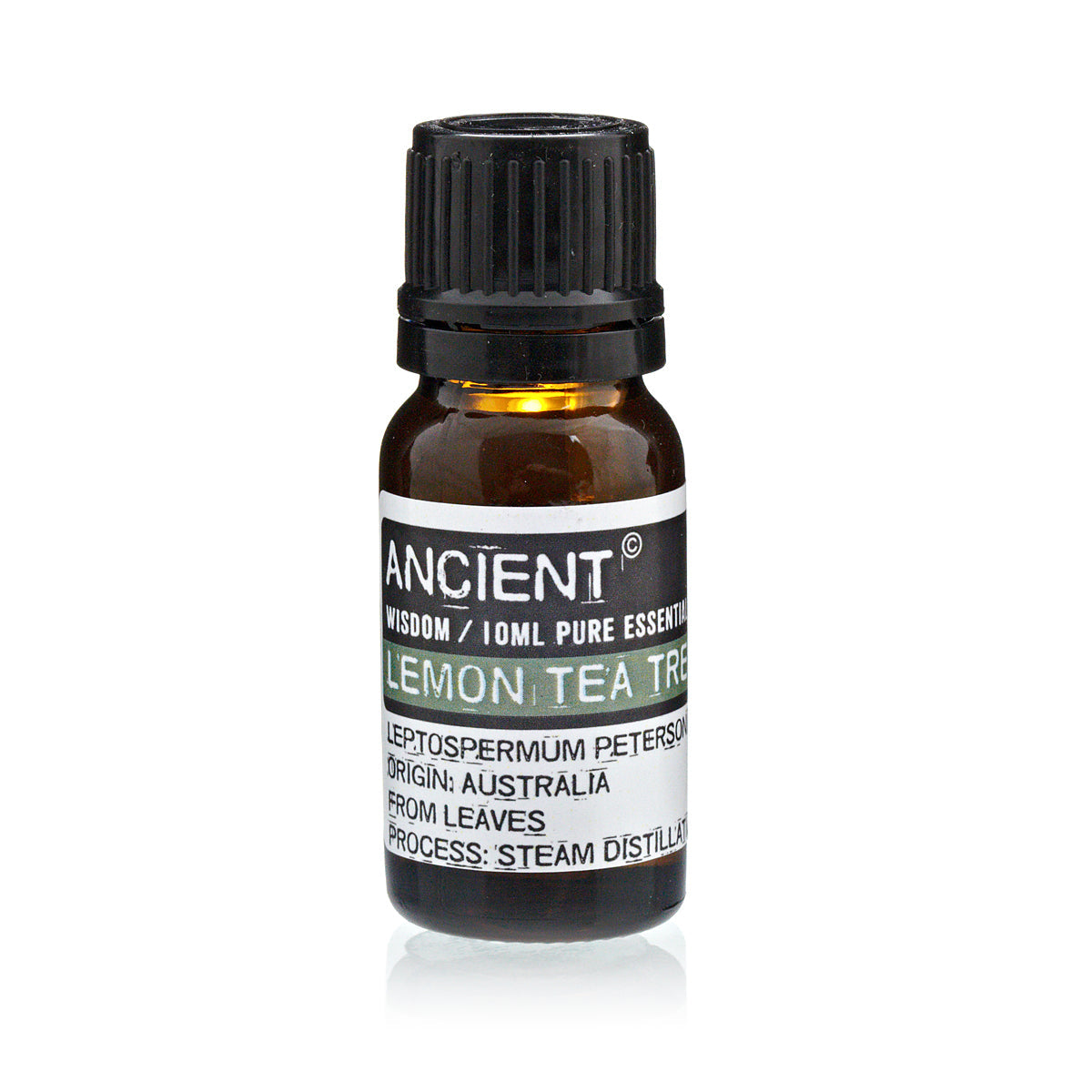
Lemon Tea Tree Essential Oil is crisp, green, and freshly clean, with a bright citrus-like lift that makes rooms feel tidier and more open. It has the clarity of a fresh herb garden and the ease of a classic room-refreshing oil. This guide covers the scent, use ideas, blend partners, and the safety notes worth keeping in mind.
If you want something that smells cleaner than citrus but less sharp than tea tree, Lemon Tea Tree sits in a very handy middle ground. It feels bright, practical, and easy to slot into everyday blends.
Quick facts
- Aroma family: Green, citrus-like, fresh
- Character: Clean, crisp, uplifting
- Best for: Room freshness, morning diffusion, tidy blends
- Blend role: Top note
- Use level: Moderate; start low and adjust slowly
Aroma profile
Lemon Tea Tree opens with a bright, green-clean aroma that feels fresh rather than sugary. It has a sharper edge than many soft citrus oils, but the overall effect is still tidy and approachable. That makes it particularly useful when you want a room to feel well aired and more organised.
In blends, it can help lift heavier notes and make the whole recipe feel more spacious. It sits well with herbs and woods because it adds that clean, structured top that keeps the composition from feeling muddy or too soft.
How to use
Diffuser: start with 2–3 drops in a standard diffuser. It is strong enough to be noticed quickly, so there is no need to rush the dose.
Fresh room blend: 2 Lemon Tea Tree + 2 cedarwood + 1 bergamot gives a clean, modern atmosphere with a grounded finish.
Morning reset: 2 Lemon Tea Tree + 2 rosemary + 1 lavender creates a bright, organised feel that works well in kitchens or workspaces.
Room mist: if you make a spray, use a proper solubiliser and keep the concentration modest. Spray into the air and test fabrics first if needed.
Blends well with
- Herbs: Rosemary, Lavender, Clary Sage
- Woods: Cedarwood, Cypress, Frankincense
- Citrus: Bergamot, Lemon, Orange
- Fresh notes: Eucalyptus, Peppermint (lightly)
Lemon Tea Tree is especially useful when a blend needs a cleaner opening and a less cluttered feel. It can sharpen the air in a pleasant way, helping other notes look more deliberate.
Why choose Lemon Tea Tree?
Choose Lemon Tea Tree when you want freshness with a bit more structure than a soft citrus oil provides. It is a good fit for practical, everyday scenting, especially in spaces where you want the room to feel clean, awake, and well kept.
It also pairs neatly with simple blends. A small amount can make a recipe feel more polished and more modern, without forcing you into a strong medicinal direction.
Safety & dilution
For external use only. Always dilute before applying to skin, and patch test first. Keep away from eyes and sensitive areas. If you are pregnant, nursing, or under medical care, seek qualified advice before use. Never ingest the oil, and keep it out of reach of children and pets.
Because the aroma is bold and tidy, Lemon Tea Tree is usually best used in a diffuser or a very low-dose aromatic blend. Store it tightly closed and away from heat and direct sunlight.
Storage & shelf life
Keep Lemon Tea Tree Essential Oil in a cool, dark place with the cap firmly shut. Fresh green oils keep their best character when they are protected from air and heat.
Shop Lemon Tea Tree Essential Oil
Explore the product here: Shop Lemon Tea Tree Essential Oil →
Three clean blend ideas
- Fresh workspace: 2 Lemon Tea Tree, 2 rosemary, 1 bergamot
- Neat hallway: 2 Lemon Tea Tree, 2 cedarwood, 1 frankincense
- Morning reset: 2 Lemon Tea Tree, 2 lavender, 1 lemon
These blends keep the oil in the role it does best: the bright, crisp opener that makes the whole recipe feel cleaner. If you want a warmer result, add a wood note; if you want a softer result, add lavender.
When Lemon Tea Tree works best
Lemon Tea Tree is especially useful in the morning, after cleaning, or whenever a room feels stale and needs a quick lift. It gives a sense of tidiness without asking you to use a heavy scent, which makes it practical for kitchens, offices, and shared living spaces.
It is also handy when a blend feels too soft or vague. A little lemon tea tree can sharpen the shape of a recipe and make it easier to read.
Lemon Tea Tree vs. tea tree
Compared with classic tea tree, Lemon Tea Tree tends to feel brighter and more citrus-like, with less of the medicinal edge people sometimes notice in stronger tree oils. That makes it a friendlier option if you want freshness without going too clinical.
Storage reminder
Keep the bottle cool, dark, and tightly closed. Fresh green oils like this one hold up better when they are not left in warm light or open air for long stretches.
Because the aroma is so direct, Lemon Tea Tree tends to work best in small amounts. That keeps the blend readable and helps the cleaner top note stay pleasant instead of overpowering.
If you like fresh, practical blends, Lemon Tea Tree is an easy oil to keep on hand. It gives you a quick clean lift without needing much support, which makes it one of the simpler room-refreshing oils to use well.

- Solid Shampoo vs Liquid Shampoo: Which Is Better for Your Hair and the Environment?
 Switch to a more sustainable hair care routine with our premium solid shampoo bars , designed to cleanse, nourish, and protect your hair—without the waste of tr… Our solid shampoos are carefully crafted using… Read more: Solid Shampoo vs Liquid Shampoo: Which Is Better for Your Hair and the Environment?
 - Basil Essential Oil: The Clarifying Oil for Focus, Fatigue, and Muscle Relief
 Basil essential oil is one of the most underrated oils in aromatherapy. While it is universally recognised as a culinary herb, its essential oil has a distinct … Basil essential oil is steam-distilled from… Read more: Basil Essential Oil: The Clarifying Oil for Focus, Fatigue, and Muscle Relief
 - Lavender Essential Oil: The Complete Guide
 Lavender is where most people begin their aromatherapy journey — and for good reason. It is the most researched, most versatile, and most widely used essential … Lavender essential oil is steam-distilled from the… Read more: Lavender Essential Oil: The Complete Guide
 - Fennel Essential Oil: The Digestive Oil for Bloating, Hormones, and Detox
 Fennel has been used medicinally for thousands of years — by the ancient Egyptians, Greeks, Romans, and Chinese — primarily for its remarkable digestive propert… Fennel essential oil is steam-distilled from the crushed seeds… Read more: Fennel Essential Oil: The Digestive Oil for Bloating, Hormones, and Detox
 - Patchouli Essential Oil: The Earthy Oil for Grounding, Skin, and Sensuality
 Few essential oils provoke as strong a reaction as patchouli. Its deep, earthy, slightly sweet scent is immediately recognisable — and deeply divisive. Those wh… Patchouli essential oil is steam-distilled from the dried, fermented… Read more: Patchouli Essential Oil: The Earthy Oil for Grounding, Skin, and Sensuality
 - Peppermint Essential Oil: Energise, Focus, and Refresh
 If lavender is the oil of calm, peppermint is the oil of clarity. Sharp, cool, and instantly recognisable, peppermint essential oil is one of the most effective… Peppermint essential oil is steam-distilled from the… Read more: Peppermint Essential Oil: Energise, Focus, and Refresh