
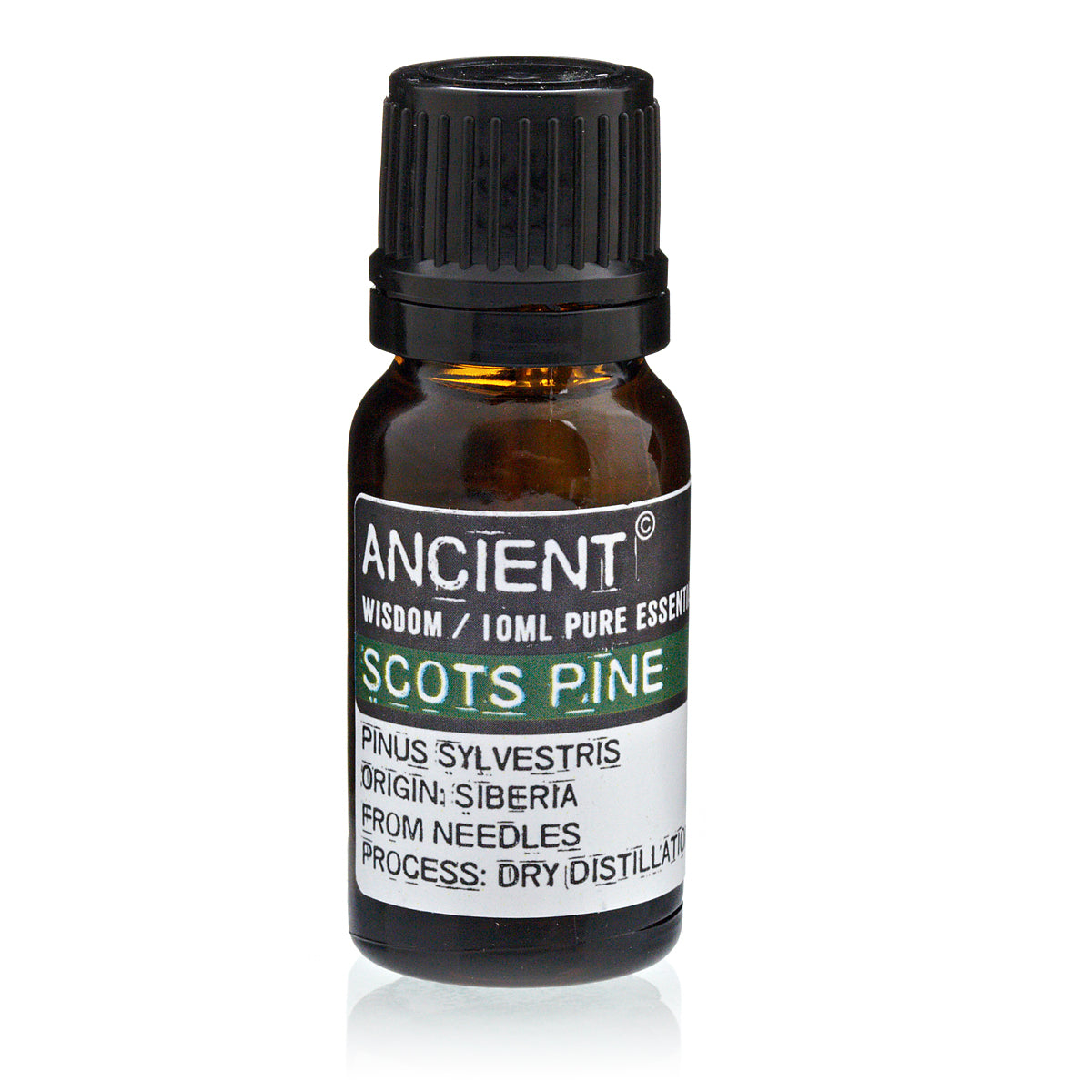
Pine Sylvestris Essential Oil is all about that clear, forest-edge feeling: brisk air, resinous needles, pale sunlight and the clean hush of evergreens after rain. Scots pine is one of the most recognisable conifers in northern landscapes, and its aroma is equally familiar — fresh, dry, woody and gently balsamic, with enough lift to wake up a room without turning sharp or medicinal.
This is a versatile oil for people who like their blends crisp rather than sweet. It can give a diffuser mix a cleaner outline, help heavier woods feel less dense, and bring a tidy, outdoorsy finish to everyday aromatherapy. If you want a scent that feels open, grounded and a little wild, Pine Sylvestris is a very easy place to start.
Quick facts
- Botanical name: Pinus sylvestris
- Family: Pinaceae
- Plant part: Needles
- Extraction: Dry distillation
- Aroma: Fresh, resinous, woody, green and clean
- Character: Brisk top note with a dry forest base
- Best for: Brightening spaces, grounding blends and outdoor-style ambience
Aroma profile
Pine Sylvestris opens with a clean, coniferous snap, then settles into soft resin and pale wood. It is less sweet than fir needle and less smoky than cedar, which makes it especially useful when you want clarity. The scent feels like a well-kept woodland path: airy, bright and grounded at once. In a blend, a small amount can sharpen the whole composition and stop softer notes from feeling blurry.
Because the oil is so recognisably piney, it works best when you let it lead the fresh side of a blend rather than crowding it with too many competing notes. Citrus lifts it, herbs tidy it, and deeper woods give it body. Used that way, it becomes a very adaptable “structure” note — the sort that quietly holds everything together.
How to use
These ideas are aimed at aromatic, adult use in well-ventilated spaces. Adjust the drops to your diffuser size and the strength you prefer.
Diffuser ideas
- Forest reset: 3 drops Pine Sylvestris + 2 drops Lemon + 1 drop Cedarwood
- Clean desk clarity: 2 drops Pine Sylvestris + 2 drops Rosemary + 2 drops Grapefruit
- Rainy-day calm: 3 drops Pine Sylvestris + 2 drops Lavender + 1 drop Frankincense
For a room spray, keep things simple: a little solubiliser, distilled water, and a modest amount of pine oil plus one bright partner such as Lemon or Orange. Shake before each use and spray into the air, not directly onto surfaces or fabrics unless they have been tested first.
For a body oil, keep the dilution low. Pine can feel wonderfully fresh in a carrier blend, but a little goes a long way. Start gently, patch test, and keep the formula uncomplicated so the pine can stay clean and natural rather than overly busy.
Blends well with
Pine Sylvestris is a team player when the rest of the blend respects its crispness.
- Citrus: Lemon, Sweet Orange, Grapefruit, Lime
- Herbs: Rosemary, Sage, Basil, Eucalyptus
- Woods: Cedarwood, Cypress, Juniper Berry, Vetiver
Good blend logic: use Pine as the bright spine, then add citrus for lift, herbs for precision, and woods for depth. If a blend starts to feel too sharp, a softer floral note can round the edges; if it feels too soft, Pine brings the outline back.
Everyday uses
In daily life, this oil works beautifully in spaces that benefit from a clear, outdoorsy impression. It can make a hallway feel fresher, give a home office a cleaner atmosphere, or add a woodland touch to weekend cleaning routines. It is also a nice bridge between “fresh” and “grounded” — useful when you want a scent that feels active but not sugary.
For a very simple signature blend, try Pine Sylvestris with Lemon and Cedarwood. It is crisp enough for daytime, but still calm enough to avoid feeling clinical. If you prefer something softer, add Lavender and reduce the citrus. If you want a more brisk, conifer-forward profile, lean into Rosemary and Grapefruit.
Safety & dilution
- For external, aromatic use only.
- Always dilute before skin use and patch test first.
- Avoid eyes, lips and sensitive areas.
- Keep out of reach of children and pets.
- If pregnant, breastfeeding or under medical care, seek qualified advice before use.
Pine oils are concentrated plant extracts, so less is usually more. A careful hand keeps the scent crisp and pleasant. Store the bottle tightly closed, away from heat and bright light, so the aroma stays clean for longer.
Shop Pine Sylvestris Essential Oil
Shop Pine Sylvestris Essential Oil →

- Solid Shampoo vs Liquid Shampoo: Which Is Better for Your Hair and the Environment?
 Switch to a more sustainable hair care routine with our premium solid shampoo bars , designed to cleanse, nourish, and protect your hair—without the waste of tr… Our solid shampoos are carefully crafted using… Read more: Solid Shampoo vs Liquid Shampoo: Which Is Better for Your Hair and the Environment?
 - Basil Essential Oil: The Clarifying Oil for Focus, Fatigue, and Muscle Relief
 Basil essential oil is one of the most underrated oils in aromatherapy. While it is universally recognised as a culinary herb, its essential oil has a distinct … Basil essential oil is steam-distilled from… Read more: Basil Essential Oil: The Clarifying Oil for Focus, Fatigue, and Muscle Relief
 - Lavender Essential Oil: The Complete Guide
 Lavender is where most people begin their aromatherapy journey — and for good reason. It is the most researched, most versatile, and most widely used essential … Lavender essential oil is steam-distilled from the… Read more: Lavender Essential Oil: The Complete Guide
 - Fennel Essential Oil: The Digestive Oil for Bloating, Hormones, and Detox
 Fennel has been used medicinally for thousands of years — by the ancient Egyptians, Greeks, Romans, and Chinese — primarily for its remarkable digestive propert… Fennel essential oil is steam-distilled from the crushed seeds… Read more: Fennel Essential Oil: The Digestive Oil for Bloating, Hormones, and Detox
 - Patchouli Essential Oil: The Earthy Oil for Grounding, Skin, and Sensuality
 Few essential oils provoke as strong a reaction as patchouli. Its deep, earthy, slightly sweet scent is immediately recognisable — and deeply divisive. Those wh… Patchouli essential oil is steam-distilled from the dried, fermented… Read more: Patchouli Essential Oil: The Earthy Oil for Grounding, Skin, and Sensuality
 - Peppermint Essential Oil: Energise, Focus, and Refresh
 If lavender is the oil of calm, peppermint is the oil of clarity. Sharp, cool, and instantly recognisable, peppermint essential oil is one of the most effective… Peppermint essential oil is steam-distilled from the… Read more: Peppermint Essential Oil: Energise, Focus, and Refresh
Really helpful guide, thank you — looking forward to more like this!