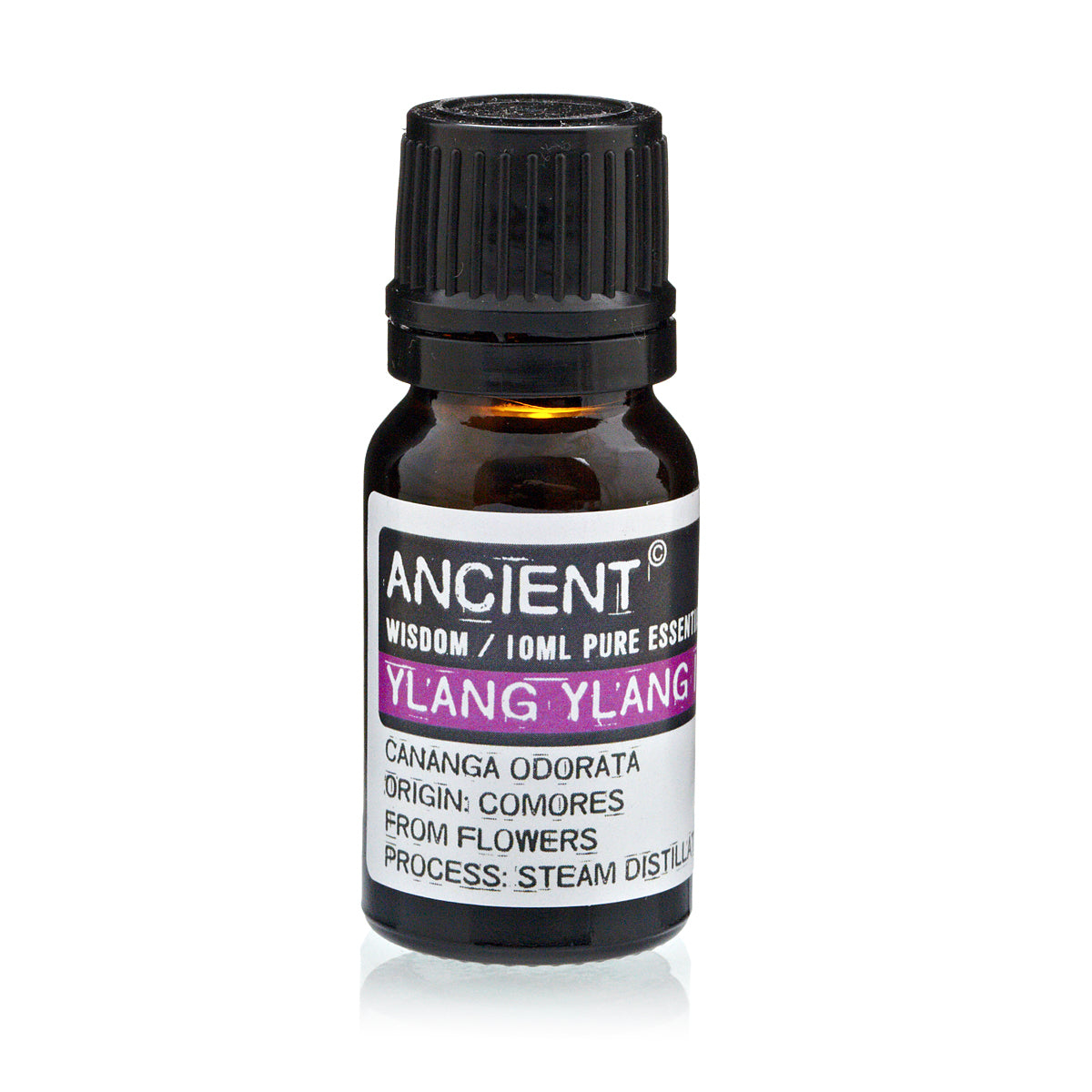
Ylang Ylang III Essential Oil is soft, floral and warmly tropical, with a rounded sweetness that feels elegant rather than sharp. It has the unmistakable character of ylang ylang, but in a lighter, gentler style that makes it easier to use in everyday blends. If you like floral oils that feel smooth and sunny, this one is very easy to love.
This is a good oil for softening a composition. It can round off bright citrus, add body to a floral blend and bring a calm, polished finish to the atmosphere. The scent feels relaxed, luxurious and slightly exotic without becoming heavy.
Quick facts
- Botanical name: Cananga odorata
- Plant part: Flowers
- Origin: Camores
- Extraction: Steam distillation
- Aroma: Floral, sweet, warm and tropical
- Character: Soft, comforting and elegant
Aroma profile
Ylang Ylang III opens with a soft floral sweetness, then settles into a warm tropical heart with a smooth, almost creamy feel. Compared with stronger ylang fractions, this one is a little lighter and easier to place in a blend, which makes it practical for daily use.
It can make a room feel softer and more relaxed without turning sugary. If you want a floral note that feels friendly and rounded, this is an excellent choice.
How to use
Use in well-ventilated spaces and keep the dose modest. Ylang Ylang III is rich enough that a few drops will usually be plenty.
Diffuser ideas
- Tropical calm: 2 drops Ylang Ylang III + 2 drops Orange + 1 drop Cedarwood
- Soft bloom: 2 drops Ylang Ylang III + 2 drops Lavender + 1 drop Grapefruit
- Evening polish: 1 drop Ylang Ylang III + 2 drops Bergamot + 2 drops Sandalwood-type wood
Ylang Ylang III is especially useful when a blend feels too bright or too dry. It adds a rounded floral middle and helps other notes feel more harmonious. Citrus becomes gentler, woods become smoother, and the whole blend feels more composed.
Blends well with
- Citrus: Orange, Bergamot, Grapefruit, Lime
- Florals: Lavender, Geranium, Jasmine, Neroli
- Woods: Cedarwood, Sandalwood, Patchouli, Vetiver
Good blend logic: use Ylang Ylang III to soften the edges, then add citrus for lift or woods for grounding. It works particularly well when a blend needs elegance rather than sharpness.
Everyday uses
This oil suits evening blends, relaxing spaces and any room that could use a more gentle, welcoming feel. It is also a lovely bridge between florals and woods, especially when you want the final result to feel smooth rather than busy.
A simple starting blend is Ylang Ylang III with Orange and Cedarwood. For a more floral result, add Lavender. For a richer and more sensual feel, pair it with Bergamot and a deeper wood note.
Safety & dilution
- For external, aromatic use only.
- Always dilute before skin use and patch test first.
- Avoid eyes, lips and sensitive areas.
- Keep out of reach of children and pets.
- If pregnant, breastfeeding or under medical care, seek qualified advice before use.
Ylang Ylang III is a concentrated essential oil and should be used carefully. Store it tightly closed, away from heat and light, so the aroma stays soft and balanced.
Shop Ylang Ylang III Essential Oil
Shop Ylang Ylang III Essential Oil →

- Solid Shampoo vs Liquid Shampoo: Which Is Better for Your Hair and the Environment?
 Switch to a more sustainable hair care routine with our premium solid shampoo bars , designed to cleanse, nourish, and protect your hair—without the waste of tr… Our solid shampoos are carefully crafted using… Read more: Solid Shampoo vs Liquid Shampoo: Which Is Better for Your Hair and the Environment?
 - Basil Essential Oil: The Clarifying Oil for Focus, Fatigue, and Muscle Relief
 Basil essential oil is one of the most underrated oils in aromatherapy. While it is universally recognised as a culinary herb, its essential oil has a distinct … Basil essential oil is steam-distilled from… Read more: Basil Essential Oil: The Clarifying Oil for Focus, Fatigue, and Muscle Relief
 - Lavender Essential Oil: The Complete Guide
 Lavender is where most people begin their aromatherapy journey — and for good reason. It is the most researched, most versatile, and most widely used essential … Lavender essential oil is steam-distilled from the… Read more: Lavender Essential Oil: The Complete Guide
 - Fennel Essential Oil: The Digestive Oil for Bloating, Hormones, and Detox
 Fennel has been used medicinally for thousands of years — by the ancient Egyptians, Greeks, Romans, and Chinese — primarily for its remarkable digestive propert… Fennel essential oil is steam-distilled from the crushed seeds… Read more: Fennel Essential Oil: The Digestive Oil for Bloating, Hormones, and Detox
 - Patchouli Essential Oil: The Earthy Oil for Grounding, Skin, and Sensuality
 Few essential oils provoke as strong a reaction as patchouli. Its deep, earthy, slightly sweet scent is immediately recognisable — and deeply divisive. Those wh… Patchouli essential oil is steam-distilled from the dried, fermented… Read more: Patchouli Essential Oil: The Earthy Oil for Grounding, Skin, and Sensuality
 - Peppermint Essential Oil: Energise, Focus, and Refresh
 If lavender is the oil of calm, peppermint is the oil of clarity. Sharp, cool, and instantly recognisable, peppermint essential oil is one of the most effective… Peppermint essential oil is steam-distilled from the… Read more: Peppermint Essential Oil: Energise, Focus, and Refresh