
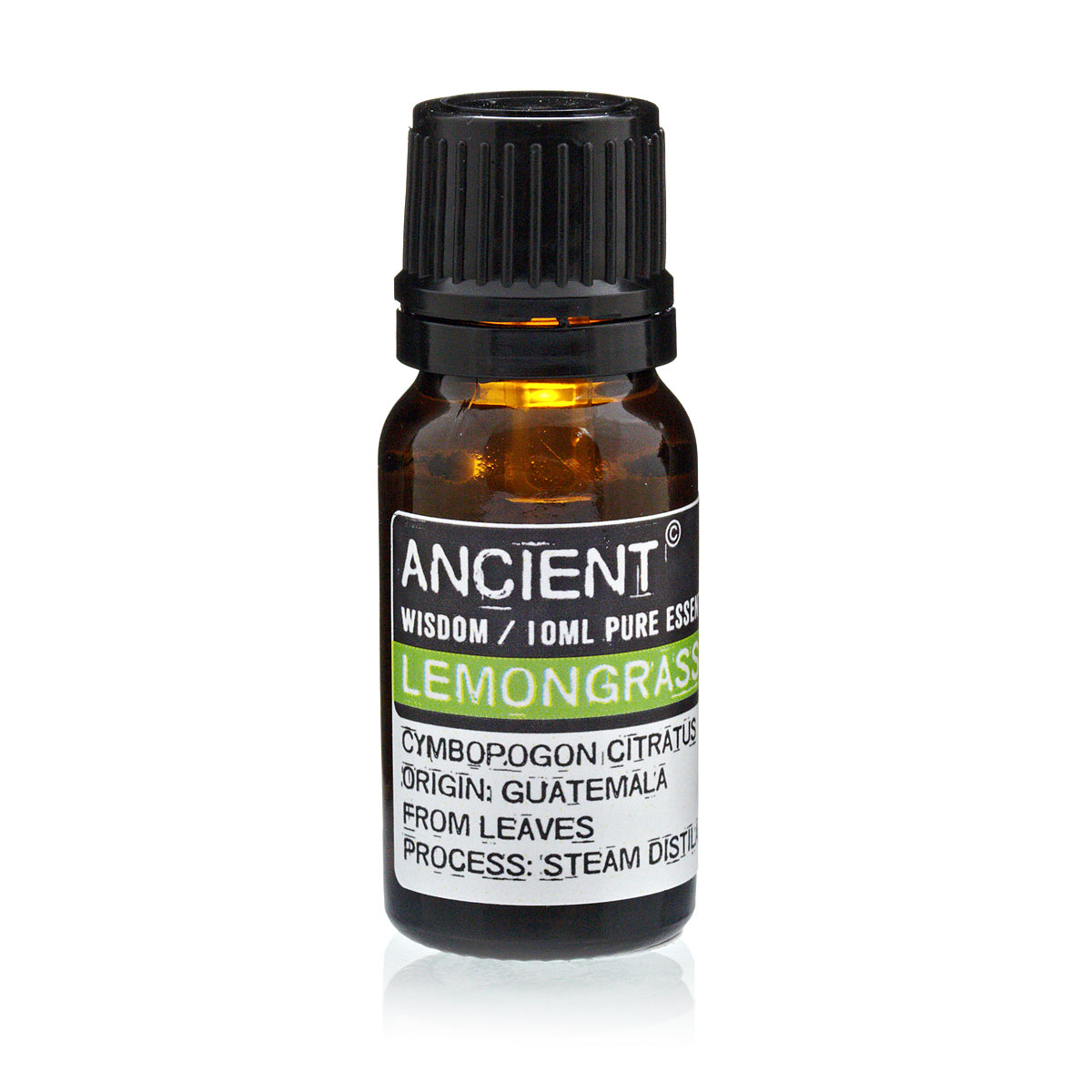
Lemongrass Essential Oil
Latin Name : Cymbopogon Citratus.
Part Of Plant Used : Leaves.
Source : Guatamala.
Extraction Method : Steam Distillation.
What Is Lemongrass Essential Oil?
Lemongrass Essential Oil is extracted from the plant Cymbopogon citratus, a tall, aromatic grass commonly referred to as “oil grass.” The oil is obtained through steam distillation of the plant’s fresh or partially dried leaves, a process that preserves its potent aroma and beneficial properties. Known for its fresh, citrus-like scent, Lemongrass Essential Oil is widely valued in aromatherapy, personal care, and traditional wellness practices.

The distinctive lemon aroma of Lemongrass Essential Oil comes from its high citral content. Citral is also responsible for the familiar lemon flavour found in lemon peel, making this oil both refreshing and energising. Because of its clean scent and versatile properties, Lemongrass Essential Oil has become a popular choice for supporting both physical and emotional wellbeing.
Lemongrass Essential Oil and Its Energising Effects
One of the most well-known benefits of Lemongrass Essential Oil is its ability to help combat fatigue and mental exhaustion. Its uplifting aroma is often used to refresh a tired body and mind, making it ideal for use after a long day or during periods of stress. In aromatherapy, Lemongrass Essential Oil is believed to stimulate the parasympathetic nervous system, which supports relaxation and recovery.
Many people use it to help relieve symptoms associated with jet lag, nervous tension, and general stress. Its fresh, clean scent can promote mental clarity and emotional balance, helping to restore focus and motivation. When diffused, it may create an environment that feels invigorating yet calming at the same time.
Lemongrass Essential Oil for Muscles and Physical Comfort
Lemongrass Essential Oil is also valued for its role in easing physical discomfort. It is commonly used in massage blends to help tone muscles and tissues, which may assist in relieving muscle soreness and stiffness. Athletes and active individuals often include Lemongrass Essential Oil in post-exercise routines to help the body feel refreshed and relaxed.
In traditional wellness practices, Lemongrass Essential Oil has been used to support recovery after illness. It is believed to stimulate glandular secretions and encourage the body’s natural healing processes. These properties have contributed to its reputation as a revitalising oil for both physical and emotional wellbeing.
Digestive and Cleansing Properties
Lemongrass Essential Oil has long been associated with digestive support. Traditionally, it has been used to help ease discomfort related to indigestion, colitis, and gastroenteritis. Its cleansing properties are thought to support healthy digestion and overall gut balance when used appropriately in aromatherapy or external applications.
In addition to digestive support, it is often used for its purifying qualities. It is commonly found in natural cleansing products and skincare formulations due to its fresh aroma and ability to help clear oily skin. Many people find that it helps reduce excessive perspiration, making it a popular ingredient in natural deodorants and body care products.
Lemongrass Essential Oil for Skin and Personal Care
When used correctly and diluted properly, it can be beneficial for oily or congested skin. Its astringent properties may help tighten pores and improve the appearance of the skin. However, it is important to note that Lemongrass Essential Oil can be irritating to sensitive skin.
Because of its potency, it should always be diluted in a suitable carrier oil before topical use. A patch test is strongly recommended to ensure skin compatibility. Care should also be taken to avoid use during pregnancy, and professional advice should be sought before using it for young children or individuals with sensitive skin conditions.
Natural Insect Repellent Benefits
Another popular use of Lemongrass Essential Oil is as a natural insect repellent. Its strong citrus aroma makes it an effective and pleasant-smelling way to help keep pets and living spaces free from fleas and ticks. Unlike synthetic repellents, Lemongrass Essential Oil offers a plant-based alternative that many people prefer for household use.
When used in sprays or diffusers, Lemongrass Essential Oil can help create an environment that insects find unappealing, while still smelling fresh and uplifting to humans. This makes it especially useful during warmer months when insects are more active.
The Traditional Roots of Lemongrass Essential Oil
Lemongrass is a perennial aromatic grass that originally grew wild in India, where it is known as choomana poolu. It is also referred to as Indian Verbena or Indian Melissa oil. In Ayurveda, the ancient Indian system of healing, Lemongrass Essential Oil has been used for centuries to help bring down fevers and support the body during infectious illnesses.
Because of these traditional uses, Lemongrass is sometimes called “fevergrass.” Its long history in herbal and traditional medicine highlights its importance as a natural wellness ingredient across many cultures.
Safety Considerations
While it offers many benefits, it should always be used with care. Due to its strong concentration, it can cause skin irritation if applied undiluted. Proper dilution, cautious use, and avoidance during pregnancy are essential for safe enjoyment of this oil.
As with all essential oils, Lemongrass Essential Oil should be used as a complementary wellness product rather than a replacement for professional medical advice. When used responsibly, it can be a refreshing, versatile, and valuable addition to a natural lifestyle.
You can Click, Tap or Scan the QR code below. It will automatically add a discount code for you to get a discount on your first purchase, of any of our essential oil 10ml bottles. Terms and Conditions apply.


- Solid Shampoo vs Liquid Shampoo: Which Is Better for Your Hair and the Environment?
 Switch to a more sustainable hair care routine with our premium solid shampoo bars , designed to cleanse, nourish, and protect your hair—without the waste of tr… Our solid shampoos are carefully crafted using… Read more: Solid Shampoo vs Liquid Shampoo: Which Is Better for Your Hair and the Environment?
 - Basil Essential Oil: The Clarifying Oil for Focus, Fatigue, and Muscle Relief
 Basil essential oil is one of the most underrated oils in aromatherapy. While it is universally recognised as a culinary herb, its essential oil has a distinct … Basil essential oil is steam-distilled from… Read more: Basil Essential Oil: The Clarifying Oil for Focus, Fatigue, and Muscle Relief
 - Lavender Essential Oil: The Complete Guide
 Lavender is where most people begin their aromatherapy journey — and for good reason. It is the most researched, most versatile, and most widely used essential … Lavender essential oil is steam-distilled from the… Read more: Lavender Essential Oil: The Complete Guide
 - Fennel Essential Oil: The Digestive Oil for Bloating, Hormones, and Detox
 Fennel has been used medicinally for thousands of years — by the ancient Egyptians, Greeks, Romans, and Chinese — primarily for its remarkable digestive propert… Fennel essential oil is steam-distilled from the crushed seeds… Read more: Fennel Essential Oil: The Digestive Oil for Bloating, Hormones, and Detox
 - Patchouli Essential Oil: The Earthy Oil for Grounding, Skin, and Sensuality
 Few essential oils provoke as strong a reaction as patchouli. Its deep, earthy, slightly sweet scent is immediately recognisable — and deeply divisive. Those wh… Patchouli essential oil is steam-distilled from the dried, fermented… Read more: Patchouli Essential Oil: The Earthy Oil for Grounding, Skin, and Sensuality
 - Peppermint Essential Oil: Energise, Focus, and Refresh
 If lavender is the oil of calm, peppermint is the oil of clarity. Sharp, cool, and instantly recognisable, peppermint essential oil is one of the most effective… Peppermint essential oil is steam-distilled from the… Read more: Peppermint Essential Oil: Energise, Focus, and Refresh
I love how this lemongrass essential oil has such a fresh, citrus scent that instantly lifts my mood and energises my space.
It’s perfect for creating a clean, refreshing atmosphere while also offering natural antimicrobial and soothing benefits.