
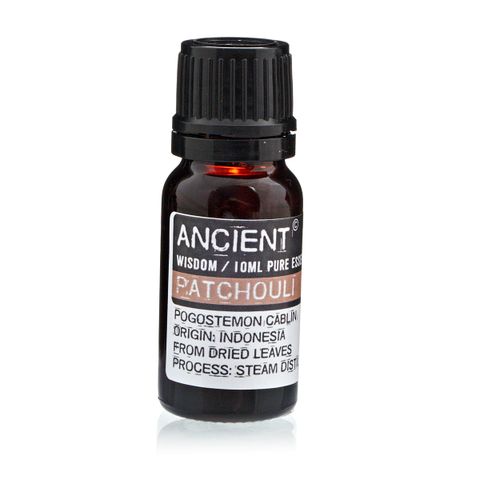
Latin Name : Pogostemon Cablin.
Part of Plant Used : Dried Leaves.
Source : Indonesia.
Extraction Method : Steam Distillation.
Patchouli Essential Oil is extracted from the Pogostemon cablin plant, a member of the mint family, and is known for its rich, musky-sweet, and slightly spicy aroma. Native to Malaysia and India, where it is called puchaput, the name “patchouli” comes from the Tamil words pachchai ilai, meaning “green leaf.” The oil is produced from young leaves that are dried and fermented before steam distillation, a process that deepens its fragrance and increases its effectiveness with age. Widely used in dermatology, patchouli oil is especially valued for its ability to support skin regeneration and improve the appearance of scars.
Across many Eastern cultures, patchouli oil has long been prized for its use in potpourris and sachets placed among clothing and linens, where it also helps deter insects and bedbugs. When diffused, it is known to calm the emotions, ease anxiety and low mood, and create a warm, romantic atmosphere. Used in bath preparations, patchouli oil may help relieve skin and scalp concerns, fungal infections, fluid retention, cellulite, and constipation. Its strong regenerative and healing qualities make it beneficial for supporting recovery from acne, eczema, sores, ulcers, and athlete’s foot, while also helping to protect against infection.
Historically, patchouli leaves were tucked between Indian cashmere shawls to prevent moth damage during transport to Victorian England, where the scent became a mark of authenticity and desirability. During the 1960s and 1970s, patchouli oil and incense surged in popularity across Europe and North America, particularly within counterculture movements, as its strong aroma masked body odour and the smell of burnt cannabis. It was also commonly used as a natural hair conditioner for dreadlocks. In several Asian traditions, patchouli continues to be valued as a traditional remedy, including its historical use in treating snakebites.
You can Click, Tap or Scan the QR code below. It will automatically add a discount code for you to get a discount on your first purchase, of any of our essential oil 10ml bottles. Terms and Conditions apply.


- Solid Shampoo vs Liquid Shampoo: Which Is Better for Your Hair and the Environment?
 Switch to a more sustainable hair care routine with our premium solid shampoo bars , designed to cleanse, nourish, and protect your hair—without the waste of tr… Our solid shampoos are carefully crafted using… Read more: Solid Shampoo vs Liquid Shampoo: Which Is Better for Your Hair and the Environment?
 - Basil Essential Oil: The Clarifying Oil for Focus, Fatigue, and Muscle Relief
 Basil essential oil is one of the most underrated oils in aromatherapy. While it is universally recognised as a culinary herb, its essential oil has a distinct … Basil essential oil is steam-distilled from… Read more: Basil Essential Oil: The Clarifying Oil for Focus, Fatigue, and Muscle Relief
 - Lavender Essential Oil: The Complete Guide
 Lavender is where most people begin their aromatherapy journey — and for good reason. It is the most researched, most versatile, and most widely used essential … Lavender essential oil is steam-distilled from the… Read more: Lavender Essential Oil: The Complete Guide
 - Fennel Essential Oil: The Digestive Oil for Bloating, Hormones, and Detox
 Fennel has been used medicinally for thousands of years — by the ancient Egyptians, Greeks, Romans, and Chinese — primarily for its remarkable digestive propert… Fennel essential oil is steam-distilled from the crushed seeds… Read more: Fennel Essential Oil: The Digestive Oil for Bloating, Hormones, and Detox
 - Patchouli Essential Oil: The Earthy Oil for Grounding, Skin, and Sensuality
 Few essential oils provoke as strong a reaction as patchouli. Its deep, earthy, slightly sweet scent is immediately recognisable — and deeply divisive. Those wh… Patchouli essential oil is steam-distilled from the dried, fermented… Read more: Patchouli Essential Oil: The Earthy Oil for Grounding, Skin, and Sensuality
 - Peppermint Essential Oil: Energise, Focus, and Refresh
 If lavender is the oil of calm, peppermint is the oil of clarity. Sharp, cool, and instantly recognisable, peppermint essential oil is one of the most effective… Peppermint essential oil is steam-distilled from the… Read more: Peppermint Essential Oil: Energise, Focus, and Refresh