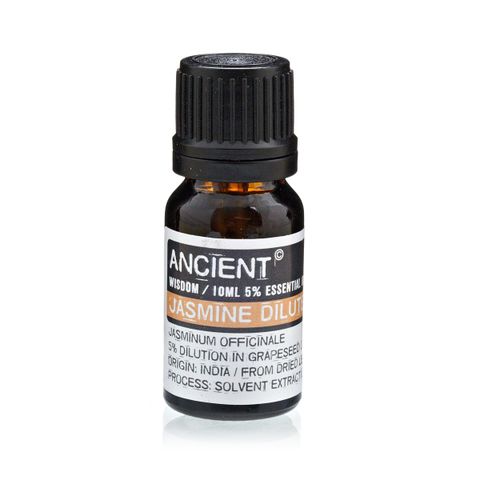
Latin Name : Jasminum Officinale.
Part Of Plant Used : Dried Leaves (Dilute) Flower (Pure)
Source : India.
Extraction Method : Steam Distillation.
Jasmine Essential Oil: Jasmine is a delicate evergreen climber native to China and India, celebrated for its small, white, star-shaped flowers that are traditionally picked at night, when their fragrance is at its most powerful. For centuries, jasmine has been revered not only for its intoxicating, richly floral aroma but also for its deep cultural, spiritual, and therapeutic significance. In India, jasmine has long been considered a holy flower, woven into garlands for Hindu gods and goddesses, worn in women’s hair, and featured prominently in wedding ceremonies. According to ancient myth, jasmine blooms at night in remembrance of a heartbroken princess whose ashes gave rise to the fragrant plant.
Historically, jasmine essential oil was highly prized for its aphrodisiac qualities, driving widespread demand across ancient civilizations. It played an important role in healing practices and religious rituals, reflecting its esteemed status. In traditional Chinese medicine, jasmine oil was used in sickrooms to scent and purify the air long before the existence of bacteria was understood. The ancient Egyptians valued jasmine for easing headaches, calming the nerves, and promoting restful sleep, underscoring its therapeutic importance.
Today, jasmine essence is typically obtained through solvent extraction, a complex and labor-intensive process that contributes to its rarity and cost. The resulting oil has a sweet, exotic, and intensely floral fragrance known to uplift the mood, relieve depression, and increase confidence. Research shows that inhaling jasmine can enhance alertness, improve hand–eye coordination, boost self-confidence and happiness, and reduce stress, all without sedative effects. Its calming yet energizing influence encourages mental clarity, emotional balance, and optimism while helping to ease anger, anxiety, and tension.
Jasmine essential oil is also valued for its skin-care benefits. When used in low concentrations, it helps nourish dry and ageing skin and can gently support conditions such as eczema and dermatitis. It tones both dry and oily skin, improves elasticity, and is known to reduce the appearance of scars and stretch marks, particularly after childbirth. In massage blends, jasmine oil can help ease muscle pain, sprains, and stiff limbs, while also supporting respiratory comfort in cases of cough or laryngitis.
Renowned for its effects on intimacy and emotional connection, jasmine has been used for centuries to boost libido, ease inhibitions, and ignite sexual desire. It is believed to support reproductive and menstrual health by helping regulate cycles, reduce period pain and fatigue, stabilize mood swings, and even delay the onset of menopause. Additionally, jasmine oil has traditionally been used to support childbirth by strengthening contractions and easing discomfort.
With its rich history, sensual aroma, and wide-ranging benefits for the body, mind, and spirit, jasmine essential oil remains one of the most cherished and powerful botanical essences, offering comfort, confidence, and balance with every breath.
Jasmine comes in two forms: Absolute, which is pure, which is great but may need diluting for massages, but excellent for other uses; and dilute which is a 5% dilute in grape seed oil. Great for massage as it is already in a base oil.
You can Click, Tap or Scan the QR code below. It will automatically add a discount code for you to get a discount on your first purchase, of any of our essential oil 10ml bottles. Terms and Conditions apply.


- Solid Shampoo vs Liquid Shampoo: Which Is Better for Your Hair and the Environment?
 Switch to a more sustainable hair care routine with our premium solid shampoo bars , designed to cleanse, nourish, and protect your hair—without the waste of tr… Our solid shampoos are carefully crafted using… Read more: Solid Shampoo vs Liquid Shampoo: Which Is Better for Your Hair and the Environment?
 - Basil Essential Oil: The Clarifying Oil for Focus, Fatigue, and Muscle Relief
 Basil essential oil is one of the most underrated oils in aromatherapy. While it is universally recognised as a culinary herb, its essential oil has a distinct … Basil essential oil is steam-distilled from… Read more: Basil Essential Oil: The Clarifying Oil for Focus, Fatigue, and Muscle Relief
 - Lavender Essential Oil: The Complete Guide
 Lavender is where most people begin their aromatherapy journey — and for good reason. It is the most researched, most versatile, and most widely used essential … Lavender essential oil is steam-distilled from the… Read more: Lavender Essential Oil: The Complete Guide
 - Fennel Essential Oil: The Digestive Oil for Bloating, Hormones, and Detox
 Fennel has been used medicinally for thousands of years — by the ancient Egyptians, Greeks, Romans, and Chinese — primarily for its remarkable digestive propert… Fennel essential oil is steam-distilled from the crushed seeds… Read more: Fennel Essential Oil: The Digestive Oil for Bloating, Hormones, and Detox
 - Patchouli Essential Oil: The Earthy Oil for Grounding, Skin, and Sensuality
 Few essential oils provoke as strong a reaction as patchouli. Its deep, earthy, slightly sweet scent is immediately recognisable — and deeply divisive. Those wh… Patchouli essential oil is steam-distilled from the dried, fermented… Read more: Patchouli Essential Oil: The Earthy Oil for Grounding, Skin, and Sensuality
 - Peppermint Essential Oil: Energise, Focus, and Refresh
 If lavender is the oil of calm, peppermint is the oil of clarity. Sharp, cool, and instantly recognisable, peppermint essential oil is one of the most effective… Peppermint essential oil is steam-distilled from the… Read more: Peppermint Essential Oil: Energise, Focus, and Refresh