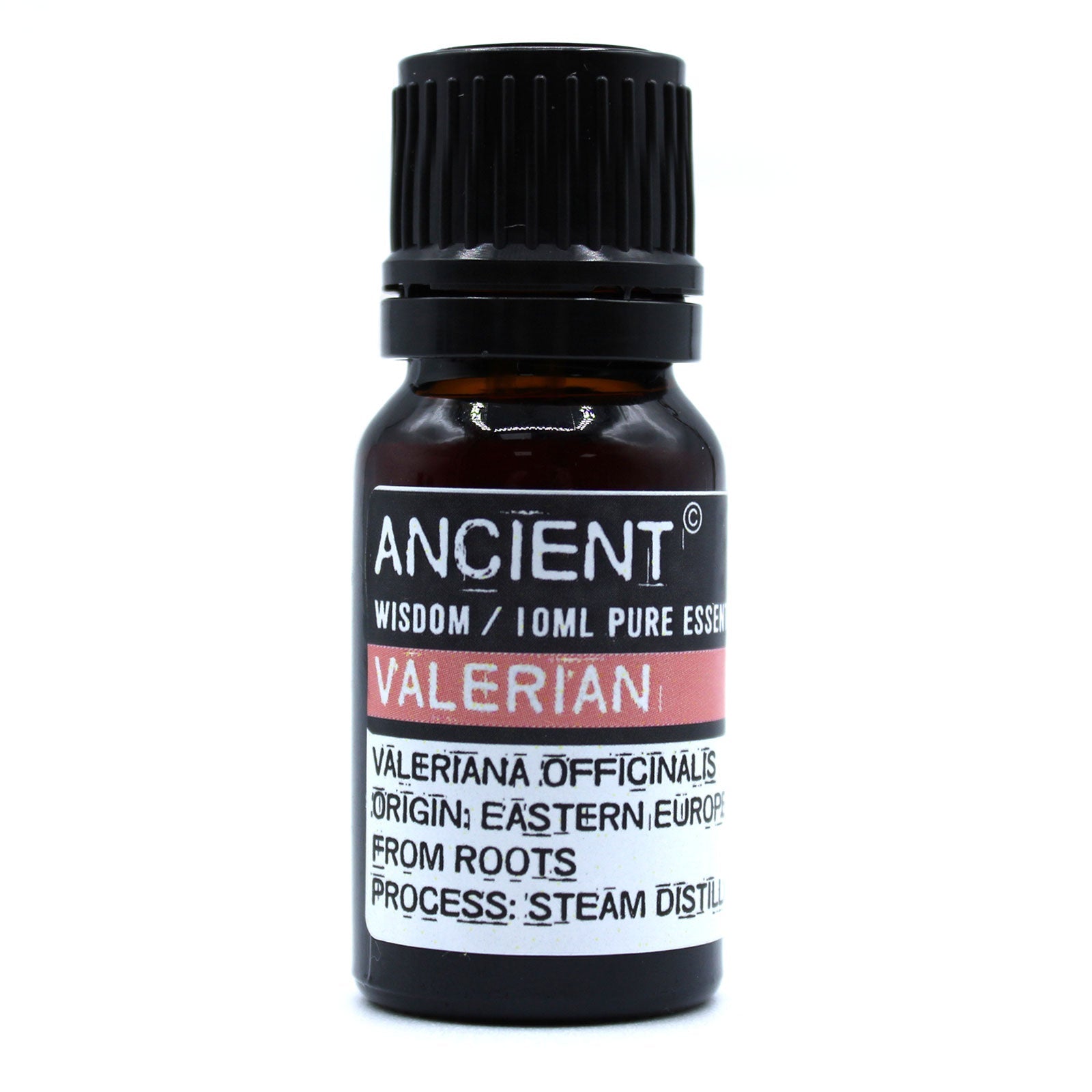
Valerian Essential Oil has a deep, earthy aroma with a heavy, rooty finish that feels calm and grounding. It is a very distinctive scent — less polished than many oils, but deeply characterful and unmistakably restful. If you want an aroma that says “slow down” immediately, Valerian makes that point clearly.
This is a niche oil, best used with care and intention. It can add a dark, settled base to a blend and help quieter notes feel more anchored. The scent is not for everyone, but when it works, it works very well.
Quick facts
- Botanical name: Valeriana officinalis
- Plant part: Root
- Origin: Europe
- Extraction: Steam distillation
- Aroma: Earthy, rooty, heavy and warm
- Character: Deep, rustic and restful
Aroma profile
Valerian opens with a strong earthy-root note and settles into a dense, settling base that feels very different from bright herbs or clean woods. It has a quiet, sleepy quality that can make a blend feel more still and contemplative.
In a blend, Valerian is best used sparingly. It can add depth to florals, soften the brightness of citrus and give a more serious, evening-leaning feel to the whole composition. Because the aroma is so distinctive, a little goes a long way.
How to use
Use in well-ventilated spaces and keep the dose very modest. Valerian is potent and often only needs a tiny amount.
Diffuser ideas
- Evening hush: 1 drop Valerian + 2 drops Lavender + 1 drop Cedarwood
- Earthy calm: 1 drop Valerian + 2 drops Orange + 1 drop Cypress
- Deep rest: 1 drop Valerian + 2 drops Bergamot + 1 drop Vetiver
Valerian is best treated as a base note for a calm, grounded blend. Citrus can help it feel less dense, woods can support it and lavender can make it easier to enjoy in the room.
Blends well with
- Citrus: Orange, Bergamot, Grapefruit, Lemon
- Florals: Lavender, Geranium, Rose
- Woods: Cedarwood, Cypress, Vetiver, Patchouli
Good blend logic: use Valerian very lightly for depth and restfulness, then build around it with brighter or softer notes. It is most useful when you want the aroma to feel settled and slow.
Everyday uses
Valerian suits evening blends, quiet rooms and moments when you want the atmosphere to feel more subdued. It is not a general-purpose freshener; it is a mood-setting, grounding oil.
A simple starting blend is Valerian with Lavender and Cedarwood. For a lighter result, add Orange or Bergamot. For a deeper and more earthy feel, pair it with Vetiver and Cypress.
Safety & dilution
- For external, aromatic use only.
- Always dilute before skin use and patch test first.
- Use very sparingly; this oil is potent and can be overpowering.
- Avoid eyes, lips and sensitive areas.
- Keep out of reach of children and pets.
- If pregnant, breastfeeding or under medical care, seek qualified advice before use.
Valerian is a concentrated essential oil and should be handled carefully. Store it tightly closed, away from heat and light, and use only tiny amounts so the aroma stays balanced.
Shop Valerian Essential Oil

- Solid Shampoo vs Liquid Shampoo: Which Is Better for Your Hair and the Environment?
 Switch to a more sustainable hair care routine with our premium solid shampoo bars , designed to cleanse, nourish, and protect your hair—without the waste of tr… Our solid shampoos are carefully crafted using… Read more: Solid Shampoo vs Liquid Shampoo: Which Is Better for Your Hair and the Environment?
 - Basil Essential Oil: The Clarifying Oil for Focus, Fatigue, and Muscle Relief
 Basil essential oil is one of the most underrated oils in aromatherapy. While it is universally recognised as a culinary herb, its essential oil has a distinct … Basil essential oil is steam-distilled from… Read more: Basil Essential Oil: The Clarifying Oil for Focus, Fatigue, and Muscle Relief
 - Lavender Essential Oil: The Complete Guide
 Lavender is where most people begin their aromatherapy journey — and for good reason. It is the most researched, most versatile, and most widely used essential … Lavender essential oil is steam-distilled from the… Read more: Lavender Essential Oil: The Complete Guide
 - Fennel Essential Oil: The Digestive Oil for Bloating, Hormones, and Detox
 Fennel has been used medicinally for thousands of years — by the ancient Egyptians, Greeks, Romans, and Chinese — primarily for its remarkable digestive propert… Fennel essential oil is steam-distilled from the crushed seeds… Read more: Fennel Essential Oil: The Digestive Oil for Bloating, Hormones, and Detox
 - Patchouli Essential Oil: The Earthy Oil for Grounding, Skin, and Sensuality
 Few essential oils provoke as strong a reaction as patchouli. Its deep, earthy, slightly sweet scent is immediately recognisable — and deeply divisive. Those wh… Patchouli essential oil is steam-distilled from the dried, fermented… Read more: Patchouli Essential Oil: The Earthy Oil for Grounding, Skin, and Sensuality
 - Peppermint Essential Oil: Energise, Focus, and Refresh
 If lavender is the oil of calm, peppermint is the oil of clarity. Sharp, cool, and instantly recognisable, peppermint essential oil is one of the most effective… Peppermint essential oil is steam-distilled from the… Read more: Peppermint Essential Oil: Energise, Focus, and Refresh