
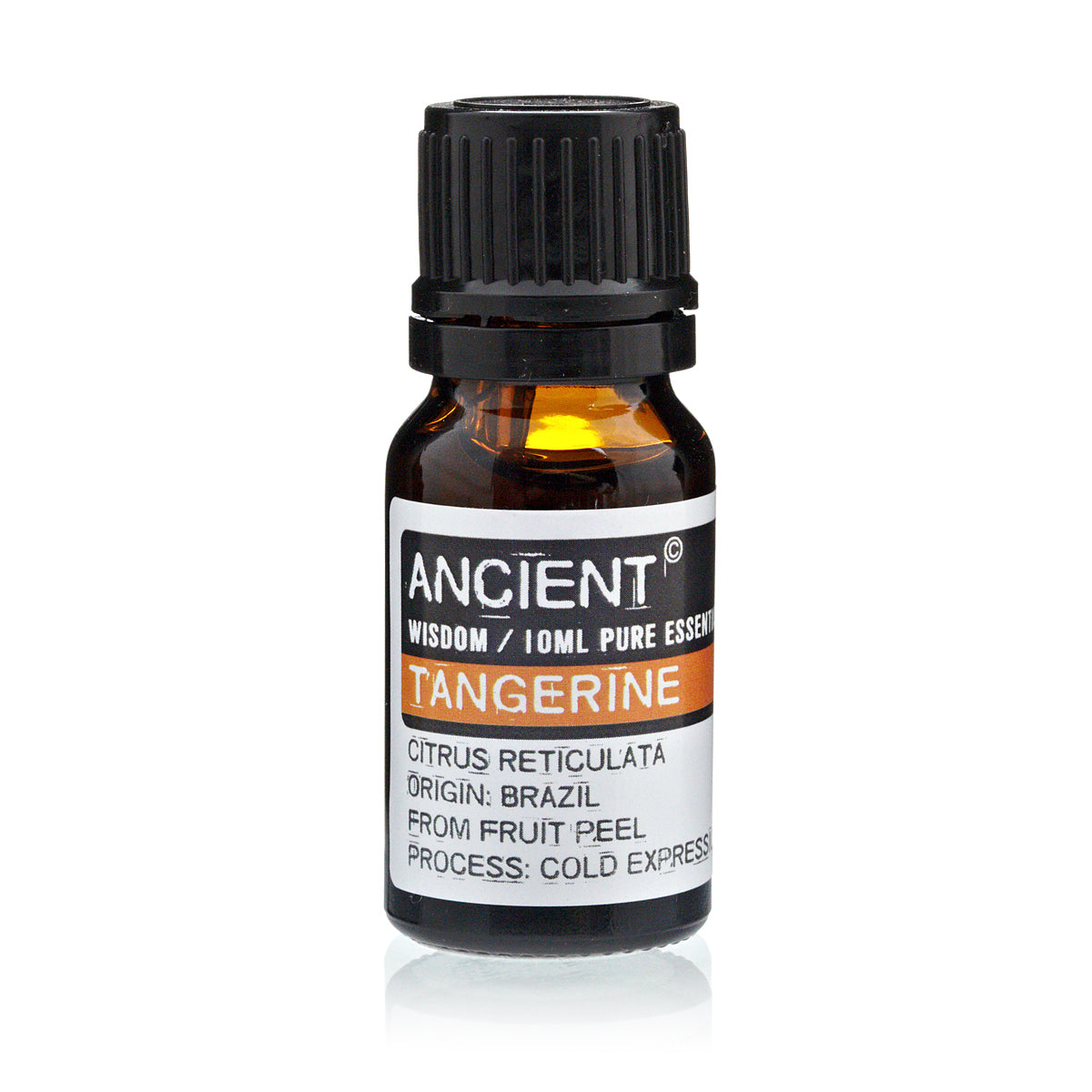
Tangerine Essential Oil is bright, cheerful, and easy to live with. It brings a sunny citrus aroma that feels clean and optimistic, without the sharp bite some citrus oils can have. This guide covers the scent profile, practical uses, blend ideas, and safety notes so you can use tangerine in a calm, everyday way.
If you want a room to feel a little lighter without becoming overwhelming, tangerine is a good place to start. It has a rounded sweetness, a soft peel-like lift, and an easy-going character that works beautifully in family rooms, kitchens, and simple diffuser blends.
Quick facts
- Aroma family: Bright citrus, sweet, gently zesty
- Character: Cheerful, soft, refreshing
- Best for: Uplifting blends, room freshness, easy daytime diffusion
- Blend role: Top note
- Good starting point: Low drop counts; it opens well
Aroma profile
Tangerine opens with a bright peel aroma and settles into a soft, sweet citrus heart. It feels warmer and gentler than some sharper citrus oils, which makes it especially useful when you want a blend to feel friendly rather than brisk. The overall impression is sunny, tidy, and quietly cheerful.
Because it sits so well at the top of a blend, tangerine can help more grounded notes feel lighter and more approachable. Woods become less serious, herbs feel less dry, and floral notes gain a brighter opening. It is the kind of oil that makes a recipe feel easier to wear in everyday life.
How to use
Diffuser: start with 3–4 drops in a standard diffuser, then adjust to the room. Tangerine is friendly enough to sit alongside other notes, so it is often best used as the bright opening rather than the whole story.
Morning reset: 3 tangerine + 2 rosemary gives a clean, awake feeling without getting too sharp. If you prefer something softer, swap rosemary for lavender and keep the blend light.
Kitchen and hallway: 3 tangerine + 2 cedarwood + 1 frankincense creates a tidy, open atmosphere with a warm base. It feels fresh, but not thin.
Soft room spray: use a proper solubiliser and keep the citrus level moderate. Spray into the air rather than directly onto furniture or fabrics, and patch test if needed.
Blends well with
- Herbs: Rosemary, Clary Sage, Basil
- Woods: Cedarwood, Cypress, Frankincense
- Florals: Lavender, Geranium, Neroli
- Other citrus: Bergamot, Lemon, Grapefruit
Tangerine is useful when a blend feels too serious, too dry, or too narrow. It can widen the mood without taking over. In practice, that means you can use it to make a blend feel friendlier, lighter, and more welcoming in one small step.
Why choose Tangerine?
Choose tangerine when you want a citrus oil that feels relaxed rather than bracing. It is especially good for shared spaces, family-friendly room scents, and simple routines where you want a little lift without too much sparkle. That gentle sweetness also makes it a nice bridge into woods and herbs.
It is also a forgiving oil for beginners. Tangerine rarely needs much help to smell pleasant, and it usually fits into a blend without much fuss. If you are building a collection of versatile oils, this is one of the easiest to reach for first.
Safety & dilution
For external use only. Always dilute before applying to skin, and patch test first. Keep citrus oils away from eyes and sensitive areas, and use extra care if you plan to wear a citrus blend on exposed skin. If you are pregnant, nursing, or under medical care, ask a qualified professional before use. Never ingest the oil.
Because tangerine is a lighter citrus, it works best in modest amounts. For most home use, a diffuser or a well-diluted aromatic blend is the easiest way to enjoy it. Store it tightly closed and away from heat and direct sunlight.
Storage & shelf life
Keep Tangerine Essential Oil in a cool, dark place with the cap firmly shut. That helps preserve the brighter top notes and keeps the aroma feeling clean for longer. If it starts to smell flat or stale, it has probably been exposed to too much air or warmth.
Shop Tangerine Essential Oil
Explore the product here: Shop Tangerine Essential Oil →
Three bright blend ideas
- Sunny morning: 3 tangerine, 2 bergamot, 1 rosemary
- Friendly kitchen: 3 tangerine, 2 cedarwood, 1 frankincense
- Soft afternoon: 2 tangerine, 2 lavender, 1 geranium
These recipes keep tangerine in its best role: the cheerful top note that makes the blend feel open and welcoming. If you want more depth, add wood or herb notes one drop at a time rather than increasing the citrus all at once.
When Tangerine works best
Tangerine is especially handy in the morning, after cleaning, or whenever you want a room to feel a little more optimistic. It is also a gentle choice for shared spaces because it tends to feel agreeable rather than overpowering. That makes it a useful oil for easy everyday diffusion rather than special-occasion scenting.
If a blend feels a bit too serious, tangerine is a good fix. It can soften the edges of woods, brighten herbs, and make florals feel more approachable. In that sense, it behaves like a small dose of sunlight in the bottle.
Tangerine vs. sharper citrus oils
Compared with lemons or more tart citrus oils, tangerine usually feels rounder and sweeter. That makes it easier to use when you want cheer without too much zing. It still gives you the clean citrus effect, just with a softer landing and a more relaxed finish.
Storage reminder
Keep the bottle tightly closed and out of direct light. Citrus oils are happiest when they are not left warm or open for long periods. A cool cupboard and quick recapping after use will help the aroma stay fresher.

- Solid Shampoo vs Liquid Shampoo: Which Is Better for Your Hair and the Environment?
 Switch to a more sustainable hair care routine with our premium solid shampoo bars , designed to cleanse, nourish, and protect your hair—without the waste of tr… Our solid shampoos are carefully crafted using… Read more: Solid Shampoo vs Liquid Shampoo: Which Is Better for Your Hair and the Environment?
 - Basil Essential Oil: The Clarifying Oil for Focus, Fatigue, and Muscle Relief
 Basil essential oil is one of the most underrated oils in aromatherapy. While it is universally recognised as a culinary herb, its essential oil has a distinct … Basil essential oil is steam-distilled from… Read more: Basil Essential Oil: The Clarifying Oil for Focus, Fatigue, and Muscle Relief
 - Lavender Essential Oil: The Complete Guide
 Lavender is where most people begin their aromatherapy journey — and for good reason. It is the most researched, most versatile, and most widely used essential … Lavender essential oil is steam-distilled from the… Read more: Lavender Essential Oil: The Complete Guide
 - Fennel Essential Oil: The Digestive Oil for Bloating, Hormones, and Detox
 Fennel has been used medicinally for thousands of years — by the ancient Egyptians, Greeks, Romans, and Chinese — primarily for its remarkable digestive propert… Fennel essential oil is steam-distilled from the crushed seeds… Read more: Fennel Essential Oil: The Digestive Oil for Bloating, Hormones, and Detox
 - Patchouli Essential Oil: The Earthy Oil for Grounding, Skin, and Sensuality
 Few essential oils provoke as strong a reaction as patchouli. Its deep, earthy, slightly sweet scent is immediately recognisable — and deeply divisive. Those wh… Patchouli essential oil is steam-distilled from the dried, fermented… Read more: Patchouli Essential Oil: The Earthy Oil for Grounding, Skin, and Sensuality
 - Peppermint Essential Oil: Energise, Focus, and Refresh
 If lavender is the oil of calm, peppermint is the oil of clarity. Sharp, cool, and instantly recognisable, peppermint essential oil is one of the most effective… Peppermint essential oil is steam-distilled from the… Read more: Peppermint Essential Oil: Energise, Focus, and Refresh
Really helpful guide, thank you — looking forward to more like this!