
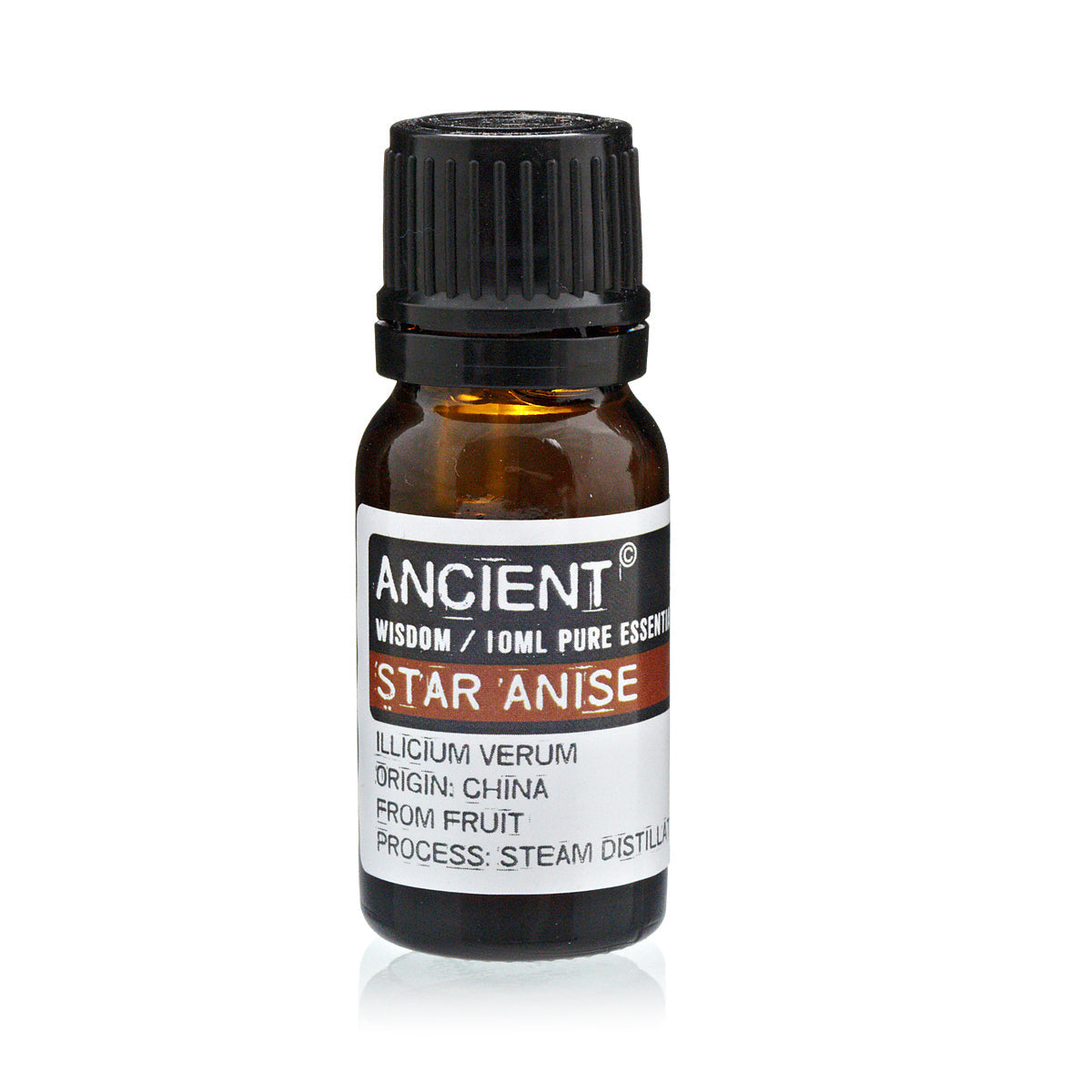
Star Anise Essential Oil has a warm, sweet-spiced aroma that feels instantly distinctive. It brings a liquorice-like lift, a rounded herbal warmth, and a quietly festive character to home fragrance blends. This guide keeps things practical: what it smells like, how to use it, what to pair it with, and how to handle it safely.
If you enjoy oils with a little personality, star anise is an easy one to remember. It can make a room feel cosy and polished without getting sugary, and it works best when you let it support the blend rather than dominate it.
Quick facts
- Aroma family: Sweet spice, warm herbal, slightly liquorice-like
- Character: Rounded, cosy, distinctive
- Best for: Winter blends, cosy rooms, and rich diffuser recipes
- Blend role: Middle note with strong personality
- Use level: Start very low; it can take over quickly
Aroma profile
Star anise opens with a sweet, spicy brightness and settles into a warm, rounded heart. The aniseed note is clear, but it is usually softened by a cosy herbal depth that makes the scent feel more blended than sharp. That balance is what gives it its charm: it is familiar enough to be comforting, yet unusual enough to feel special.
In a blend, star anise can make the overall composition feel richer and a little more layered. It is especially good with citrus and woods, where it adds warmth and a polished spice note. If you use too much, it can easily overwhelm the other ingredients, so treat it as an accent rather than a main event.
How to use
Diffuser: begin with 1–2 drops in a standard diffuser. If you want a richer winter blend, add one more drop only after you know how the scent behaves in the room. Star anise usually needs less than you think.
Cosy evening blend: 1 star anise + 2 orange + 2 cedarwood gives a warm, rounded atmosphere that feels soft rather than sharp. It is a nice choice for sitting rooms or relaxed after-dinner scenting.
Herbal-spice blend: 1 star anise + 2 bergamot + 1 rosemary creates a cleaner, more lifted profile with enough spice to keep it interesting. Keep the star anise low so the bergamot can stay bright.
Room spray: if you use a mist, make sure the oil is properly solubilised and keep the concentration modest. Spray into the air and test fabrics first if necessary.
Blends well with
- Citrus: Orange, Bergamot, Lemon, Grapefruit
- Woods: Cedarwood, Frankincense, Cypress
- Spices: Clove Leaf, Cinnamon (very lightly), Nutmeg
- Herbs: Rosemary, Clary Sage, Lavender
Star anise is useful when a formula needs depth and a little sweetness at the same time. Citrus keeps it lively, woods give it structure, and herbs help stop the spice from feeling too heavy. It is a small oil with a strong effect.
Why choose Star Anise?
Choose star anise if you want a more characterful spice note than the usual citrus-and-wood recipe. It has a festive, welcoming quality that works especially well in the colder months, but it can also bring interest to more neutral blends throughout the year.
It also pairs well with simple routines. One small diffuser blend can change the mood of a room quickly, which makes it handy when you want the space to feel warmer, more settled, or just a bit more distinctive.
Safety & dilution
For external use only. Always dilute before skin application, and patch test first. Keep away from eyes and sensitive areas. If you are pregnant, nursing, or under medical care, seek qualified advice before use. Never ingest the oil, and keep it out of reach of children and pets.
Because the aroma is quite powerful, star anise is best used sparingly. A diffuser or a very gentle aromatic blend is usually the most comfortable way to enjoy it. Store the bottle tightly closed and away from heat and sunlight.
Storage & shelf life
Keep Star Anise Essential Oil in a cool, dark place with the cap firmly closed. That helps protect the warm spiced top notes and keeps the scent more balanced over time. If it starts to smell dull or overly flat, it has likely been sitting open or warm for too long.
Shop Star Anise Essential Oil
Explore the product here: Shop Star Anise Essential Oil →
Three cosy blend ideas
- Winter room: 1 star anise, 2 orange, 2 cedarwood
- Spiced evening: 1 star anise, 2 bergamot, 1 clove leaf
- Soft festive: 1 star anise, 2 lavender, 1 frankincense
These recipes keep the spice note present but manageable. Start with the smallest amount of star anise you think will work, then adjust around it. That approach usually keeps the blend elegant rather than noisy.
When Star Anise works best
Star anise is especially good in colder months, after dark, or whenever you want a room to feel more settled and inviting. It can give an ordinary diffuser blend a more memorable shape without needing a complicated formula. In a hallway or sitting room, it often reads as warm and welcoming straight away.
It is also useful when a recipe feels too bright. The spiced sweetness can bridge citrus and woods neatly, helping the whole blend feel more coherent. In small doses, it adds polish; in large doses, it can swamp everything else, so restraint pays off.
Storage reminder
Keep the bottle tightly closed and away from sunlight or heat. Star anise holds onto its character better when it is stored cool and dark. If the scent ever seems muted or less vibrant, give the bottle a quick check for age and exposure.

- Solid Shampoo vs Liquid Shampoo: Which Is Better for Your Hair and the Environment?
 Switch to a more sustainable hair care routine with our premium solid shampoo bars , designed to cleanse, nourish, and protect your hair—without the waste of tr… Our solid shampoos are carefully crafted using… Read more: Solid Shampoo vs Liquid Shampoo: Which Is Better for Your Hair and the Environment?
 - Basil Essential Oil: The Clarifying Oil for Focus, Fatigue, and Muscle Relief
 Basil essential oil is one of the most underrated oils in aromatherapy. While it is universally recognised as a culinary herb, its essential oil has a distinct … Basil essential oil is steam-distilled from… Read more: Basil Essential Oil: The Clarifying Oil for Focus, Fatigue, and Muscle Relief
 - Lavender Essential Oil: The Complete Guide
 Lavender is where most people begin their aromatherapy journey — and for good reason. It is the most researched, most versatile, and most widely used essential … Lavender essential oil is steam-distilled from the… Read more: Lavender Essential Oil: The Complete Guide
 - Fennel Essential Oil: The Digestive Oil for Bloating, Hormones, and Detox
 Fennel has been used medicinally for thousands of years — by the ancient Egyptians, Greeks, Romans, and Chinese — primarily for its remarkable digestive propert… Fennel essential oil is steam-distilled from the crushed seeds… Read more: Fennel Essential Oil: The Digestive Oil for Bloating, Hormones, and Detox
 - Patchouli Essential Oil: The Earthy Oil for Grounding, Skin, and Sensuality
 Few essential oils provoke as strong a reaction as patchouli. Its deep, earthy, slightly sweet scent is immediately recognisable — and deeply divisive. Those wh… Patchouli essential oil is steam-distilled from the dried, fermented… Read more: Patchouli Essential Oil: The Earthy Oil for Grounding, Skin, and Sensuality
 - Peppermint Essential Oil: Energise, Focus, and Refresh
 If lavender is the oil of calm, peppermint is the oil of clarity. Sharp, cool, and instantly recognisable, peppermint essential oil is one of the most effective… Peppermint essential oil is steam-distilled from the… Read more: Peppermint Essential Oil: Energise, Focus, and Refresh