
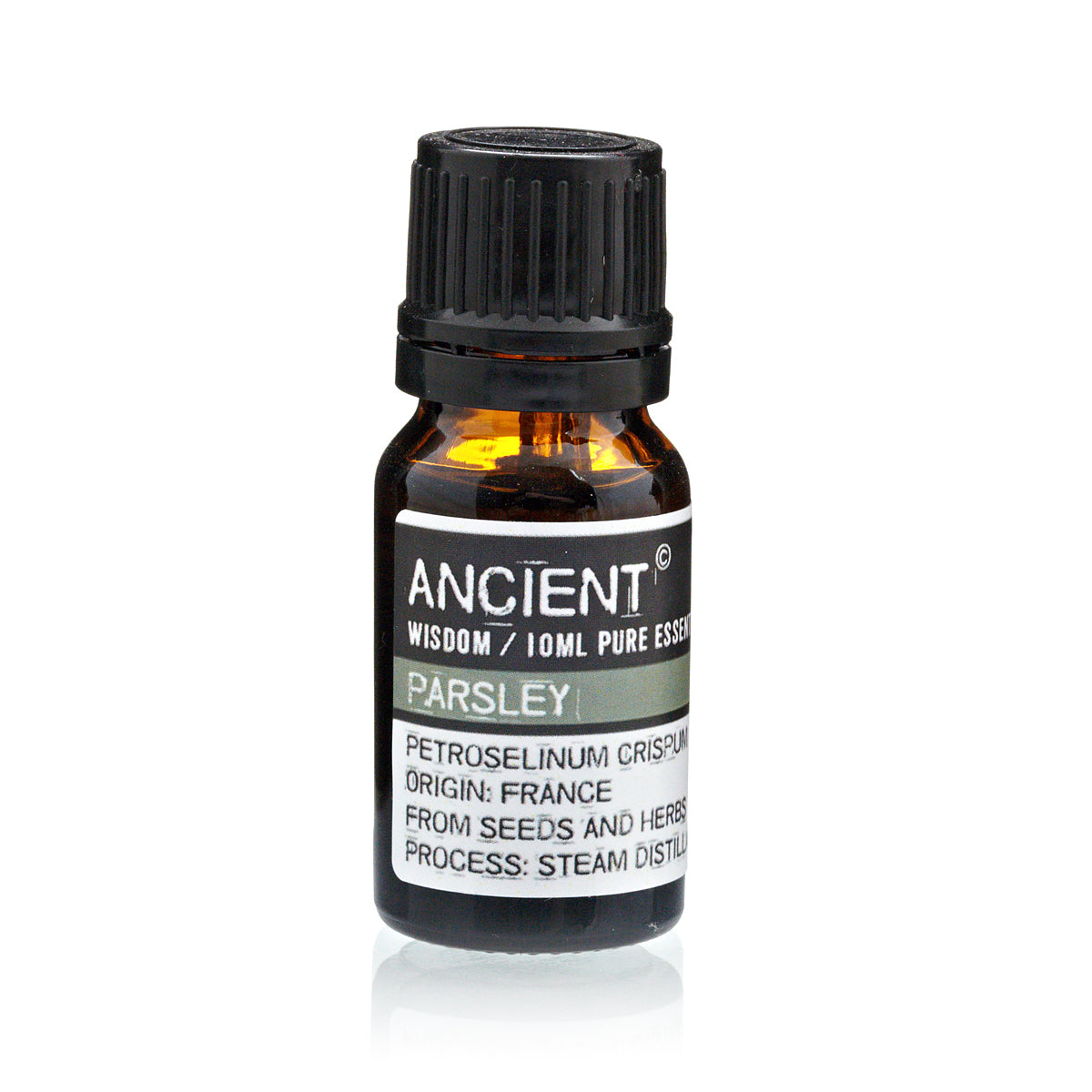
Parsley Essential Oil is a crisp, green, kitchen-garden aroma with a surprisingly polished edge. This guide keeps things practical: what it smells like, how to use it in small everyday blends, what it pairs with, and the safety notes worth respecting when you reach for a more assertive herbal oil.
If you like herbaceous oils that feel clean rather than sweet, Parsley can be a quiet star. It brings a dry, leafy brightness that feels tidy in the room, refined in the diffuser, and useful as a bridge between citruses, woods, and softer botanicals. In other words, it behaves a bit like the most well-mannered person at the table: not loud, but very good at making everyone else sound better.
Quick facts
- Botanical name: Petroselinum crispum
- Plant family: Apiaceae
- Extraction: Steam distillation
- Aroma family: Green, herbaceous, slightly woody
- Strength: Medium to strong
- Perfumery note: Middle
- Best for: Fresh kitchens, tidy blends, and clean herbal accords
Aroma profile
Parsley Essential Oil opens with a bright leafy snap, then settles into a drier, slightly earthy middle that feels more refined than rough. There is a gentle peppery edge, but it never turns brash. Instead, the oil reads as fresh, green, and a little woody, like crushed stems, clean chopping boards, and the first inhale after opening a herb drawer.
That profile gives parsley a useful role in blends. It can sharpen a citrus mix that feels too sweet, give woods a greener lift, or add a subtle “just cleaned” impression to room scents without drifting into minty territory. It is not the easiest oil to wear on its own, but it becomes very interesting once it is playing a supporting role.
How to use
Diffuser: start low with 1–2 drops in a small room and 2–3 drops in a larger space. Because parsley has a noticeable herbal footprint, it works best when you let the other notes do some of the lifting. A good everyday structure is one part parsley to three or four parts supporting oils.
Kitchen reset: after cooking, parsley can help a room feel cleaner and more organised. Try 1 parsley, 2 lemon, and 2 cypress for a crisp after-dinner atmosphere that feels fresh rather than perfumed.
Desk-side blend: for workspaces, parsley can be paired with bergamot and rosemary to create a focused herbal-citrus profile. Keep the parsley portion small so the blend stays bright and breathable rather than dense.
Room spray: if you make a water-based mist, use a proper solubiliser and keep the parsley concentration modest. Spray into the air, not directly onto surfaces you care about, and always patch test fabrics first.
Blends well with
- Citrus: Lemon, Bergamot, Lime, Sweet Orange
- Herbs: Rosemary, Basil, Clary Sage
- Woods: Cedarwood, Cypress, Frankincense
- Soft florals: Lavender, Geranium
Parsley is especially good when a blend needs contrast. Citrus softens the green edges, woods give it a steadier base, and lavender or geranium can make the whole thing feel more rounded and humane. If a recipe begins to smell too sharp, parsley often needs only one supporting note to fall into line.
Easy trio: 2 lemon + 2 cedarwood + 1 parsley for a tidy, modern herbal scent. It is simple, calm, and surprisingly elegant in shared spaces.
Why choose Parsley?
If you want something greener than rosemary and less familiar than basil, parsley is a useful middle path. It feels crisp without being cold, natural without being rustic, and refined without becoming floral. That makes it a clever choice for people who like clean, botanical blends that still have a bit of character.
It also has a practical advantage: parsley can quietly tidy a blend. A recipe that feels too sweet, too airy, or too soft often gains definition with a tiny amount of parsley. Used carefully, it behaves like a fine line in a sketch: barely visible at first, but it gives shape to the whole picture.
Safety & dilution
Parsley Essential Oil should be treated as a low-dose oil. For skin use, dilute heavily, patch test first, and keep it for short-term external use only. If you are pregnant, breastfeeding, or under medical care, avoid using parsley oil unless a qualified professional specifically advises otherwise. Keep it away from children and pets, and never use it internally.
Because parsley oils can be quite assertive, bath use is not a good default choice here. A diffuser or a carefully diluted room blend is the better fit. If you do use it on skin, think in tiny percentages rather than generous pours; parsley is one of those oils where less really is more.
Store the bottle tightly closed, out of direct sunlight, and away from heat. As with any essential oil, stop using it if it bothers your skin or feels too intense in the air.
Storage & shelf life
Parsley Essential Oil is best kept in a cool, dark cupboard with the cap firmly closed. That helps protect the aroma from oxidation and keeps the green-herbal character closer to the bottle you first opened. Avoid storing it beside a sunny window or near radiators, and return the dropper promptly after use so less air gets into the bottle.
If you like to rotate oils seasonally, parsley makes a useful “bridge” bottle for kitchen and study blends. It works especially well when you want something fresher than a woody note but less sweet than a citrus. That versatility is a big reason it earns its place on a shelf even though it is not an obvious solo scent.
Three gentle blend ideas
- Kitchen polish: 2 lemon, 2 cypress, 1 parsley
- Herbal focus: 2 bergamot, 2 rosemary, 1 parsley
- Soft green evening: 2 lavender, 1 geranium, 1 parsley, 1 cedarwood
These are intentionally small, easy formulas. The parsley should read as a lift or a line of definition, not the whole story. When you keep it in that supporting role, it gives you a more versatile blend that feels considered instead of cluttered.
Shop Parsley Essential Oil
https://shop.vividaromas.uk/products/10-ml-parsley-essential-oil
Explore the product here: Shop Parsley Essential Oil →

- Solid Shampoo vs Liquid Shampoo: Which Is Better for Your Hair and the Environment?
 Switch to a more sustainable hair care routine with our premium solid shampoo bars , designed to cleanse, nourish, and protect your hair—without the waste of tr… Our solid shampoos are carefully crafted using… Read more: Solid Shampoo vs Liquid Shampoo: Which Is Better for Your Hair and the Environment?
 - Basil Essential Oil: The Clarifying Oil for Focus, Fatigue, and Muscle Relief
 Basil essential oil is one of the most underrated oils in aromatherapy. While it is universally recognised as a culinary herb, its essential oil has a distinct … Basil essential oil is steam-distilled from… Read more: Basil Essential Oil: The Clarifying Oil for Focus, Fatigue, and Muscle Relief
 - Lavender Essential Oil: The Complete Guide
 Lavender is where most people begin their aromatherapy journey — and for good reason. It is the most researched, most versatile, and most widely used essential … Lavender essential oil is steam-distilled from the… Read more: Lavender Essential Oil: The Complete Guide
 - Fennel Essential Oil: The Digestive Oil for Bloating, Hormones, and Detox
 Fennel has been used medicinally for thousands of years — by the ancient Egyptians, Greeks, Romans, and Chinese — primarily for its remarkable digestive propert… Fennel essential oil is steam-distilled from the crushed seeds… Read more: Fennel Essential Oil: The Digestive Oil for Bloating, Hormones, and Detox
 - Patchouli Essential Oil: The Earthy Oil for Grounding, Skin, and Sensuality
 Few essential oils provoke as strong a reaction as patchouli. Its deep, earthy, slightly sweet scent is immediately recognisable — and deeply divisive. Those wh… Patchouli essential oil is steam-distilled from the dried, fermented… Read more: Patchouli Essential Oil: The Earthy Oil for Grounding, Skin, and Sensuality
 - Peppermint Essential Oil: Energise, Focus, and Refresh
 If lavender is the oil of calm, peppermint is the oil of clarity. Sharp, cool, and instantly recognisable, peppermint essential oil is one of the most effective… Peppermint essential oil is steam-distilled from the… Read more: Peppermint Essential Oil: Energise, Focus, and Refresh
Really helpful guide, thank you — looking forward to more like this!