
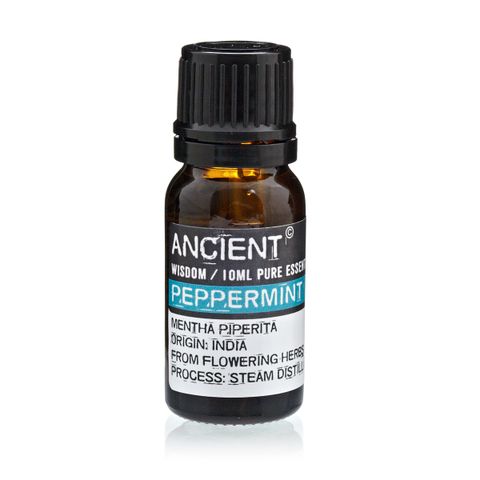
Name: Peppermint Essential Oil
Latin Name : Mentha Piperita.
Part Of Plant Used : Flowering Herb.
Source : India.
Extraction Method : Steam Distillation.
Peppermint Essential Oil is traditionally valued for relieving conditions such as asthma, colic, fever, flatulence, headaches, nausea, chest congestion, and vertigo. Its menthol content provides a refreshing and invigorating effect, making it beneficial for combating mental fatigue and depression. This oil supports skin health and is commonly included in lotions to soothe sunburn, irritation, and inflammation. Additionally, it promotes oral hygiene by combating bad breath and gum infections when used in mouthwashes. When diffused, it offers therapeutic benefits while repelling mosquitoes and other insects.
Peppermint, originally from the Mediterranean, is now cultivated across Europe, America, and Asia. Its use dates back to ancient civilizations like Egypt, Greece, Rome, China, and Japan. Greek mythology tells of the nymph Mentha, transformed into the mint plant by Persephone’s jealousy. Historically, Pliny noted that Greeks and Romans adorned themselves with peppermint during celebrations. For centuries, England has embraced peppermint for its medicinal benefits. Experience the timeless tradition and natural power of peppermint in your daily routine.
You can Click, Tap or Scan the QR code below. It will automatically add a discount code for you to get a discount on your first purchase, of any of our essential oil 10ml bottles. Terms and Conditions apply.


- Solid Shampoo vs Liquid Shampoo: Which Is Better for Your Hair and the Environment?
 Switch to a more sustainable hair care routine with our premium solid shampoo bars , designed to cleanse, nourish, and protect your hair—without the waste of tr… Our solid shampoos are carefully crafted using… Read more: Solid Shampoo vs Liquid Shampoo: Which Is Better for Your Hair and the Environment?
 - Basil Essential Oil: The Clarifying Oil for Focus, Fatigue, and Muscle Relief
 Basil essential oil is one of the most underrated oils in aromatherapy. While it is universally recognised as a culinary herb, its essential oil has a distinct … Basil essential oil is steam-distilled from… Read more: Basil Essential Oil: The Clarifying Oil for Focus, Fatigue, and Muscle Relief
 - Lavender Essential Oil: The Complete Guide
 Lavender is where most people begin their aromatherapy journey — and for good reason. It is the most researched, most versatile, and most widely used essential … Lavender essential oil is steam-distilled from the… Read more: Lavender Essential Oil: The Complete Guide
 - Fennel Essential Oil: The Digestive Oil for Bloating, Hormones, and Detox
 Fennel has been used medicinally for thousands of years — by the ancient Egyptians, Greeks, Romans, and Chinese — primarily for its remarkable digestive propert… Fennel essential oil is steam-distilled from the crushed seeds… Read more: Fennel Essential Oil: The Digestive Oil for Bloating, Hormones, and Detox
 - Patchouli Essential Oil: The Earthy Oil for Grounding, Skin, and Sensuality
 Few essential oils provoke as strong a reaction as patchouli. Its deep, earthy, slightly sweet scent is immediately recognisable — and deeply divisive. Those wh… Patchouli essential oil is steam-distilled from the dried, fermented… Read more: Patchouli Essential Oil: The Earthy Oil for Grounding, Skin, and Sensuality
 - Peppermint Essential Oil: Energise, Focus, and Refresh
 If lavender is the oil of calm, peppermint is the oil of clarity. Sharp, cool, and instantly recognisable, peppermint essential oil is one of the most effective… Peppermint essential oil is steam-distilled from the… Read more: Peppermint Essential Oil: Energise, Focus, and Refresh