
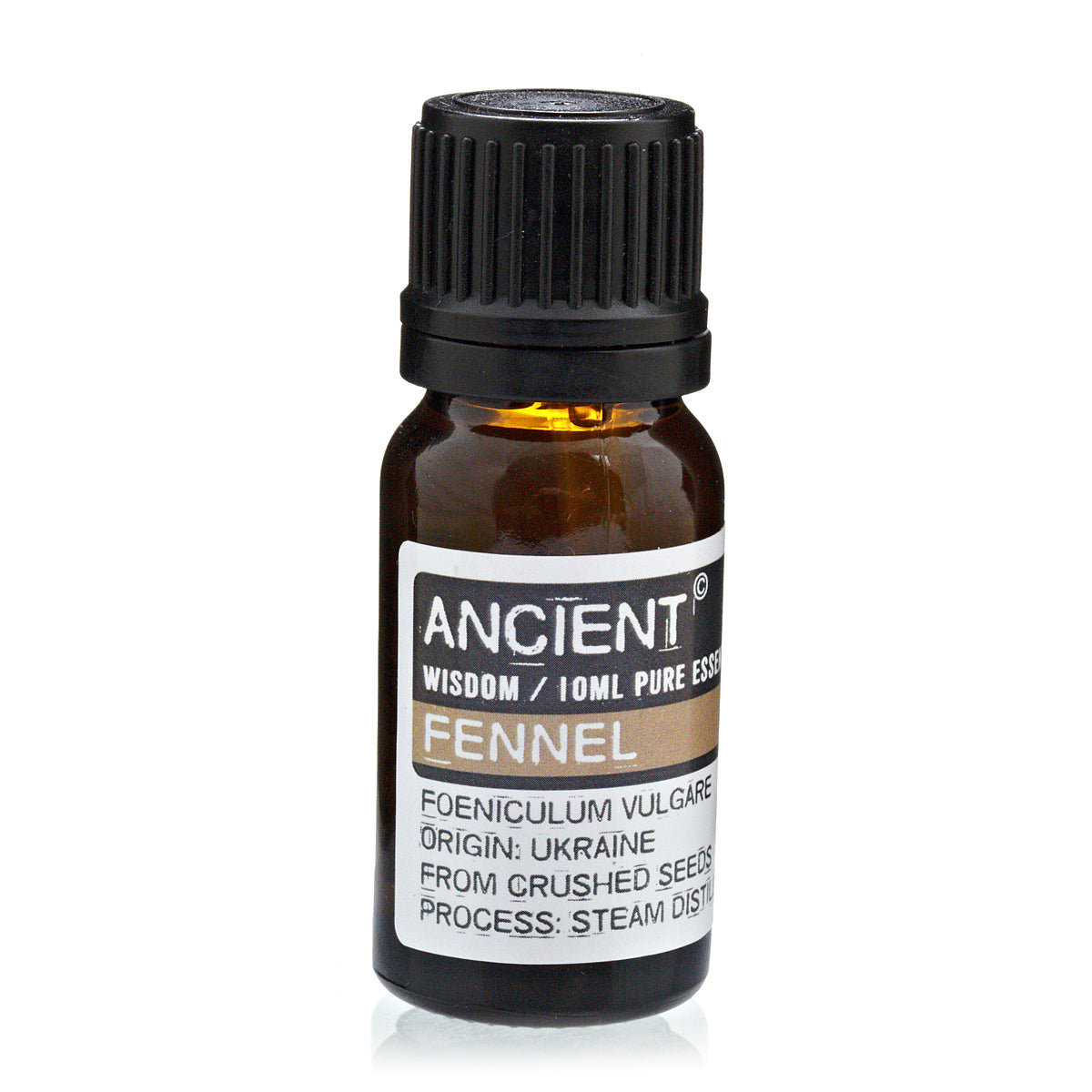
Latin Name : Foeniculum Vulgare.
Part Of Plant Used : Crushed Seeds.
Source : Ukraine.
Extraction Method : Steam Distillation.
Fennel Essential Oil is derived from the crushed seeds of Foeniculum vulgare var. dulce, commonly known as sweet or Roman fennel, through steam distillation. Like the seeds themselves, the oil is widely valued for its digestive benefits and a range of other traditional uses. In aromatherapy, it is often used to support oily or mature skin and is associated with promoting confidence, determination, and inner strength.
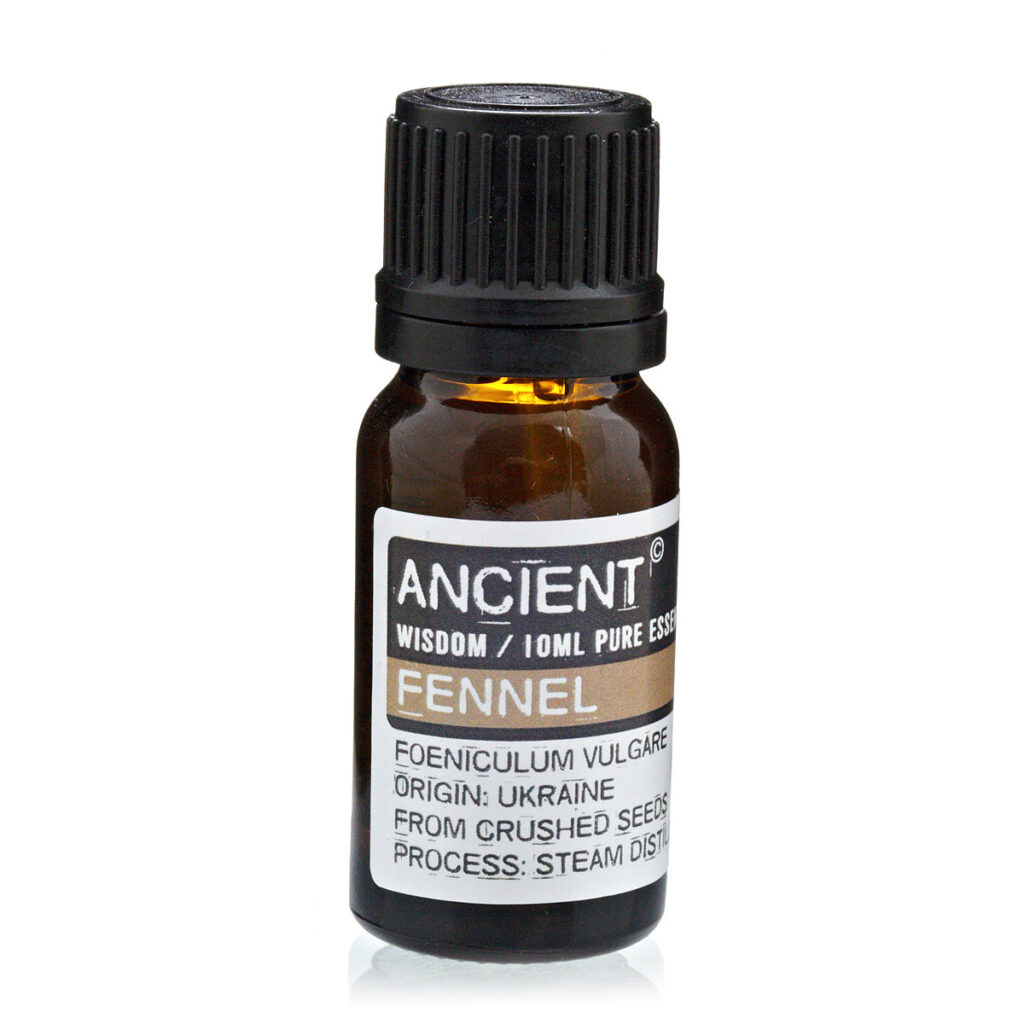
Traditionally, fennel oil has been used to help relieve digestive discomforts such as gas, constipation, colic, nausea, vomiting, poor appetite, and indigestion. It is also believed to support weight management by encouraging a feeling of fullness, while its mild diuretic properties are said to help reduce the appearance of cellulite. Additionally, the oil has been associated with toning the liver and spleen, cleansing and firming the skin, and helping ease bruising. However, fennel essential oil should be used sparingly and is not recommended during pregnancy or lactation, or for individuals with breast cancer or epilepsy.
The name “fennel” comes from the Latin word foenum, meaning “hay,” and during medieval times it was known as “fenkle.” The herb was highly regarded by ancient Chinese, Egyptian, and Roman cultures, who believed it promoted longevity, courage, and strength, and even protected against evil spirits. Fennel was also traditionally used to support eyesight, treat snakebites, and soothe colic. In India, fennel seeds—known as saunf—are commonly served plain, roasted, or sugar- or mint-coated after meals to aid digestion.
You can Click, Tap or Scan the QR code below. It will automatically add a discount code for you to get a discount on your first purchase, of any of our essential oil 10ml bottles. Terms and Conditions apply.

- Solid Shampoo vs Liquid Shampoo: Which Is Better for Your Hair and the Environment?
 Switch to a more sustainable hair care routine with our premium solid shampoo bars , designed to cleanse, nourish, and protect your hair—without the waste of tr… Our solid shampoos are carefully crafted using… Read more: Solid Shampoo vs Liquid Shampoo: Which Is Better for Your Hair and the Environment?
 - Basil Essential Oil: The Clarifying Oil for Focus, Fatigue, and Muscle Relief
 Basil essential oil is one of the most underrated oils in aromatherapy. While it is universally recognised as a culinary herb, its essential oil has a distinct … Basil essential oil is steam-distilled from… Read more: Basil Essential Oil: The Clarifying Oil for Focus, Fatigue, and Muscle Relief
 - Lavender Essential Oil: The Complete Guide
 Lavender is where most people begin their aromatherapy journey — and for good reason. It is the most researched, most versatile, and most widely used essential … Lavender essential oil is steam-distilled from the… Read more: Lavender Essential Oil: The Complete Guide
 - Fennel Essential Oil: The Digestive Oil for Bloating, Hormones, and Detox
 Fennel has been used medicinally for thousands of years — by the ancient Egyptians, Greeks, Romans, and Chinese — primarily for its remarkable digestive propert… Fennel essential oil is steam-distilled from the crushed seeds… Read more: Fennel Essential Oil: The Digestive Oil for Bloating, Hormones, and Detox
 - Patchouli Essential Oil: The Earthy Oil for Grounding, Skin, and Sensuality
 Few essential oils provoke as strong a reaction as patchouli. Its deep, earthy, slightly sweet scent is immediately recognisable — and deeply divisive. Those wh… Patchouli essential oil is steam-distilled from the dried, fermented… Read more: Patchouli Essential Oil: The Earthy Oil for Grounding, Skin, and Sensuality
 - Peppermint Essential Oil: Energise, Focus, and Refresh
 If lavender is the oil of calm, peppermint is the oil of clarity. Sharp, cool, and instantly recognisable, peppermint essential oil is one of the most effective… Peppermint essential oil is steam-distilled from the… Read more: Peppermint Essential Oil: Energise, Focus, and Refresh
Fantastic info, thanks.
Really helpful guide, thank you — looking forward to more like this!