
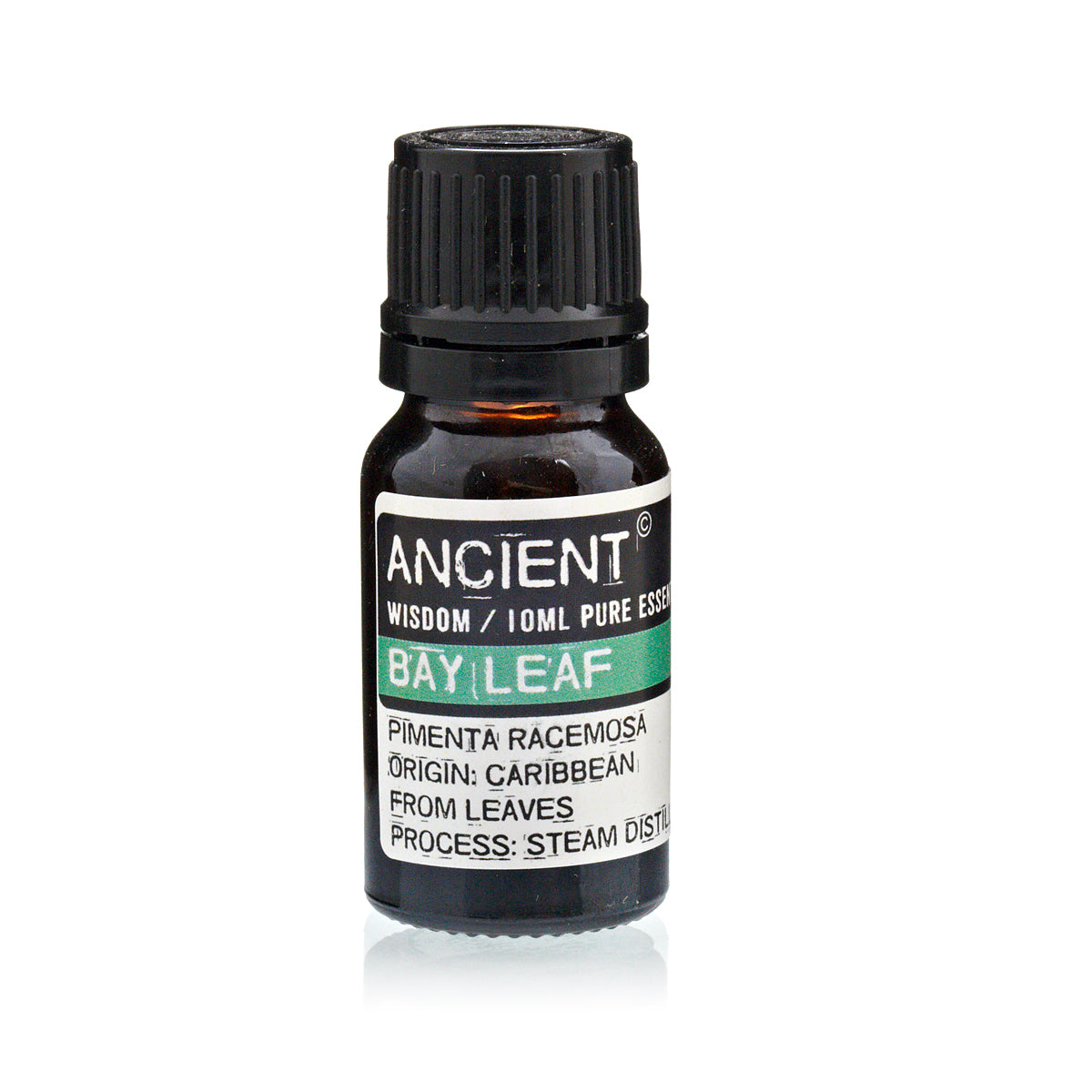
Bay Leaf Essential Oil offers a bright, herbaceous aroma with a gently spicy edge that feels tidy, comforting, and quietly invigorating. This long‑form guide keeps things practical: clear aroma notes, easy diffuser recipes, room ideas, and friendly safety guidance in plain UK English—no hype, no medical claims, just calm, confident use at home.
Quick facts
- Latin name: Laurus nobilis
- Plant part: Leaves
- Extraction: Steam distillation
- Character: Fresh, green, lightly spicy, clean
- Typical use: Kitchen‑fresh ambience, focus, tidy evening blends
Aroma profile
Bay Leaf reads as green and aromatic with a soft camphoraceous lift—think freshly crushed leaves, clean spice, and a rounded, kitchen‑garden warmth. It brings clarity and definition to blends without shouting. In the air it feels composed and quietly confident, ideal for tidy, welcoming rooms.
- Overall: Green‑herbal, gently spicy, composed
- Top: Crisp green lift
- Heart: Herbal spice with soft warmth
- Base: Clean, tidy finish
How to use (ambience)
Diffuser basics: Start with 2–3 drops in a 200–300 ml diffuser. Run for 20–30 minutes, then reassess. Bay Leaf can dominate if overused; aim for balance and ease.
- Fresh kitchen tidy‑up: 2 Bay Leaf + 2 Lemon + 1 Cedarwood
- Sunday reset: 2 Bay Leaf + 2 Orange + 1 Frankincense
- Focused study: 2 Bay Leaf + 1 Rosemary + 1 Grapefruit
- Guest‑ready living room: 2 Bay Leaf + 2 Bergamot + 1 Lavender
Personal fragrance (dilute): Make a pulse‑point roll‑on at 1–2% in a skin‑friendly carrier (e.g., jojoba). Keep it light—Bay Leaf is vivid; one swipe is enough.
Linen & space: For a DIY room mist, combine distilled water + a little solubiliser + a few drops of Bay Leaf with Lemon or Petitgrain. Spray from a distance and patch test fabrics.
Blends well with
- Bright lift: Lemon, Orange, Grapefruit
- Grounded warmth: Cedarwood, Frankincense, Vetiver
- Herbal clarity: Rosemary, Clary Sage
- Soft balance: Lavender, Petitgrain
Room ideas
Kitchen & dining: A tidy, fresh backdrop after cooking—Bay Leaf + Lemon + Cedarwood reads clean and welcoming.
Home office: Use a light blend (Bay Leaf + Grapefruit + Rosemary) to add clarity without distraction.
Hallway: Pair Bay Leaf with Orange for a friendly, guest‑ready first impression.
Safety & dilution
For external use only. Always dilute before skin application (1–2% is a common DIY topical range) and patch test first. Avoid contact with eyes and sensitive areas. Keep out of reach of children and pets. If pregnant, nursing, or under medical care, consult a professional. Store tightly capped, away from heat and light. We describe ambience and mood rather than medical uses.
Quick shop via QR

Deeper blending ideas
For a luminous, tidy daytime blend, keep Bay Leaf at a supporting level and let bright citruses lead. A simple trio—Bay Leaf, Lemon, and Grapefruit—reads fresh without feeling sharp. In cooler months, trade Grapefruit for Orange and add a touch of Cedarwood for warmth. If you enjoy cosy, library‑like spaces, anchor Bay Leaf with Frankincense and a hint of Vetiver; the result feels grounded, calm, and quietly sophisticated.
When pairing with florals, choose Lavender or Petitgrain to soften edges. Lavender rounds the spice and adds evening ease, while Petitgrain lends a crisp, tidy backbone. Avoid crowding the blend—three oils are plenty for a clear, elegant result.
Sourcing & quality notes
Essential oils vary by origin, harvest, and distillation. Bay Leaf typically shows a greener profile when leaves are distilled fresh and a warmer, spicier hue when older, drier material is used. Storage also matters: oxygen, heat, and light can dull brightness over time. Keep bottles tightly capped and away from sunlight to preserve that clean, herbal lift.
Storage & shelf life
Store tightly closed in a cool, dark place. Many users refresh their working bottle yearly to keep the aroma lively. If the scent smells flat or tired, it may be time to replace. Always label DIY blends with dates and percentages so you can remake favourites consistently.
FAQ
- Is Bay Leaf the same as Bay Laurel? In everyday use the names are used interchangeably; we list the Latin name so you can compare like‑for‑like across brands.
- Can I cook with essential oils? We recommend enjoying them for ambience and personal fragrance only. Do not ingest essential oils.
- Can I use it on skin? Always dilute and patch test; many people prefer Bay Leaf for ambience rather than topical use due to its vivid character.
More ways to use
Open‑window refresh: On breezy days, diffuse Bay Leaf with Lemon at very low strength near an open window. The air turnover carries the aroma lightly through the space for a clean, effortless feel.
After‑dinner reset: A couple of drops of Bay Leaf with Orange helps clear cooking smells and signals an easy wind‑down. Keep concentrations modest so the blend feels like fresh air rather than a strong perfume.
Entryway calm: Bay Leaf plus Cedarwood gives a reassuring, composed first impression—welcoming without being sweet. It suits smaller diffusers set on low‑intensity cycles.
Scent styling tips
- Keep it simple: Two or three oils usually smell clearer and more elegant than complex mixes.
- Mind the ratio: Let citrus lead for daylight; let woods lead for evening. Keep Bay Leaf in a supporting role.
- Test in short runs: Run for 20–30 minutes, pause, and check. Your nose re‑tunes quickly—short cycles help you hit the right level.
What Bay Leaf is not
Bay Leaf isn’t sugary or perfumey; it’s green, tidy, and quietly spicy. If you want something plusher, steer toward Rose Geranium or Sandalwood. If you want sharper freshness, try Eucalyptus or Peppermint. Bay Leaf sits in the middle—fresh, composed, and versatile.
Troubleshooting blends
- Too sharp? Add 1 drop of Orange or a touch of Lavender.
- Too flat? Add 1 drop of Lemon or Grapefruit for lift.
- Too woody? Reduce Cedarwood by one drop and increase citrus.
Sustainability notes
Responsible sourcing and careful batch selection help maintain a consistent aroma year‑to‑year. We support practical, transparent quality standards and encourage mindful use—small amounts, used well, go a long way.
- Solid Shampoo vs Liquid Shampoo: Which Is Better for Your Hair and the Environment?
 Switch to a more sustainable hair care routine with our premium solid shampoo bars , designed to cleanse, nourish, and protect your hair—without the waste of tr… Our solid shampoos are carefully crafted using… Read more: Solid Shampoo vs Liquid Shampoo: Which Is Better for Your Hair and the Environment?
 - Basil Essential Oil: The Clarifying Oil for Focus, Fatigue, and Muscle Relief
 Basil essential oil is one of the most underrated oils in aromatherapy. While it is universally recognised as a culinary herb, its essential oil has a distinct … Basil essential oil is steam-distilled from… Read more: Basil Essential Oil: The Clarifying Oil for Focus, Fatigue, and Muscle Relief
 - Lavender Essential Oil: The Complete Guide
 Lavender is where most people begin their aromatherapy journey — and for good reason. It is the most researched, most versatile, and most widely used essential … Lavender essential oil is steam-distilled from the… Read more: Lavender Essential Oil: The Complete Guide
 - Fennel Essential Oil: The Digestive Oil for Bloating, Hormones, and Detox
 Fennel has been used medicinally for thousands of years — by the ancient Egyptians, Greeks, Romans, and Chinese — primarily for its remarkable digestive propert… Fennel essential oil is steam-distilled from the crushed seeds… Read more: Fennel Essential Oil: The Digestive Oil for Bloating, Hormones, and Detox
 - Patchouli Essential Oil: The Earthy Oil for Grounding, Skin, and Sensuality
 Few essential oils provoke as strong a reaction as patchouli. Its deep, earthy, slightly sweet scent is immediately recognisable — and deeply divisive. Those wh… Patchouli essential oil is steam-distilled from the dried, fermented… Read more: Patchouli Essential Oil: The Earthy Oil for Grounding, Skin, and Sensuality
 - Peppermint Essential Oil: Energise, Focus, and Refresh
 If lavender is the oil of calm, peppermint is the oil of clarity. Sharp, cool, and instantly recognisable, peppermint essential oil is one of the most effective… Peppermint essential oil is steam-distilled from the… Read more: Peppermint Essential Oil: Energise, Focus, and Refresh
Really helpful guide, thank you — looking forward to more like this!