
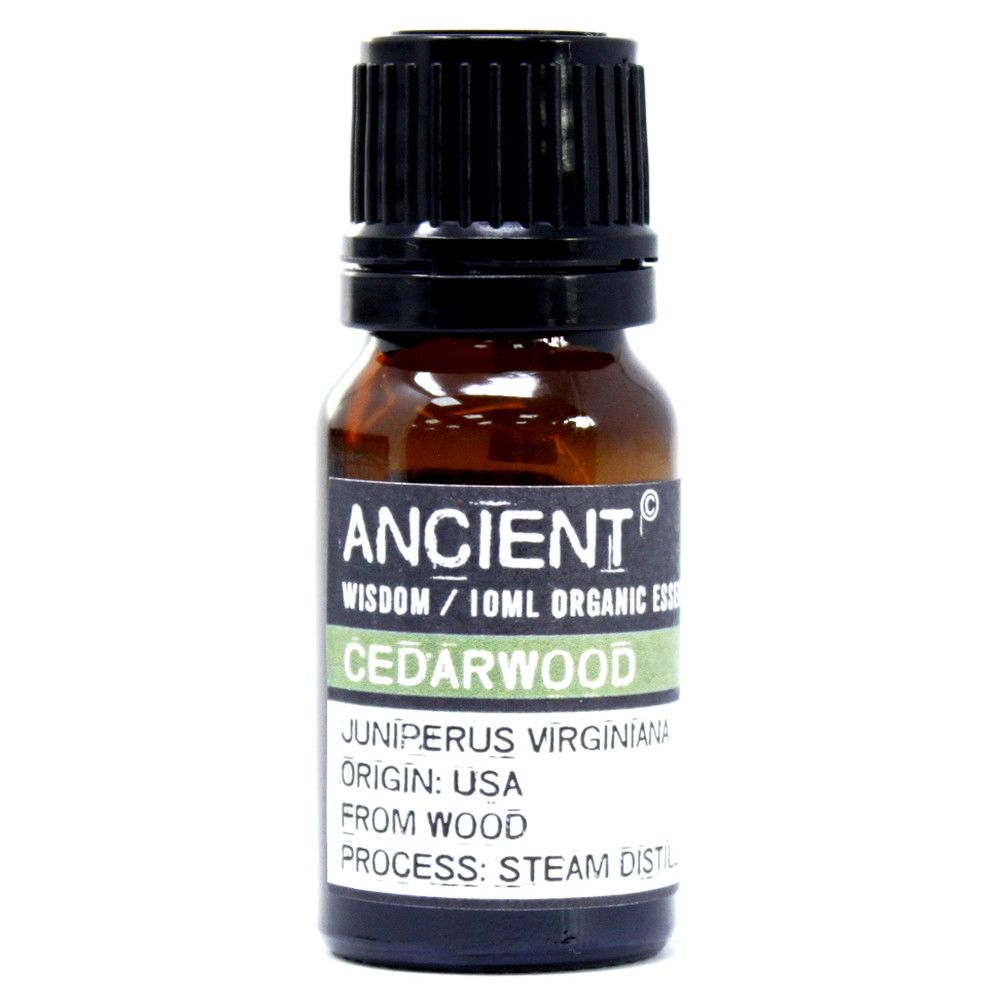
Cedarwood Virginian Essential Oil (Juniperus virginiana) is a warm, dry, softly smoky wood note that brings instant calm and a grounded feel to a room. Steam‑distilled from the heartwood of the Eastern Red Cedar, this classic American aroma has been loved for generations for its steadying presence in evening blends, soothing massage oils, and natural home care.
Aroma and character
The scent opens dry and woody with pencil‑shavings brightness, then settles into a smooth, resin‑tinged base. Compared with Atlas or Himalayan cedarwood, Virginian cedarwood is a touch lighter and cleaner, which makes it an easy base note for everyday diffusion and a reliable fixative in bespoke blends. You’ll notice its profile sits comfortably beneath brighter top notes without overwhelming them, which is why it’s so often described as a “quiet anchor” for a fragrance or blend.
Where it comes from
Our oil is distilled from sustainably harvested heartwood of Juniperus virginiana in the USA. Steam distillation draws out the aromatic fractions while leaving behind heavier resins, giving you a clear, pourable oil that blends beautifully with citruses, conifers, florals, and spices. Each batch is evaluated for aroma, clarity, and typical compositional markers. Virginian cedarwood is naturally rich in cedrenes and cedrol, the molecules that contribute to its steadying, woody depth.
Why people reach for Virginian cedarwood
- Grounding ambience: a centring backdrop for unwinding routines, reading nooks, and focused work sessions.
- Gentle skin support in low dilutions: often chosen for simple, comforting body oils where a soft woody note is preferred over sweetness.
- Blend stabiliser: acts as a mild fixative so brighter top notes linger longer in the air.
How to use
Diffuser (evening or study): Add 4–6 drops to 100 ml water. Try these quick blends:
- Fireside Calm: 3 drops Cedarwood Virginian + 2 drops Sweet Orange + 1 drop Clary Sage.
- Fresh Cabin: 3 Cedarwood + 2 Scotch Pine + 1 Lemon.
- Soft Focus: 2 Cedarwood + 2 Bergamot + 1 Lavender.
Massage/body oil (1–2%): 3–6 drops total essential oil per 10 ml carrier. Jojoba or Sweet Almond both pair well. Keep to the low end for daily use and patch test first.
Bath: Dilute 3–4 drops in a tablespoon of carrier oil or unscented bath base before adding to warm water. Avoid adding neat oils directly to the tub.
Linen/room spray: 10–20 drops total essential oil in 100 ml distilled water plus a splash of neutral alcohol or solubiliser. Shake before each use; mist fabrics lightly from a distance.
Blending companions
- Citrus: Sweet Orange, Bergamot, Grapefruit — lifts and brightens the wood for daytime diffusion.
- Conifers: Pine, Cypress, Black Spruce — brings an outdoorsy, fresh‑air vibe.
- Florals: Lavender, Geranium — softens edges for bedtime blends.
- Spice/resin: Cardamom, Frankincense — cosy, meditative accords.
Quality and care
- Botanical name: Juniperus virginiana
- Plant part: Heartwood
- Extraction: Steam distillation
- Origin: USA
- Appearance: Clear to pale yellow liquid
- Aroma: Dry, woody, softly smoky; medium strength; base‑note behaviour
Safety notes
- For external aromatherapy use only; do not ingest.
- Always dilute for skin application (1–2% is typical; patch test first).
- Avoid contact with eyes and mucous membranes.
- Keep away from children and pets. Cats in particular may be sensitive to essential oil vapours; ventilate well and allow them an oil‑free space.
- If pregnant, nursing, or under medical care, consult a professional before use.
Why this 10 ml size?
Ten millilitres is ideal for regular diffusion and small batch blending without the oil sitting too long on the shelf. Store tightly capped in a cool, dark place and enjoy the warm, comfortable cedar profile month after month.
Buy with our site‑wide offer
Tap below to view the full product page and current stock, or scan the QR code to open the product on your phone.
Open: Cedarwood Virginian Essential Oil – 10 ml


- Solid Shampoo vs Liquid Shampoo: Which Is Better for Your Hair and the Environment?
 Switch to a more sustainable hair care routine with our premium solid shampoo bars , designed to cleanse, nourish, and protect your hair—without the waste of tr… Our solid shampoos are carefully crafted using… Read more: Solid Shampoo vs Liquid Shampoo: Which Is Better for Your Hair and the Environment?
 - Basil Essential Oil: The Clarifying Oil for Focus, Fatigue, and Muscle Relief
 Basil essential oil is one of the most underrated oils in aromatherapy. While it is universally recognised as a culinary herb, its essential oil has a distinct … Basil essential oil is steam-distilled from… Read more: Basil Essential Oil: The Clarifying Oil for Focus, Fatigue, and Muscle Relief
 - Lavender Essential Oil: The Complete Guide
 Lavender is where most people begin their aromatherapy journey — and for good reason. It is the most researched, most versatile, and most widely used essential … Lavender essential oil is steam-distilled from the… Read more: Lavender Essential Oil: The Complete Guide
 - Fennel Essential Oil: The Digestive Oil for Bloating, Hormones, and Detox
 Fennel has been used medicinally for thousands of years — by the ancient Egyptians, Greeks, Romans, and Chinese — primarily for its remarkable digestive propert… Fennel essential oil is steam-distilled from the crushed seeds… Read more: Fennel Essential Oil: The Digestive Oil for Bloating, Hormones, and Detox
 - Patchouli Essential Oil: The Earthy Oil for Grounding, Skin, and Sensuality
 Few essential oils provoke as strong a reaction as patchouli. Its deep, earthy, slightly sweet scent is immediately recognisable — and deeply divisive. Those wh… Patchouli essential oil is steam-distilled from the dried, fermented… Read more: Patchouli Essential Oil: The Earthy Oil for Grounding, Skin, and Sensuality
 - Peppermint Essential Oil: Energise, Focus, and Refresh
 If lavender is the oil of calm, peppermint is the oil of clarity. Sharp, cool, and instantly recognisable, peppermint essential oil is one of the most effective… Peppermint essential oil is steam-distilled from the… Read more: Peppermint Essential Oil: Energise, Focus, and Refresh