
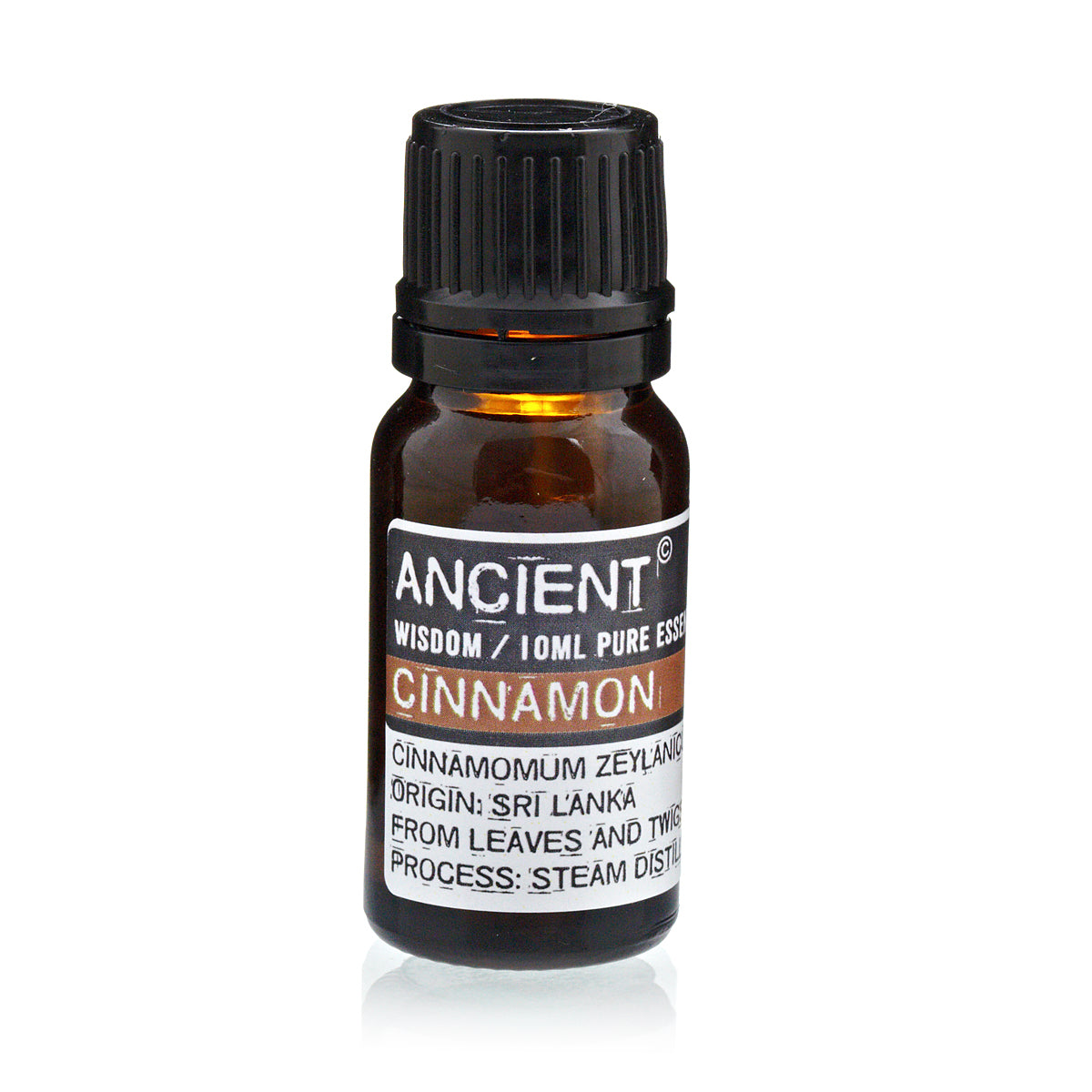
Cinnamon Essential Oil is extracted by steam distillation from the Cinnamomum zeylanicum tree, also called Ceylon cinnamon or true cinnamon.
Latin Name : Cinnamomum Zeylanicum.
Part Of Plant Used : Leaves & Twigs
Source : Sri Lanka.
Extraction Method : Steam Distillation.
There are two kinds of essential oils extracted: one from the leaves, which is gentler, yellow to light brown, and most often used in aromatherapy; and the other from the bark, which is darker brown and not commonly preferred in aromatherapy.
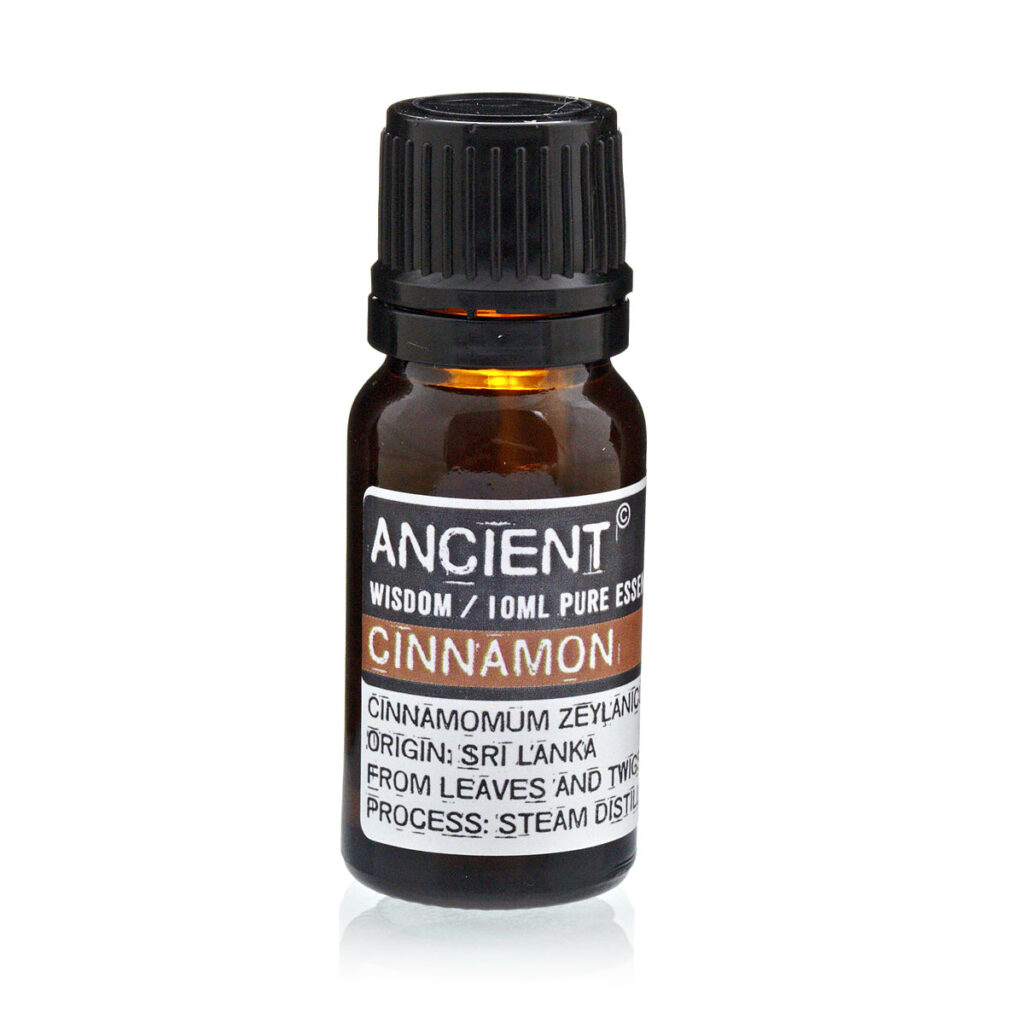
Cinnamon oil is a calming one with powerful antiseptic properties. When used in an oil burner, this oil is said to help colds and bronchitis, and lift depression. It’s used to assist with bronchitis, diarrhoea, chills, infections, flu, rheumatism, and arthritis when used in bath water or blended into a massage oil. It eases nausea and vomiting.
Cinnamon Essential Oil
Furthermore, it stimulates the glandular system and therefore reduces menstrual pain. Avoid the leaf oil during pregnancy. The bark oil is very strong and should only be used diluted, under expert supervision. The cinnamon tree is native to the Indian subcontinent and has been an important item of trade for centuries between India, China, and Egypt. The source of cinnamon was a mystery to the Western world for the longest time.
According to Herodotus and other authors, Arabia was the source of cinnamon. The story goes that giant Cinnamon birds collected cinnamon sticks for their nests from a mysterious place where cinnamon trees grew. The Arabs then tricked the birds and got the cinnamon from them. This was the belief up to 1310 in Byzantium.
You can Click, Tap or Scan the QR code below. It will automatically add a discount code for you to get a discount on your first purchase, of any of our essential oil 10ml bottles. Terms and Conditions apply.

- Solid Shampoo vs Liquid Shampoo: Which Is Better for Your Hair and the Environment?
 Switch to a more sustainable hair care routine with our premium solid shampoo bars , designed to cleanse, nourish, and protect your hair—without the waste of tr… Our solid shampoos are carefully crafted using… Read more: Solid Shampoo vs Liquid Shampoo: Which Is Better for Your Hair and the Environment?
 - Basil Essential Oil: The Clarifying Oil for Focus, Fatigue, and Muscle Relief
 Basil essential oil is one of the most underrated oils in aromatherapy. While it is universally recognised as a culinary herb, its essential oil has a distinct … Basil essential oil is steam-distilled from… Read more: Basil Essential Oil: The Clarifying Oil for Focus, Fatigue, and Muscle Relief
 - Lavender Essential Oil: The Complete Guide
 Lavender is where most people begin their aromatherapy journey — and for good reason. It is the most researched, most versatile, and most widely used essential … Lavender essential oil is steam-distilled from the… Read more: Lavender Essential Oil: The Complete Guide
 - Fennel Essential Oil: The Digestive Oil for Bloating, Hormones, and Detox
 Fennel has been used medicinally for thousands of years — by the ancient Egyptians, Greeks, Romans, and Chinese — primarily for its remarkable digestive propert… Fennel essential oil is steam-distilled from the crushed seeds… Read more: Fennel Essential Oil: The Digestive Oil for Bloating, Hormones, and Detox
 - Patchouli Essential Oil: The Earthy Oil for Grounding, Skin, and Sensuality
 Few essential oils provoke as strong a reaction as patchouli. Its deep, earthy, slightly sweet scent is immediately recognisable — and deeply divisive. Those wh… Patchouli essential oil is steam-distilled from the dried, fermented… Read more: Patchouli Essential Oil: The Earthy Oil for Grounding, Skin, and Sensuality
 - Peppermint Essential Oil: Energise, Focus, and Refresh
 If lavender is the oil of calm, peppermint is the oil of clarity. Sharp, cool, and instantly recognisable, peppermint essential oil is one of the most effective… Peppermint essential oil is steam-distilled from the… Read more: Peppermint Essential Oil: Energise, Focus, and Refresh