
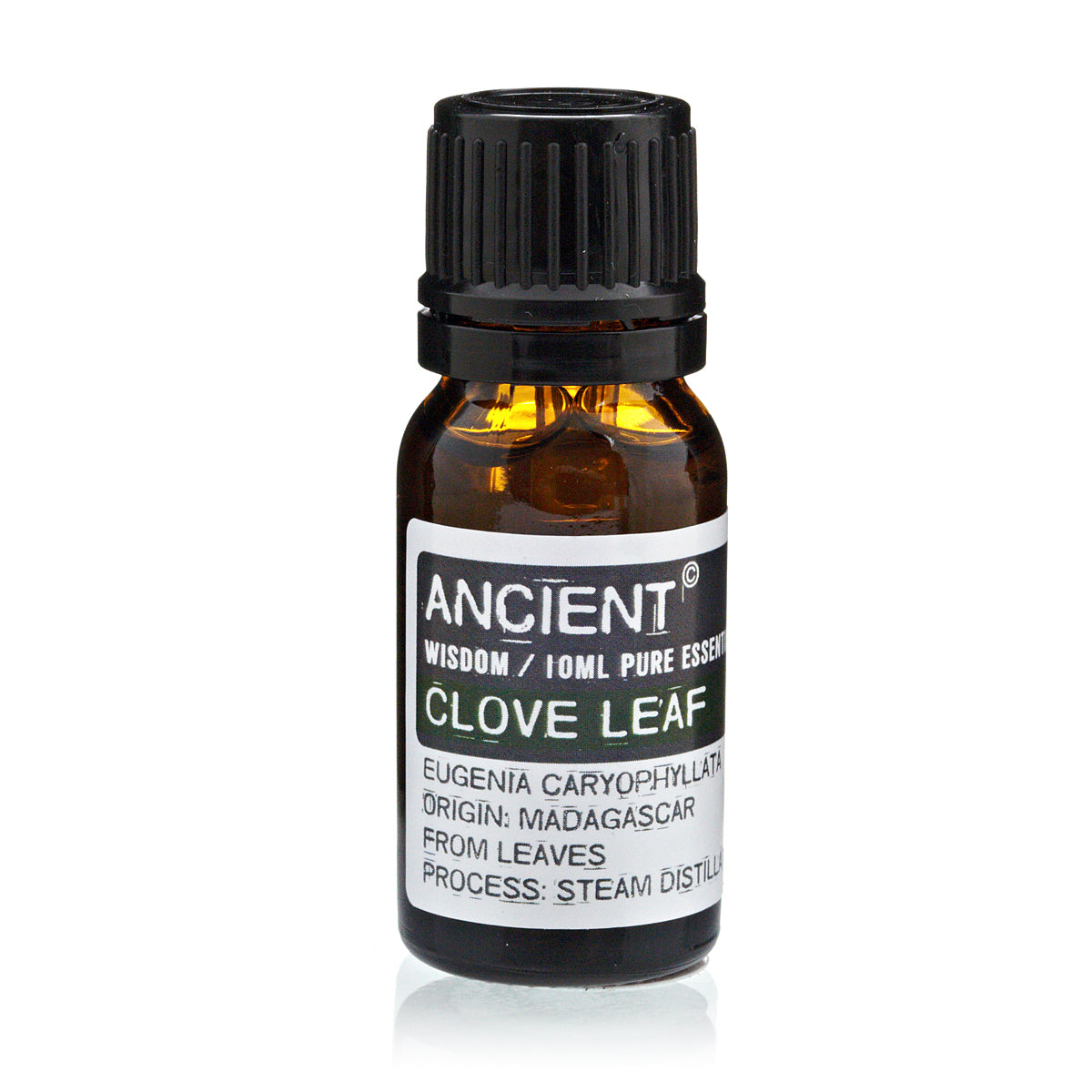
Clove Leaf Essential Oil
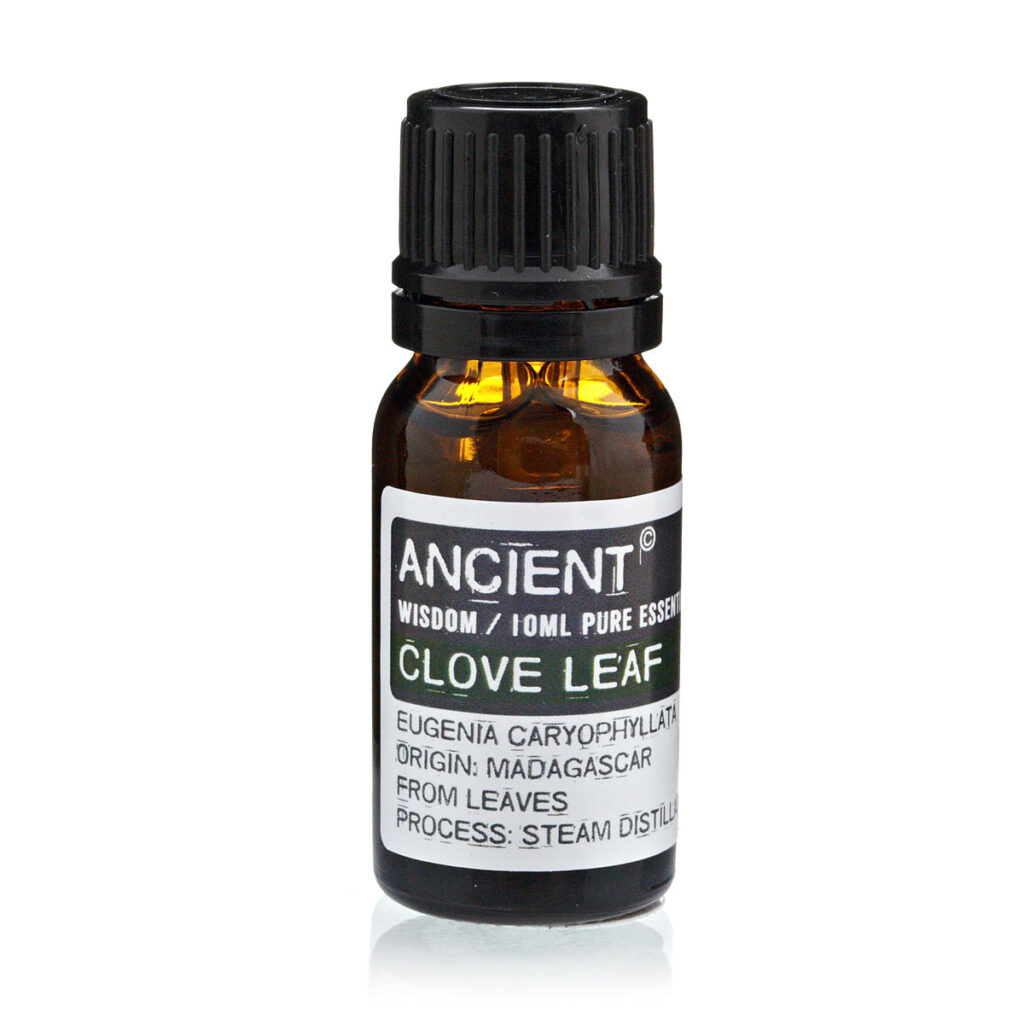
Latin Name : Eugenia Caryophyllata.
Part Of Plant Used : Leaves
Source : Madagascar.
Extraction Method : Steam Distillation.
Clove Leaf Essential Oil is most commonly obtained through steam distillation of the leaves, stems, and unopened flower buds of the Eugenia caryophyllata tree. This evergreen tree is native to Indonesia and the Malacca Islands, regions long known as the historical heartland of the global spice trade. The resulting oil is highly concentrated and powerful, characterized by a warm, intensely spicy, and penetrating aroma. Due to its strength, clove essential oil should always be used in very small amounts and properly diluted, especially in aromatherapy and topical applications.
Traditionally, clove oil has been valued for its soothing and restorative properties. When carefully diluted, it has been used to help calm acne, minor cuts, bruises, burns, leg sores, and other skin irritations. It is also well known for its warming effect, making it useful as a natural pain reliever for conditions such as rheumatism and arthritis. In addition, clove oil has a long-standing reputation for supporting digestive health, helping to ease discomfort related to nausea, vomiting, diarrhoea, flatulence, intestinal spasms, and certain parasites.
Clove essential oil is also associated with respiratory support and has been used to help relieve symptoms of bronchitis, asthma, coughs, and other breathing difficulties. In aromatherapy, its stimulating scent is believed to invigorate the mind, promote mental alertness, and help counter feelings of exhaustion and fatigue. At the same time, when used appropriately, it can encourage relaxation and may support more restful sleep for those experiencing occasional insomnia.
Clove Leaf Essential Oil
The use of cloves dates back thousands of years. In ancient India and China, cloves were highly prized for both culinary and medicinal purposes. Traditional Chinese medicine records their use in treating indigestion, diarrhoea, hernias, athlete’s foot, and various fungal infections. Cloves were also widely used for oral care, helping to soothe toothaches, heal mouth ulcers, and freshen breath—uses that continue today. Historically, cloves were among the first spices to be traded internationally, and Arab merchants are believed to have introduced them to Europe during the time of the Roman Empire, where they quickly became a symbol of both wealth and healing.
Today, clove essential oil remains valued for its versatility, rich history, and powerful properties, making it an enduring ingredient in natural wellness practices when used with care and respect for its potency.
You can Click, Tap or Scan the QR code below. It will automatically add a discount code for you to get a discount on your first purchase, of any of our essential oil 10ml bottles. Terms and Conditions apply.

- Solid Shampoo vs Liquid Shampoo: Which Is Better for Your Hair and the Environment?
 Switch to a more sustainable hair care routine with our premium solid shampoo bars , designed to cleanse, nourish, and protect your hair—without the waste of tr… Our solid shampoos are carefully crafted using… Read more: Solid Shampoo vs Liquid Shampoo: Which Is Better for Your Hair and the Environment?
 - Basil Essential Oil: The Clarifying Oil for Focus, Fatigue, and Muscle Relief
 Basil essential oil is one of the most underrated oils in aromatherapy. While it is universally recognised as a culinary herb, its essential oil has a distinct … Basil essential oil is steam-distilled from… Read more: Basil Essential Oil: The Clarifying Oil for Focus, Fatigue, and Muscle Relief
 - Lavender Essential Oil: The Complete Guide
 Lavender is where most people begin their aromatherapy journey — and for good reason. It is the most researched, most versatile, and most widely used essential … Lavender essential oil is steam-distilled from the… Read more: Lavender Essential Oil: The Complete Guide
 - Fennel Essential Oil: The Digestive Oil for Bloating, Hormones, and Detox
 Fennel has been used medicinally for thousands of years — by the ancient Egyptians, Greeks, Romans, and Chinese — primarily for its remarkable digestive propert… Fennel essential oil is steam-distilled from the crushed seeds… Read more: Fennel Essential Oil: The Digestive Oil for Bloating, Hormones, and Detox
 - Patchouli Essential Oil: The Earthy Oil for Grounding, Skin, and Sensuality
 Few essential oils provoke as strong a reaction as patchouli. Its deep, earthy, slightly sweet scent is immediately recognisable — and deeply divisive. Those wh… Patchouli essential oil is steam-distilled from the dried, fermented… Read more: Patchouli Essential Oil: The Earthy Oil for Grounding, Skin, and Sensuality
 - Peppermint Essential Oil: Energise, Focus, and Refresh
 If lavender is the oil of calm, peppermint is the oil of clarity. Sharp, cool, and instantly recognisable, peppermint essential oil is one of the most effective… Peppermint essential oil is steam-distilled from the… Read more: Peppermint Essential Oil: Energise, Focus, and Refresh
Clove leaf essential oil has a warming, numbing aroma often used in aromatic blends. For any oral discomfort, speak to a professional.