
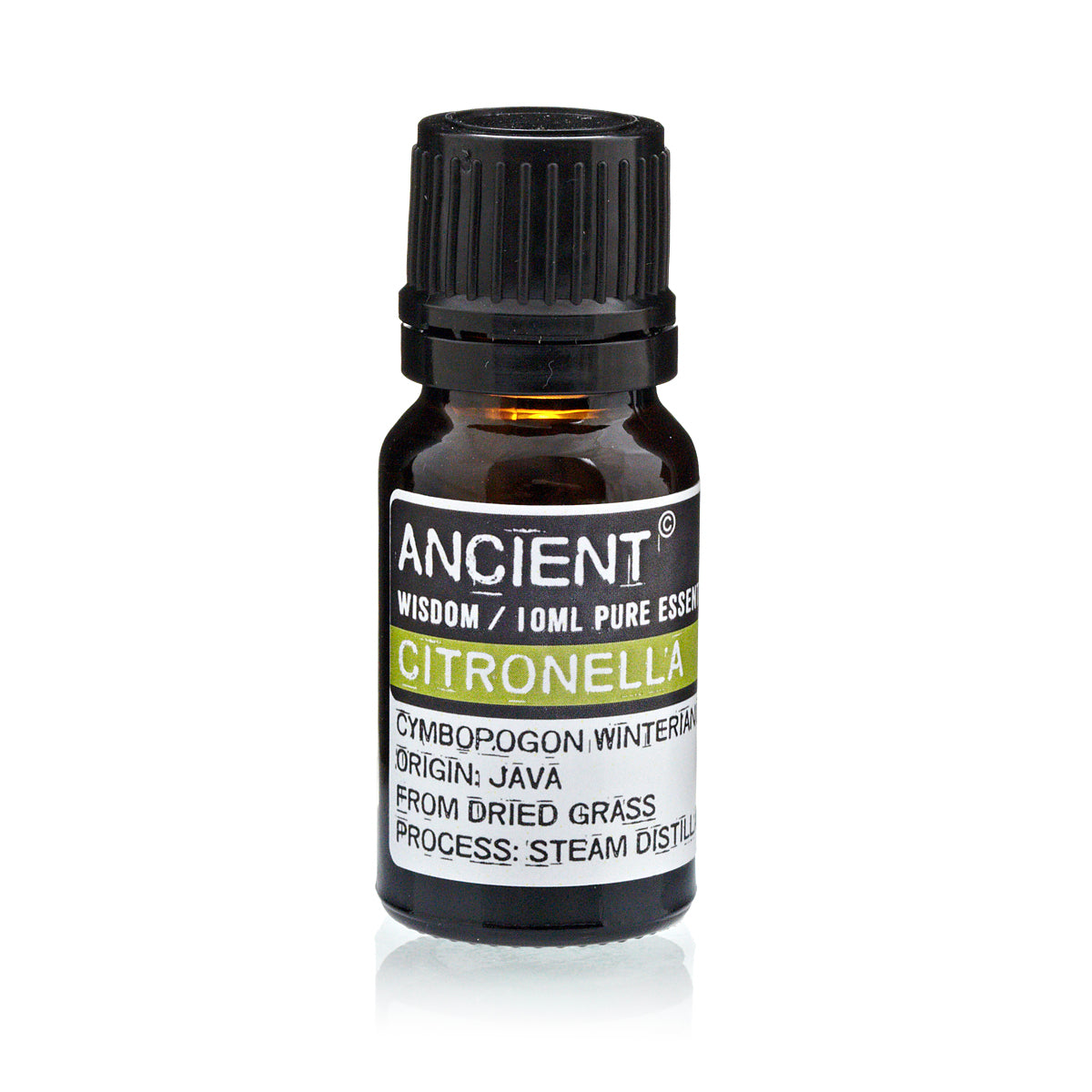
Latin Name : Cymbopogon Nardus.
Part Of Plant Used : Dried Grass
Source : Java.
Extraction Method : Steam Distillation.
Citronella essential oil is a natural aromatic oil obtained through steam distillation of the leaves and stems of plants belonging to the Cymbopogon genus, most notably Cymbopogon nardus. This tall, hardy grass thrives in warm, tropical climates and has been valued for centuries for its strong, fresh, lemon-like aroma and wide range of practical uses. Among essential oils, citronella is best known for its role as a plant-based insect repellent, but its benefits extend well beyond this single purpose.
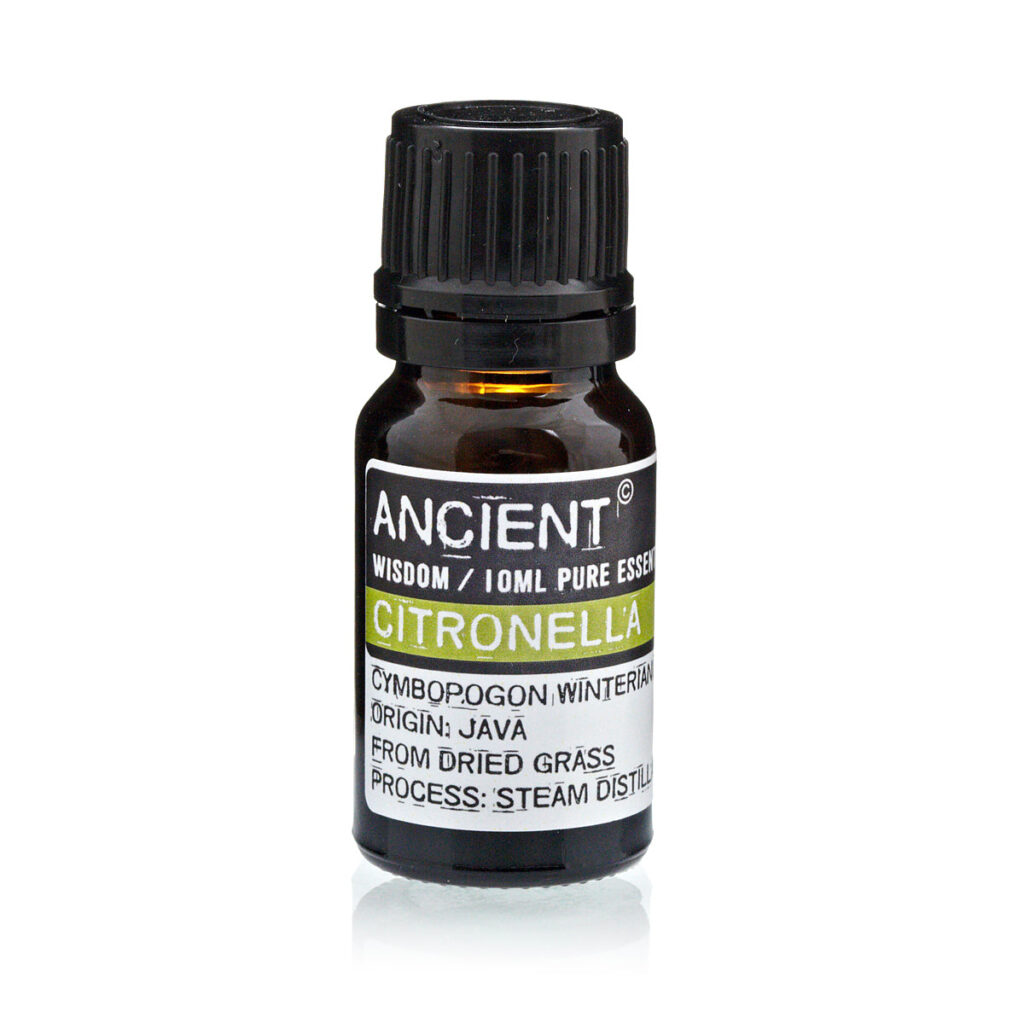
One of the most significant qualities of citronella essential oil is its effectiveness as a natural insect deterrent. It functions as a bio-pesticide with a non-toxic mode of action, meaning it repels insects without relying on harsh synthetic chemicals. Because of this, it has been widely used in candles, sprays, lotions, and diffusers designed to discourage mosquitoes and other insects. In recognition of its safety and effectiveness, citronella oil has been officially registered for use as an insect repellent in the United States since 1948. Today, it remains one of the most popular natural alternatives to chemical repellents worldwide.
The global production of citronella essential oil is concentrated mainly in Indonesia and China. Together, these two countries account for roughly 40 percent of the world’s total citronella oil supply. Their climates are ideal for growing Cymbopogon grasses, and large-scale cultivation and distillation have made these regions central to the essential oil industry. Smaller amounts are also produced in other parts of Asia and tropical regions, but Indonesia and China remain the dominant producers.
Beyond its insect-repelling properties, citronella essential oil is valued in skincare and personal care. It is commonly used to help manage excessive perspiration and is particularly beneficial for people with oily skin or hair. Its natural deodorizing properties make it useful in products designed to neutralize odours rather than simply mask them. When diluted and applied appropriately, it can leave the skin feeling refreshed and cleansed, with a light, uplifting scent.
Citronella oil has also been traditionally associated with soothing physical discomfort. It is often mentioned in connection with relief from aches and pains related to rheumatism and arthritis. Additionally, it has been used to support the body during seasonal illnesses, such as colds and flu, and to help resist minor infections. While these traditional uses come from long-standing practices, citronella continues to be appreciated today for its refreshing and cleansing qualities.
In the realm of digestive health, citronella essential oil has historically been used to support the digestive system. It has been associated with helping soothe conditions such as colitis and intestinal infections, as well as assisting in the removal of intestinal parasites. These traditional applications highlight the oil’s reputation as a purifying and balancing agent within the body. It has also been used to help ease menstrual cramps and discomfort, and it is said to stimulate circulation by gently increasing heart rate.
When used in aromatherapy, citronella essential oil offers benefits that go beyond physical well-being. Diffused in a vaporizer, it is known to help dispel fatigue, ease headaches, and reduce neuralgia-related discomfort. Its bright, citrus-like aroma is often described as energizing and mood-lifting, helping to create an atmosphere of cheerfulness, clarity, and optimism. For this reason, citronella is frequently included in blends designed to promote alertness and emotional balance.
Despite its many uses, citronella essential oil should be handled with care. It is not intended for internal consumption, and its use is generally discouraged during pregnancy and for children under the age of three. As with many essential oils, proper dilution and mindful use are important to ensure safety.
The history of citronella oil is deeply rooted in ancient civilizations. In regions such as India, Egypt, and other parts of the world where Cymbopogon grasses grew naturally, people discovered early on that these plants could help repel insects, particularly mosquitoes. This knowledge was not merely a convenience—it was essential for survival. Ancient communities often settled near rivers, lakes, and other water sources because these areas provided fertile land, food, and transportation routes. However, living near water also meant constant exposure to mosquitoes and other insects that carried disease.
At a time when medical knowledge and treatments were limited, insect-borne illnesses posed a serious threat to entire populations. The ability to repel mosquitoes could mean the difference between life and death. Burning the grasses, rubbing crushed leaves on the skin, or placing them around living areas became vital practices for protection. Over generations, this practical knowledge was passed down, forming the foundation for citronella’s continued use today.
From ancient riverbanks to modern homes, citronella essential oil has maintained its reputation as a powerful, natural ally. Its enduring popularity reflects both its effectiveness and its versatility, bridging traditional wisdom and contemporary applications in health, wellness, and everyday living.
You can Click, Tap or Scan the QR code below. It will automatically add a discount code for you to get a discount on your first purchase, of any of our essential oil 10ml bottles. Terms and Conditions apply.


- Solid Shampoo vs Liquid Shampoo: Which Is Better for Your Hair and the Environment?
 Switch to a more sustainable hair care routine with our premium solid shampoo bars , designed to cleanse, nourish, and protect your hair—without the waste of tr… Our solid shampoos are carefully crafted using… Read more: Solid Shampoo vs Liquid Shampoo: Which Is Better for Your Hair and the Environment?
 - Basil Essential Oil: The Clarifying Oil for Focus, Fatigue, and Muscle Relief
 Basil essential oil is one of the most underrated oils in aromatherapy. While it is universally recognised as a culinary herb, its essential oil has a distinct … Basil essential oil is steam-distilled from… Read more: Basil Essential Oil: The Clarifying Oil for Focus, Fatigue, and Muscle Relief
 - Lavender Essential Oil: The Complete Guide
 Lavender is where most people begin their aromatherapy journey — and for good reason. It is the most researched, most versatile, and most widely used essential … Lavender essential oil is steam-distilled from the… Read more: Lavender Essential Oil: The Complete Guide
 - Fennel Essential Oil: The Digestive Oil for Bloating, Hormones, and Detox
 Fennel has been used medicinally for thousands of years — by the ancient Egyptians, Greeks, Romans, and Chinese — primarily for its remarkable digestive propert… Fennel essential oil is steam-distilled from the crushed seeds… Read more: Fennel Essential Oil: The Digestive Oil for Bloating, Hormones, and Detox
 - Patchouli Essential Oil: The Earthy Oil for Grounding, Skin, and Sensuality
 Few essential oils provoke as strong a reaction as patchouli. Its deep, earthy, slightly sweet scent is immediately recognisable — and deeply divisive. Those wh… Patchouli essential oil is steam-distilled from the dried, fermented… Read more: Patchouli Essential Oil: The Earthy Oil for Grounding, Skin, and Sensuality
 - Peppermint Essential Oil: Energise, Focus, and Refresh
 If lavender is the oil of calm, peppermint is the oil of clarity. Sharp, cool, and instantly recognisable, peppermint essential oil is one of the most effective… Peppermint essential oil is steam-distilled from the… Read more: Peppermint Essential Oil: Energise, Focus, and Refresh
Hey everyone, I recently checked out vivid aromas shop and wanted to share my thoughts. They have a good selection of different essential oils and other bits and bobs, it’s really good.
Citronella essential oil has a fresh, citrusy scent that instantly uplifts the mood and refreshes any space.
It’s also a natural go-to for keeping insects away while creating a clean, calming atmosphere.