
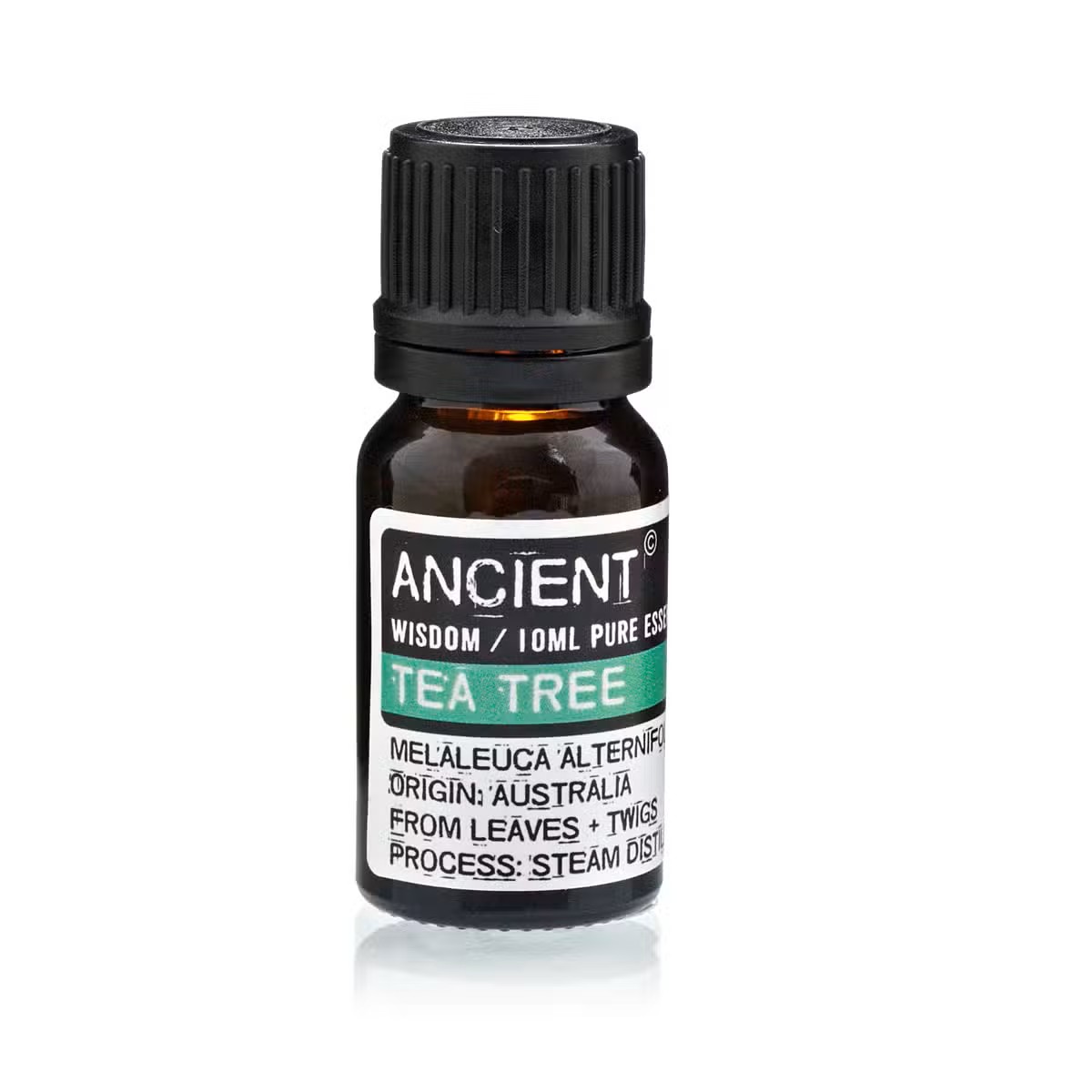
Name: Tea Tree Essential Oil
Latin Name : Melaleuca Alternifolia.
Part of Plant Used : Leaves & Twigs
Source : Australia.
Extraction Method : Steam Distillation.
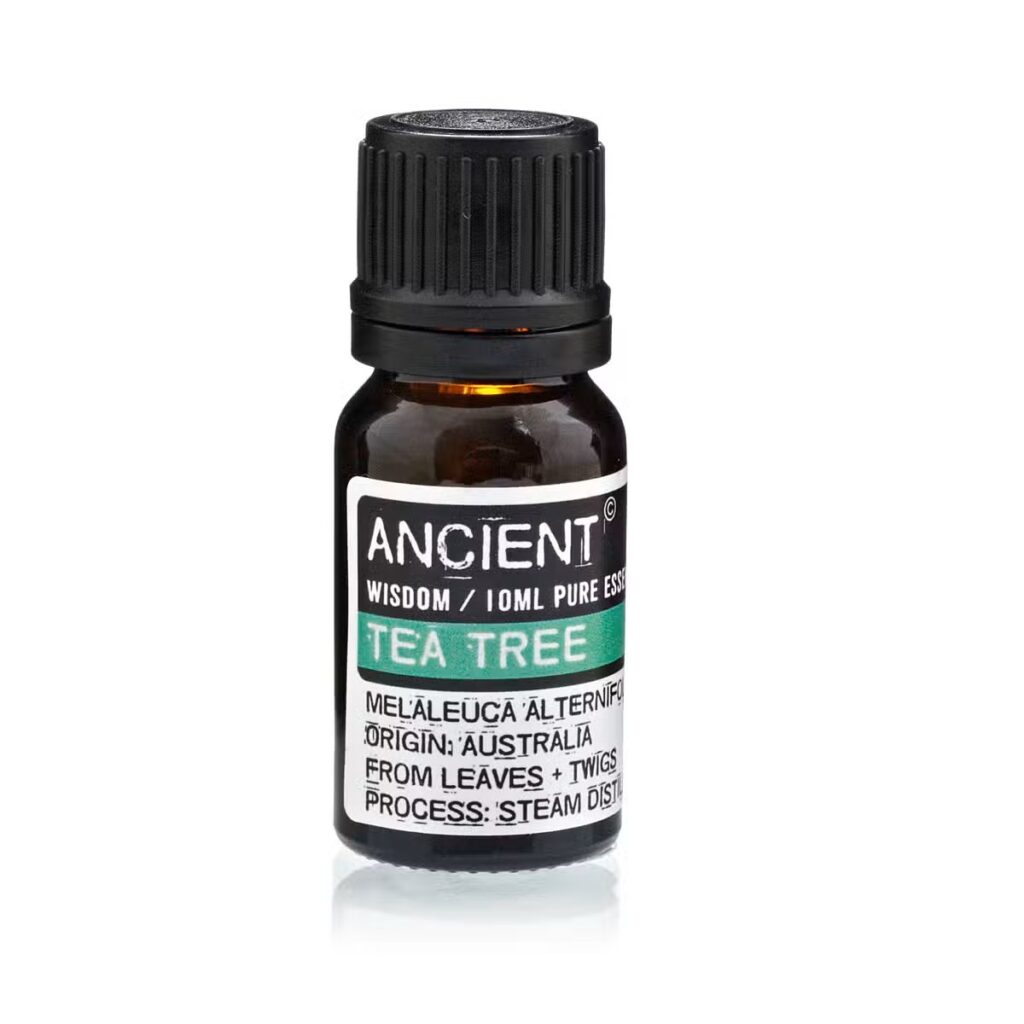
Tea Tree Essential Oil is derived through steam distillation of the leaves of Melaleuca alternifolia, a tree native to the northeast coast of New South Wales, Australia. Historically, the leaves were brewed to create tea, inspiring the oil’s name. Rich in terpenoids, this concentrated oil is recognized for its antiseptic and antifungal qualities, making it a common ingredient in various medicinal and personal care formulations.
Benefits of Tea Tree Essential Oil
Tea tree oil is reputed for its ability to alleviate congestion, colds, coughs, and flu symptoms. It has been traditionally applied to treat acne, fungal infections, dandruff, vaginal infections, haemorrhoids, and athlete’s foot, and is also thought to relieve muscle aches and joint pain. When added to bath water, it helps reduce bacterial presence. This oil is intended for external use only and should never be ingested. It is recommended for adult use exclusively and must be kept out of reach of children and pets. Use is not advised during pregnancy or breastfeeding.
The medicinal qualities of the tea tree have been recognized since ancient times in eastern Australia. Indigenous Australian communities traditionally used crushed leaves to treat cuts, burns, sores, and infections. They inhaled the leaf oils to ease coughs and colds, applied the oil directly to wounds, and used poultices for healing. Additionally, they brewed the leaves into a tea to relieve sore throats. The essential oil’s antimicrobial benefits became widely acknowledged and utilized in Europe during the 1920s and 1930s.
You can Click, Tap or Scan the QR code below. It will automatically add a discount code for you to get a discount on your first purchase, of any of our essential oil 10ml bottles. Terms and Conditions apply.


- Solid Shampoo vs Liquid Shampoo: Which Is Better for Your Hair and the Environment?
 Switch to a more sustainable hair care routine with our premium solid shampoo bars , designed to cleanse, nourish, and protect your hair—without the waste of tr… Our solid shampoos are carefully crafted using… Read more: Solid Shampoo vs Liquid Shampoo: Which Is Better for Your Hair and the Environment?
 - Basil Essential Oil: The Clarifying Oil for Focus, Fatigue, and Muscle Relief
 Basil essential oil is one of the most underrated oils in aromatherapy. While it is universally recognised as a culinary herb, its essential oil has a distinct … Basil essential oil is steam-distilled from… Read more: Basil Essential Oil: The Clarifying Oil for Focus, Fatigue, and Muscle Relief
 - Lavender Essential Oil: The Complete Guide
 Lavender is where most people begin their aromatherapy journey — and for good reason. It is the most researched, most versatile, and most widely used essential … Lavender essential oil is steam-distilled from the… Read more: Lavender Essential Oil: The Complete Guide
 - Fennel Essential Oil: The Digestive Oil for Bloating, Hormones, and Detox
 Fennel has been used medicinally for thousands of years — by the ancient Egyptians, Greeks, Romans, and Chinese — primarily for its remarkable digestive propert… Fennel essential oil is steam-distilled from the crushed seeds… Read more: Fennel Essential Oil: The Digestive Oil for Bloating, Hormones, and Detox
 - Patchouli Essential Oil: The Earthy Oil for Grounding, Skin, and Sensuality
 Few essential oils provoke as strong a reaction as patchouli. Its deep, earthy, slightly sweet scent is immediately recognisable — and deeply divisive. Those wh… Patchouli essential oil is steam-distilled from the dried, fermented… Read more: Patchouli Essential Oil: The Earthy Oil for Grounding, Skin, and Sensuality
 - Peppermint Essential Oil: Energise, Focus, and Refresh
 If lavender is the oil of calm, peppermint is the oil of clarity. Sharp, cool, and instantly recognisable, peppermint essential oil is one of the most effective… Peppermint essential oil is steam-distilled from the… Read more: Peppermint Essential Oil: Energise, Focus, and Refresh