
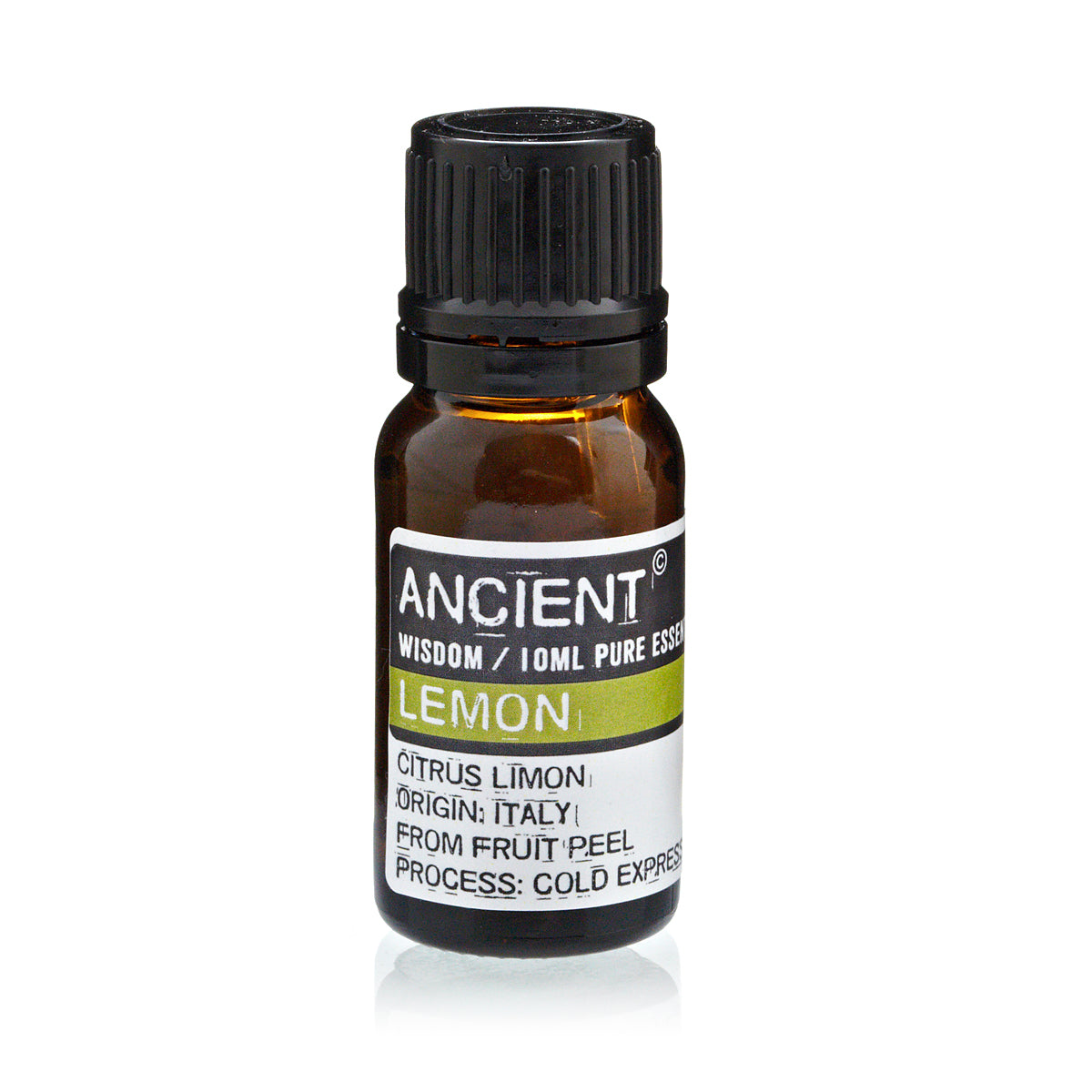
Latin Name : Citrus Limon.
Part Of Plant Used : Fruit Peel
Source : Italy.
Extraction Method : Cold Expression.
Lemon Essential Oil has a crisp, clean fragrance and is obtained from the fresh peel of the lemon fruit through cold expression. Known for its refreshing qualities, it helps sharpen focus and mental clarity, which is why it is commonly used in room fresheners for offices and workplaces. Traditionally, it has been believed to support relief from rheumatism, arthritis, and gout, and has been used for various skin concerns such as acne, boils, abscesses, and carbuncles. It is also valued for supporting the immune system and helping cleanse the body.
When used in an oil burner with a few drops added to water, the vapors of lemon oil are commonly used during colds, flu, headaches, and laryngitis. Its aroma is thought to help ease mental and emotional challenges such as stress, fatigue, irritation, low mood, and lethargy, lifting the spirits and clearing the mind. Added to a bath or blended into massage oils, lemon essential oil is traditionally used to help with digestive discomfort, low energy, tiredness, infections, obesity, rheumatism, stress, and emotional tension. It has also been used to help relieve hangover symptoms.
The lemon plant is native to India and possibly China, and was introduced to Europe by Crusaders during the Middle Ages. Because lemons contain significant amounts of vitamins A, B, and C, sailors were once given an ounce a day to help prevent scurvy, eye problems, and other vitamin deficiencies. Large-scale lemon cultivation in Europe began in Genoa in the mid-fifteenth century. The fruit was later brought to the Americas by Christopher Columbus, and Spanish explorers helped spread lemon seeds further. Initially, lemons were used mainly as ornamental plants and for medicinal purposes, and only much later did they become a common ingredient in cooking.
You can Click, Tap or Scan the QR code below. It will automatically add a discount code for you to get a discount on your first purchase, of any of our essential oil 10ml bottles. Terms and Conditions apply.


- Solid Shampoo vs Liquid Shampoo: Which Is Better for Your Hair and the Environment?
 Switch to a more sustainable hair care routine with our premium solid shampoo bars , designed to cleanse, nourish, and protect your hair—without the waste of tr… Our solid shampoos are carefully crafted using… Read more: Solid Shampoo vs Liquid Shampoo: Which Is Better for Your Hair and the Environment?
 - Basil Essential Oil: The Clarifying Oil for Focus, Fatigue, and Muscle Relief
 Basil essential oil is one of the most underrated oils in aromatherapy. While it is universally recognised as a culinary herb, its essential oil has a distinct … Basil essential oil is steam-distilled from… Read more: Basil Essential Oil: The Clarifying Oil for Focus, Fatigue, and Muscle Relief
 - Lavender Essential Oil: The Complete Guide
 Lavender is where most people begin their aromatherapy journey — and for good reason. It is the most researched, most versatile, and most widely used essential … Lavender essential oil is steam-distilled from the… Read more: Lavender Essential Oil: The Complete Guide
 - Fennel Essential Oil: The Digestive Oil for Bloating, Hormones, and Detox
 Fennel has been used medicinally for thousands of years — by the ancient Egyptians, Greeks, Romans, and Chinese — primarily for its remarkable digestive propert… Fennel essential oil is steam-distilled from the crushed seeds… Read more: Fennel Essential Oil: The Digestive Oil for Bloating, Hormones, and Detox
 - Patchouli Essential Oil: The Earthy Oil for Grounding, Skin, and Sensuality
 Few essential oils provoke as strong a reaction as patchouli. Its deep, earthy, slightly sweet scent is immediately recognisable — and deeply divisive. Those wh… Patchouli essential oil is steam-distilled from the dried, fermented… Read more: Patchouli Essential Oil: The Earthy Oil for Grounding, Skin, and Sensuality
 - Peppermint Essential Oil: Energise, Focus, and Refresh
 If lavender is the oil of calm, peppermint is the oil of clarity. Sharp, cool, and instantly recognisable, peppermint essential oil is one of the most effective… Peppermint essential oil is steam-distilled from the… Read more: Peppermint Essential Oil: Energise, Focus, and Refresh
It’s amazing how versatile it is, from boosting focus to refreshing the air naturally, making it a must-have in my daily routine.
I absolutely love this lemon essential oil—its fresh, the citrus scent instantly lifts my mood and makes my space feel clean and energised
I like warming the jar slightly between hands so the scent opens up softly—easy to overdo, so start light.