Intro
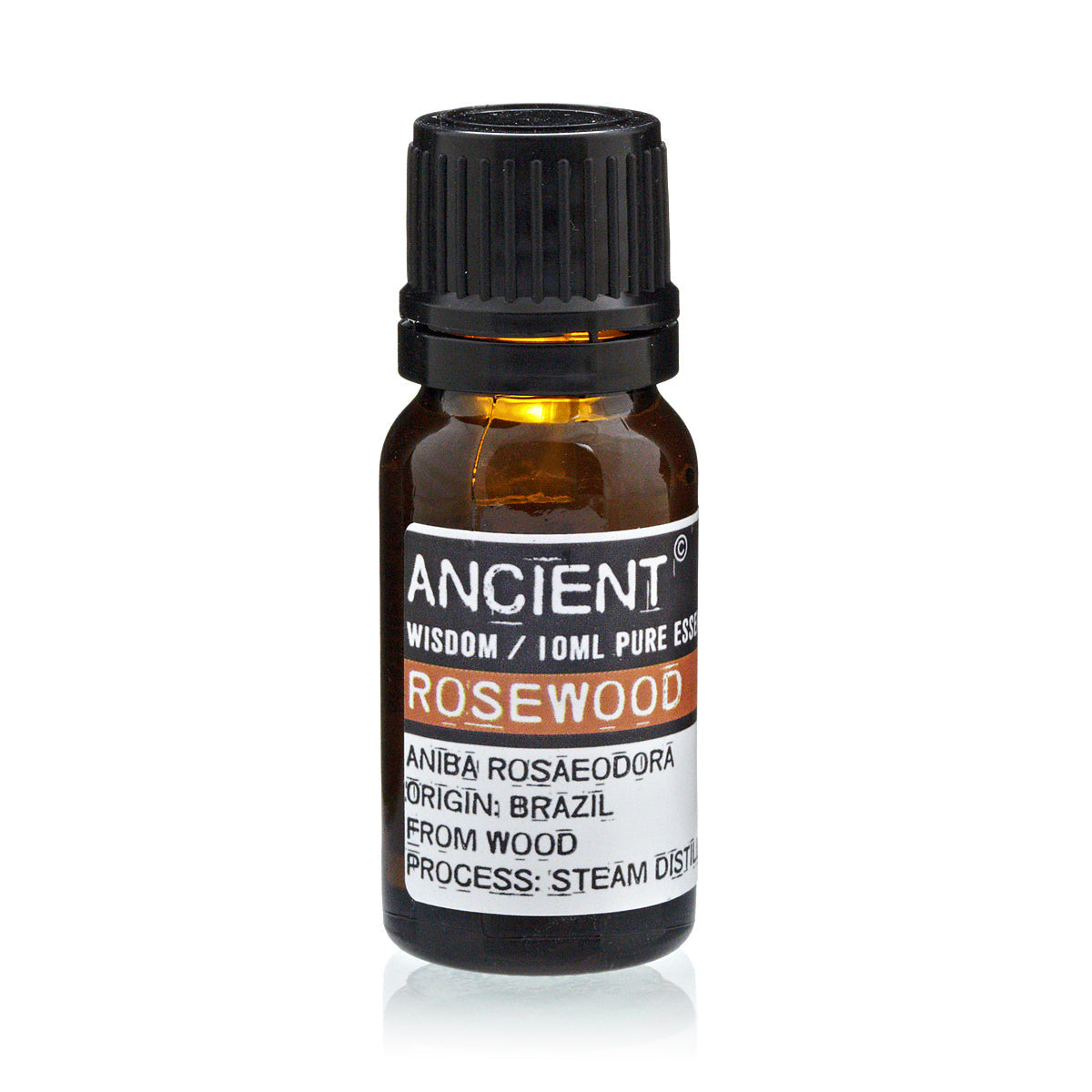
Graceful and luminously floral, Rosewood (Aniba rosaeodora) essential oil is prized for its silky, rosy-woody aroma and its remarkable versatility in home fragrance and skincare routines. This guide gives you a clear, practical overview you can trust—covering aroma, ways to use it, blending ideas, and sensible safety tips—without hype or medical claims.
Quick Facts
- Botanical name: Aniba rosaeodora (steam‑distilled wood)
- Aroma family: soft floral‑wood with a delicate rosy lift
- Main component: linalool (naturally occurring)
- Strength: light–medium; elegant rather than heavy
- Best for: calm, inviting, polished ambience; rounding sharp blends
Aroma Profile
Rosewood opens with a bright, slightly citrusy sparkle before settling into a smooth floral‑wood heart. Think of it as a refined bridge between citrus top notes and deeper woods, adding a silk‑like texture that makes a blend feel complete. The drydown is clean, gently sweet, and quietly sophisticated—ideal for spaces where you want a welcoming, elevated feel without heaviness.
How to Use
Diffuser (home/office): 5–8 drops in a 200–300 ml water diffuser for an even, polished background scent. Try it in living rooms, reading corners, or workspaces where you want clarity without sharpness.
Room/linen mist: Add 20–25 drops per 100 ml to a base of distilled water + a suitable solubiliser (per supplier instructions). Shake before each use and avoid delicate fabrics.
Personal aroma oil (external use only): For a simple pulse‑point oil, dilute Rosewood in a carrier at 1–2% total essential oil. Its silky character layers beautifully with your favourite floral or citrus notes.
Bath (external use only): Disperse in an appropriate solubiliser before adding to water (do not drop neat oils into a bath). Keep overall dilution gentle (e.g., 3–6 drops dispersed for a full tub).
Blends Well With
- Citrus: Bergamot (FCF), Mandarin, Lime – adds brightness with a suave finish.
- Florals: Geranium, Jasmine (dilute), Neroli – rounds edges and smooths the bouquet.
- Woods/Resins: Cedarwood, Frankincense, Sandalwood – lends lift and polish.
- Herbals: Clary Sage, Rosemary (light touch) – softens and civilises sharper notes.
Three Ready‑to‑Try Ideas
- Polished Living Room: Rosewood 4, Bergamot 4, Cedarwood 2.
- Quiet Focus: Rosewood 3, Lime 3, Petitgrain 2, Frankincense 2.
- Soft Floral: Rosewood 4, Geranium 3, Neroli (dilute) 1–2.
Safety & Dilution
- For external use only; keep away from eyes and mucous membranes.
- Always dilute essential oils in a suitable carrier before skin use. Typical everyday leave‑on dilution: 1–2% (1–2 drops per 5 ml carrier). For sensitive skin, start lower.
- Patch test before wider use. Discontinue if irritation occurs.
- Store well closed, away from heat and light. Do not ingest.
- Keep out of reach of children and pets. If you are pregnant, nursing, under medical care, or have allergies, consult a qualified professional before use.
Sourcing Note
Rosewood trees are protected in international trade. Choose products from reputable suppliers who follow current regulations and sustainability practices. As an alternative aesthetic in blends, some creators use Ho Wood (ct. linalool) to achieve a similarly silky, rosy‑wood nuance.
Quality & Authenticity
Look for suppliers who provide batch GC/MS analysis and clear origin details. Rosewood’s naturally high linalool content should be evident on a batch report, and the aroma should smell plush and well integrated—not thin, sharp, or solvent‑like. Packaging should be dark glass with a tight reducer and a clear batch/lot code.
Storage & Shelf Life
Store in a cool, dark place with the cap firmly closed. Like many essential oils rich in terpenoids, Rosewood benefits from minimal air exposure. Decanting into a smaller bottle as the level drops can help reduce headspace and slow oxidation over time.
Comparisons & Substitutions
- Ho Wood (ct. linalool): A popular, sustainable alternative for achieving a similar silky, rosy‑wood nuance in blends. Ho Wood is naturally high in linalool and works well where you want Rosewood’s polish without shifting the character too far.
- Lavender (high‑linalool types): Softer and more herbal; helpful if you want a gentle floral roundness but with a recognisably lavender profile.
- Coriander Seed: Another elegant linalool‑rich oil; spicier and more herbal, it can be combined with Rosewood for a textured, luminous floral‑spice accord.
Frequently Asked Questions
Can I use Rosewood on skin? Yes—always dilute in a suitable carrier first. Everyday leave‑on dilutions of 1–2% are a common starting point; sensitive skin may prefer lower. Patch test before wider use.
What does “linalool‑rich” mean? Linalool is a naturally occurring aroma molecule common in many essential oils. In Rosewood, it dominates the profile and contributes to the silky, rosy‑wood character people love.
Why mention sustainability? Rosewood trees are regulated in international trade. Responsible sourcing matters; reputable suppliers work under current regulations. Ho Wood can be a helpful stand‑in when you want a similar vibe in blends.
Extended Blend Ideas
Velvet Study: Rosewood 4, Petitgrain 3, Frankincense 2, Cedarwood 1 — polished focus with gentle depth.
Salon Fresh: Rosewood 3, Mandarin 3, Lime 2, Geranium 2 — bright yet refined for airy, welcoming spaces.
Evening Unwind: Rosewood 3, Bergamot (FCF) 3, Neroli (dilute) 1–2, Sandalwood 1 — plush, cocooning ambience.
Practical Tips
- Start small in blends; Rosewood excels as a finisher that smooths and elevates.
- If a blend feels sharp, 1–2 drops of Rosewood often “silkens” edges without muting character.
- Pair with a tiny touch of vanilla/benzoin for a soft, cashmere‑like warmth.
Why We Love It
Rosewood is a “finishing touch” oil that quietly transforms a blend from good to gorgeous. A single drop can add a satin‑like smoothness, linking bright top notes to deeper woods so everything feels coherent and intentional. If you enjoy refined, hotel‑lobby style ambience—polished yet unobtrusive—Rosewood is a beautiful choice to keep on hand alongside your favourite citruses, florals, and gentle woods.

- Solid Shampoo vs Liquid Shampoo: Which Is Better for Your Hair and the Environment?
 Switch to a more sustainable hair care routine with our premium solid shampoo bars , designed to cleanse, nourish, and protect your hair—without the waste of tr… Our solid shampoos are carefully crafted using… Read more: Solid Shampoo vs Liquid Shampoo: Which Is Better for Your Hair and the Environment?
 - Basil Essential Oil: The Clarifying Oil for Focus, Fatigue, and Muscle Relief
 Basil essential oil is one of the most underrated oils in aromatherapy. While it is universally recognised as a culinary herb, its essential oil has a distinct … Basil essential oil is steam-distilled from… Read more: Basil Essential Oil: The Clarifying Oil for Focus, Fatigue, and Muscle Relief
 - Lavender Essential Oil: The Complete Guide
 Lavender is where most people begin their aromatherapy journey — and for good reason. It is the most researched, most versatile, and most widely used essential … Lavender essential oil is steam-distilled from the… Read more: Lavender Essential Oil: The Complete Guide
 - Fennel Essential Oil: The Digestive Oil for Bloating, Hormones, and Detox
 Fennel has been used medicinally for thousands of years — by the ancient Egyptians, Greeks, Romans, and Chinese — primarily for its remarkable digestive propert… Fennel essential oil is steam-distilled from the crushed seeds… Read more: Fennel Essential Oil: The Digestive Oil for Bloating, Hormones, and Detox
 - Patchouli Essential Oil: The Earthy Oil for Grounding, Skin, and Sensuality
 Few essential oils provoke as strong a reaction as patchouli. Its deep, earthy, slightly sweet scent is immediately recognisable — and deeply divisive. Those wh… Patchouli essential oil is steam-distilled from the dried, fermented… Read more: Patchouli Essential Oil: The Earthy Oil for Grounding, Skin, and Sensuality
 - Peppermint Essential Oil: Energise, Focus, and Refresh
 If lavender is the oil of calm, peppermint is the oil of clarity. Sharp, cool, and instantly recognisable, peppermint essential oil is one of the most effective… Peppermint essential oil is steam-distilled from the… Read more: Peppermint Essential Oil: Energise, Focus, and Refresh
Really helpful guide, thank you — looking forward to more like this!
Great read, I learned something new. Thanks for sharing!