
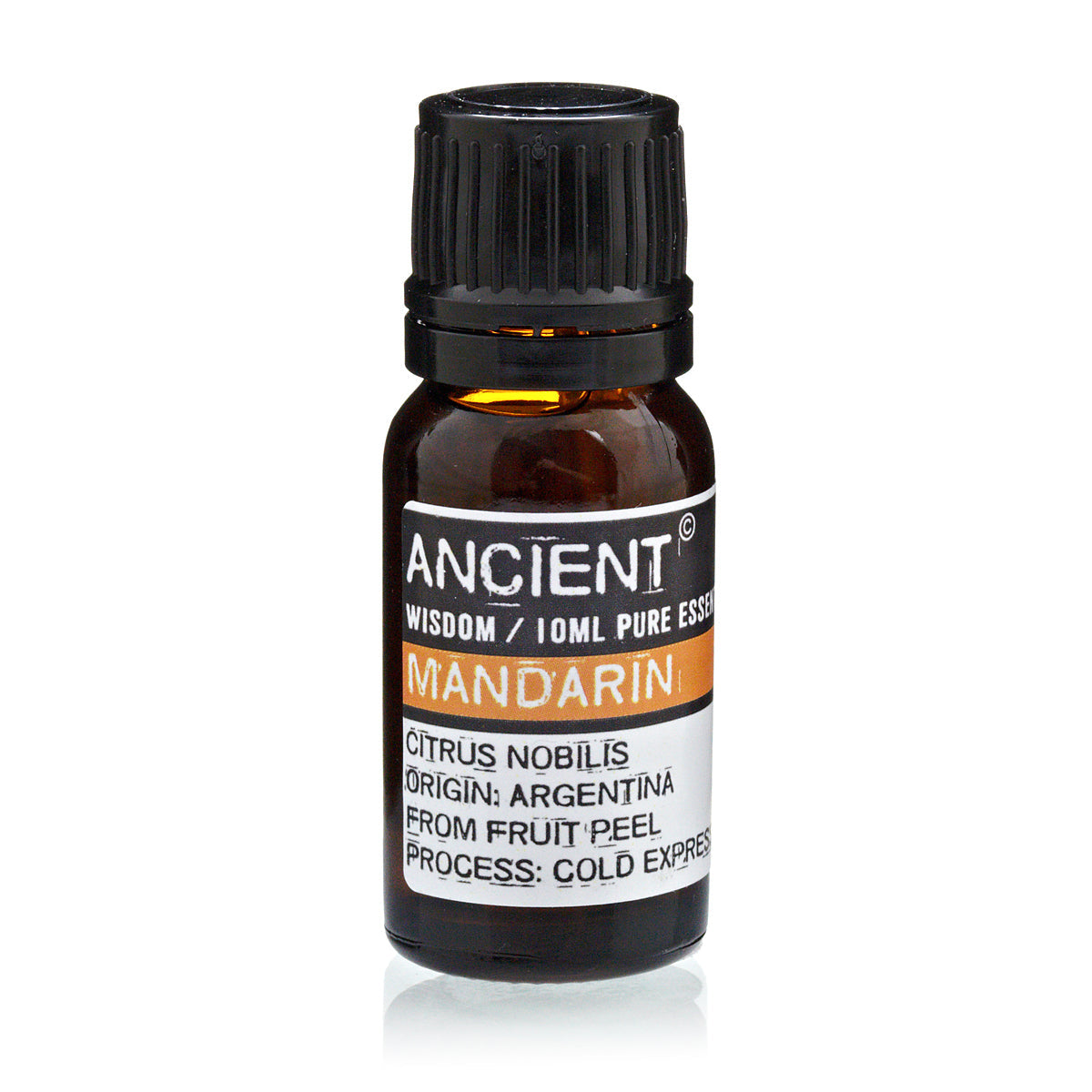
Mandarin essential oil (10 ml) is a gentle, sweet citrus oil obtained from the cold-pressed peel of Citrus reticulata. Celebrated for its bright, approachable scent, mandarin is used across a wide range of ambient and lifestyle applications — from morning diffusion to family-friendly topical blends — where a soft citrus note is desired without the sharpness of some other citrus oils.
Quick facts
- Botanical name: Citrus reticulata
- Plant part: Peel (cold-pressed)
- Extraction: Cold-pressing (expression)
- Typical aroma: Sweet, fresh, lightly floral citrus
- Common uses: Diffusion, light topical blends, room mists, natural cleaning scent
Aroma profile
Mandarin sits in the top-note citrus family: its character is bright, candy-like and slightly floral on first impression, then softens into a gentle, comforting background note. It is noticeably sweeter and less astringent than bitter orange or grapefruit, which makes it especially popular in blends intended for children or communal spaces. Mandarin pairs naturally with other citrus oils (bergamot, sweet orange, lime), softer florals (lavender, geranium) and light bases such as cedarwood in small quantities.
How to use (ambience)
Diffusion: 3–5 drops in a diffuser for 20–30 minutes is a reliable way to refresh a small to medium living space. It’s particularly effective in the morning or during creative tasks where a bright, optimistic scent helps set the tone. Room mist: combine 10–15 drops with 100 ml water and a teaspoon of alcohol (or solubiliser) for an easy spray to freshen linens or curtains—shake well before each use. Topical: for a bedside roll-on, dilute to 1%–2% in a carrier oil (approx. 6–12 drops per 30 ml carrier). Test a small patch first and avoid sensitive areas.
Suggested blends
- Uplift: 3 drops Mandarin + 2 drops Bergamot + 1 drop Lime (diffuser)
- Evening calm: 2 drops Mandarin + 2 drops Lavender + 1 drop Cedarwood (diffuser or 1% topical)
- Family-friendly spray: 10 drops Mandarin + 5 drops Sweet Orange in 100 ml water
Safety & storage
Mandarin essential oil is generally well tolerated when diluted. Follow standard aromatic safety: dilute to 1%–2% for topical applications, avoid contact with eyes and mucous membranes, and do not apply neat to the skin. Photosensitivity is uncommon with mandarin compared with bergamot, but as a precaution avoid sun exposure on freshly applied topical blends for several hours. Store in a cool, dark place in a tightly sealed amber bottle, and keep all essential oils out of reach of children and pets. For pregnancy, nursing, or medical conditions, consult a qualified practitioner before use.
Why people choose mandarin
Mandarin’s gentle sweetness and low-intensity citrus profile make it a go-to oil for everyday use. It is welcoming for people new to aromatherapy, blends seamlessly with many other oils, and provides an uncomplicated way to freshen a room or add an inviting scent to personal care products without overwhelming the senses.
Shop & product details
We offer Mandarin Essential Oil in a 10 ml bottle. For product specifics, ingredients, and to purchase, visit the product page: Mandarin Essential Oil — 10 ml

Tap the QR to visit the shop and apply the discount
Sourcing & quality
We source mandarin oil from reputable growers who prioritise proper harvesting and cold-press extraction to preserve the bright, volatile aroma compounds. Look for oils that list the botanical name (Citrus reticulata) and country of origin; fresh, well-handled oils will retain their lively citrus lift and have a pleasant, sweet finish rather than a flattened or fermented note.
Storage & shelf life
Like most citrus oils, mandarin is best stored in a cool, dark place in an amber or cobalt bottle to limit light exposure and slow oxidation. Expect a typical shelf life of 1–2 years for peak aroma, though proper storage can extend this. If the oil smells dull, fermented, or markedly different from the bright, sweet citrus of fresh mandarin, consider replacing it.
Simple at-home recipes
Room refresher: 8 drops Mandarin + 4 drops Sweet Orange + 2 drops Lime in 200 ml water (shake before use). Linen spray: 10 drops Mandarin + 5 drops Lavender + 2 tsp witch hazel in 100 ml distilled water. Gentle hand serum: 2 drops Mandarin + 28 drops jojoba oil (approx. 1% dilution) mixed in a 10 ml roller bottle — use for a lightly scented hand massage.
FAQ
Is mandarin safe for children? When diluted appropriately (1% or less) and applied to a small test area, mandarin is commonly used in family blends. Avoid direct application on babies and consult a qualified practitioner for infant use. Is mandarin phototoxic? Mandarin is low in photosensitising compounds compared with bergamot; nevertheless, avoid direct sun exposure on freshly applied topical blends as a precaution.
Final notes
Mandarin essential oil is valued for its versatility and gentle profile. Whether you’re new to aromatherapy or refining household blends, mandarin offers a cheerful, low-risk citrus note that supports everyday freshness and mindful rituals.
Notes on aroma chemistry
Mandarin’s scent profile is driven by a mix of monoterpenes such as limonene and smaller quantities of oxygenated compounds that soften the citrus edge. These constituents make mandarin bright and volatile — excellent for diffusion — but also mean the oil can oxidise faster than heavier, more resinous oils. Using mandarin in moderation within blends prolongs the overall scent stability.
Creating balanced blends
Because mandarin is inherently sweet and top-note dominant, it shines when paired with middle and base notes that provide depth and longevity. Adding a small amount of a base note like cedarwood or vetiver anchors the blend and prevents the citrus from evaporating too quickly. For personal care, combining mandarin with a stabilising carrier oil and a gentle antioxidant (like vitamin E) helps preserve both scent and skin-friendly properties.
Final tips
Start small when experimenting — a single drop can change a blend’s character. Keep notes on combinations that work in your home environment (rooms, diffuser size, and timing), and rotate oils occasionally to keep scent profiles fresh. Mandarin’s low-intensity sweetness makes it an ideal daily companion for approachable, mood-lifting blends.
- Solid Shampoo vs Liquid Shampoo: Which Is Better for Your Hair and the Environment?
 Switch to a more sustainable hair care routine with our premium solid shampoo bars , designed to cleanse, nourish, and protect your hair—without the waste of tr… Our solid shampoos are carefully crafted using… Read more: Solid Shampoo vs Liquid Shampoo: Which Is Better for Your Hair and the Environment?
 - Basil Essential Oil: The Clarifying Oil for Focus, Fatigue, and Muscle Relief
 Basil essential oil is one of the most underrated oils in aromatherapy. While it is universally recognised as a culinary herb, its essential oil has a distinct … Basil essential oil is steam-distilled from… Read more: Basil Essential Oil: The Clarifying Oil for Focus, Fatigue, and Muscle Relief
 - Lavender Essential Oil: The Complete Guide
 Lavender is where most people begin their aromatherapy journey — and for good reason. It is the most researched, most versatile, and most widely used essential … Lavender essential oil is steam-distilled from the… Read more: Lavender Essential Oil: The Complete Guide
 - Fennel Essential Oil: The Digestive Oil for Bloating, Hormones, and Detox
 Fennel has been used medicinally for thousands of years — by the ancient Egyptians, Greeks, Romans, and Chinese — primarily for its remarkable digestive propert… Fennel essential oil is steam-distilled from the crushed seeds… Read more: Fennel Essential Oil: The Digestive Oil for Bloating, Hormones, and Detox
 - Patchouli Essential Oil: The Earthy Oil for Grounding, Skin, and Sensuality
 Few essential oils provoke as strong a reaction as patchouli. Its deep, earthy, slightly sweet scent is immediately recognisable — and deeply divisive. Those wh… Patchouli essential oil is steam-distilled from the dried, fermented… Read more: Patchouli Essential Oil: The Earthy Oil for Grounding, Skin, and Sensuality
 - Peppermint Essential Oil: Energise, Focus, and Refresh
 If lavender is the oil of calm, peppermint is the oil of clarity. Sharp, cool, and instantly recognisable, peppermint essential oil is one of the most effective… Peppermint essential oil is steam-distilled from the… Read more: Peppermint Essential Oil: Energise, Focus, and Refresh