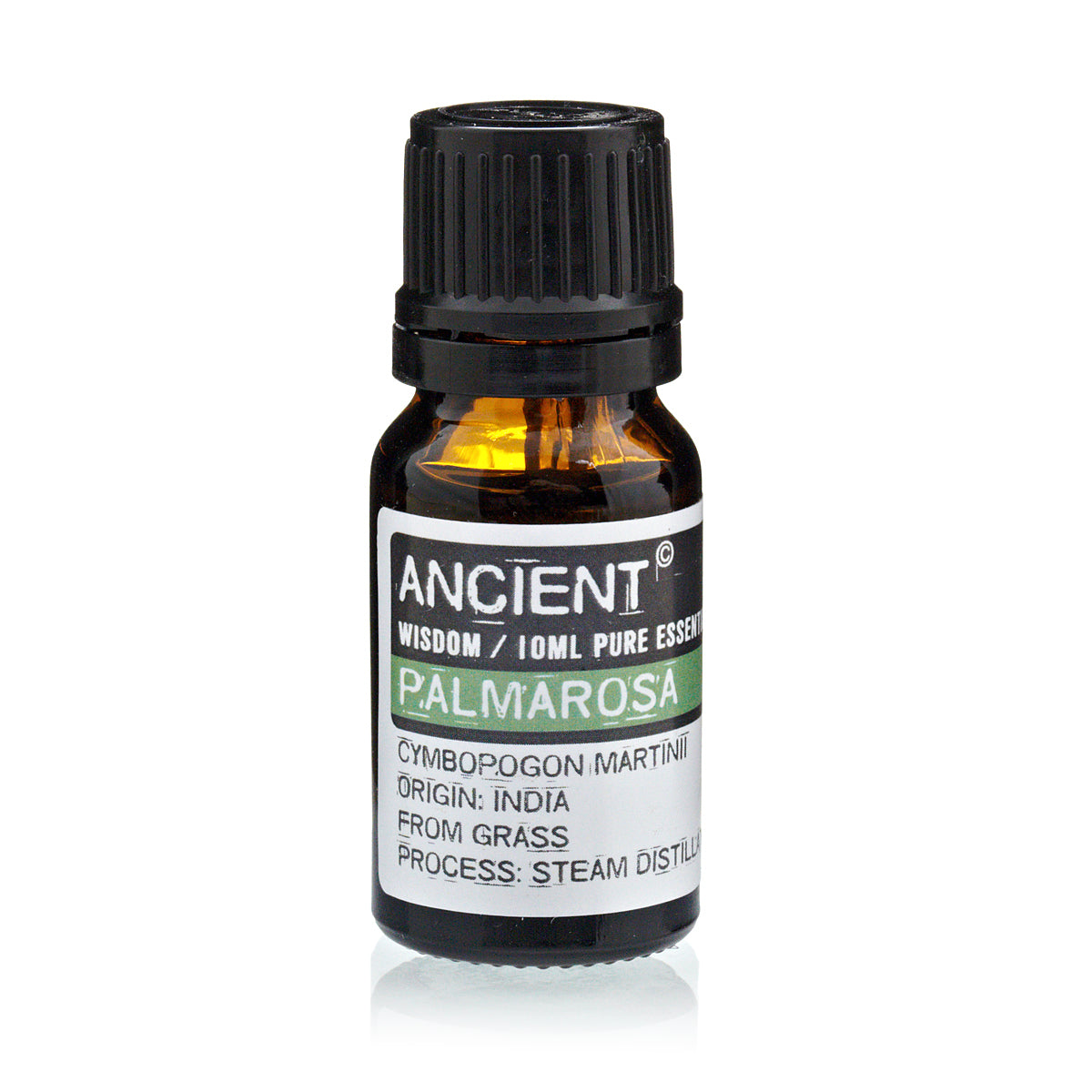
Palmarosa essential oil (10 ml) offers a floral, slightly rosy aroma with a fresh, uplifting green base. Steam-distilled from the grass Cymbopogon martinii, palmarosa is prized for its gentle, skin-friendly character and its ability to blend harmoniously with both florals and lighter woods. This guide focuses on safe, practical aromatic uses and blending ideas in an educational, non-medical tone.
Quick facts
- Botanical name: Cymbopogon martinii
- Plant part: Grass (leaves & stems)
- Extraction: Steam distillation
- Origin: India (typical)
- Typical aroma: Floral, rosy, fresh green
Aroma profile
Palmarosa sits as a versatile middle note: floral and slightly sweet with a clean green backbone. It complements true florals like rose and geranium and pairs well with cedarwood or sandalwood when a longer-lasting base is required.
How to use (ambience)
Diffuse: 3–4 drops palmarosa + 2 drops geranium for a softly floral room scent. Linen spray: 8 drops palmarosa + 4 drops orange in 200 ml water with solubiliser. Topical: dilute to 1% for general adult skin use; patch-test first and avoid eyes.
Blends well with
- Rose, Geranium, Neroli
- Orange, Bergamot
- Cedarwood, Sandalwood
Safety & dilution
Palmarosa is generally well tolerated when diluted. Use standard 1% topical dilution for routine use, avoid contact with eyes and mucous membranes, and store in a cool, dark place. Consult a qualified practitioner for pregnancy, nursing, or health conditions.
Shop
Find the 10 ml bottle and product details: Palmarosa Essential Oil — 10 ml

Tap the QR to visit the shop and apply the discount
Sourcing & quality
Palmarosa is commonly sourced from India where Cymbopogon martinii is grown and steam-distilled. High-quality palmarosa will list the botanical name and origin; fresh, clean distillation notes and a floral-rosy character are signs of a well-handled oil.
How it feels & aroma chemistry
Palmarosa’s scent is largely shaped by geraniol and related alcohols, giving it a soft, rose-like floral character with a fresh green undertone. These constituents make palmarosa both interesting in perfumery and relatively skin-friendly when diluted appropriately.
Practical uses
Palmarosa is excellent in blends for calming ambience, late-afternoon relaxation, and skin-care formulations. As a diffuser blend it lifts and soothes; in skin products, it’s used at low dilution where a light floral note is wanted. For a quick mood blend: 3 drops Palmarosa + 2 drops Lavender + 1 drop Bergamot in a diffuser for 20 minutes.
DIY recipes
Daily linen spray: 8 drops palmarosa + 4 drops orange + 200 ml water (solubiliser optional). Gentle hand oil: 6 drops palmarosa in 30 ml jojoba (around 1%); massage into hands after washing. Foot soak: 6 drops palmarosa + 2 tbsp epsom salts in warm water.
Blending tips
- Pair palmarosa with rose or geranium for a floral heart.
- Add citrus (orange/bergamot) for brightness.
- Use a small amount of cedarwood to anchor blends and increase longevity.
Storage & shelf life
Store palmarosa in a cool, dark place in an amber bottle. Expect 1–2 years of peak aroma; if the oil develops an off or stale smell, replace it.
Safety & dilution
Palmarosa is generally safe at typical topical dilutions (1%). Always patch-test and avoid eyes. For pregnancy, nursing, or medical conditions, consult a qualified practitioner before use.
FAQ
Can I use palmarosa daily? Yes — when diluted appropriately, palmarosa is often used in daily skincare and gentle diffusion mixes. Is palmarosa safe for sensitive skin? It is relatively mild, but do a patch test and use low dilutions for sensitive skin.
Why choose palmarosa
Palmarosa offers a floral, rose-like alternative to rose oils at a fraction of the price and with good skin compatibility. It’s versatile, approachable, and blends well across many families of oils.
Sustainability & sourcing notes
When buying palmarosa, consider supplier transparency: sustainable harvests and fair sourcing practices help ensure supply and quality. Look for suppliers that disclose growing and distillation practices, and prefer certified or traceable sources when available.
Historical uses & cultural context
Palmarosa has long been used in traditional perfumery and personal care across South Asia; its mild floral aroma made it a popular, affordable substitute for true rose oil in many applications.
Long-form blends (for experienced blenders)
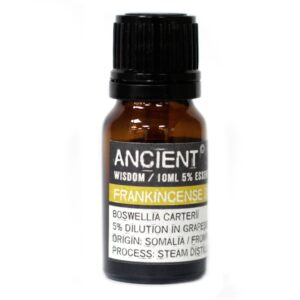
Calm & focus diffuser blend: 3 drops Palmarosa + 2 drops Frankincense + 1 drop Vetiver (use short bursts). Restorative body oil: 4 drops Palmarosa + 2 drops Lavender + 24 ml Sweet Almond oil (approx. 1% dilution) — use for evening self-care massage on clean skin.
Storage & freshness tips
To maximise shelf life: keep bottles upright, minimise air exposure, and avoid temperature swings. If you make blended products, store them in cool, dark containers and label with date and dilution percentage.
Final notes
Palmarosa is a useful, cost-effective floral oil that performs well in both aromatic and topical contexts when used responsibly. Its rose-like clarity and skin-friendly profile make it a reliable addition to any collection.
Practical storage & rotation
Rotate citrus and floral oils periodically; palmarosa pairs well with seasonal switches. If you notice a change in aroma, try a small blend test to check compatibility before using in products. Label blends with date and keep a running log of what works in which room or with which diffuser settings.
Extra FAQ
Can palmarosa be used on sensitive skin? Many find palmarosa gentle, but always perform a patch test and keep topical dilutions low for sensitive skin. How long to diffuse? Short bursts (15–30 minutes) are effective for atmosphere without saturating fabrics; longer runs can be fine if ventilation is good and sensitivity is considered.
With these additions palmarosa becomes a versatile, approachable oil for both beginners and experienced blenders alike.
- Solid Shampoo vs Liquid Shampoo: Which Is Better for Your Hair and the Environment?
 Switch to a more sustainable hair care routine with our premium solid shampoo bars , designed to cleanse, nourish, and protect your hair—without the waste of tr… Our solid shampoos are carefully crafted using… Read more: Solid Shampoo vs Liquid Shampoo: Which Is Better for Your Hair and the Environment?
 - Basil Essential Oil: The Clarifying Oil for Focus, Fatigue, and Muscle Relief
 Basil essential oil is one of the most underrated oils in aromatherapy. While it is universally recognised as a culinary herb, its essential oil has a distinct … Basil essential oil is steam-distilled from… Read more: Basil Essential Oil: The Clarifying Oil for Focus, Fatigue, and Muscle Relief
 - Lavender Essential Oil: The Complete Guide
 Lavender is where most people begin their aromatherapy journey — and for good reason. It is the most researched, most versatile, and most widely used essential … Lavender essential oil is steam-distilled from the… Read more: Lavender Essential Oil: The Complete Guide
 - Fennel Essential Oil: The Digestive Oil for Bloating, Hormones, and Detox
 Fennel has been used medicinally for thousands of years — by the ancient Egyptians, Greeks, Romans, and Chinese — primarily for its remarkable digestive propert… Fennel essential oil is steam-distilled from the crushed seeds… Read more: Fennel Essential Oil: The Digestive Oil for Bloating, Hormones, and Detox
 - Patchouli Essential Oil: The Earthy Oil for Grounding, Skin, and Sensuality
 Few essential oils provoke as strong a reaction as patchouli. Its deep, earthy, slightly sweet scent is immediately recognisable — and deeply divisive. Those wh… Patchouli essential oil is steam-distilled from the dried, fermented… Read more: Patchouli Essential Oil: The Earthy Oil for Grounding, Skin, and Sensuality
 - Peppermint Essential Oil: Energise, Focus, and Refresh
 If lavender is the oil of calm, peppermint is the oil of clarity. Sharp, cool, and instantly recognisable, peppermint essential oil is one of the most effective… Peppermint essential oil is steam-distilled from the… Read more: Peppermint Essential Oil: Energise, Focus, and Refresh