
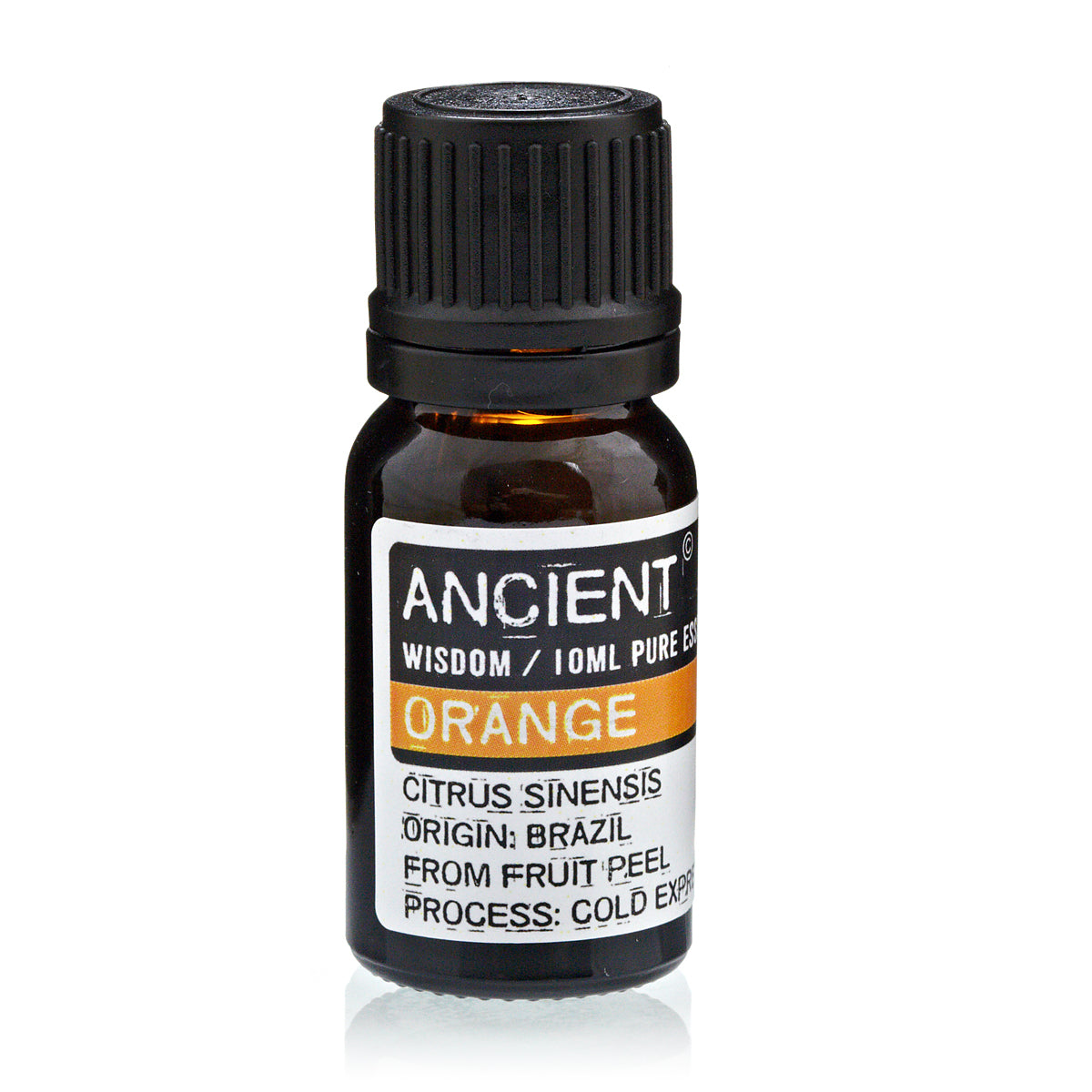
Orange essential oil (10 ml) is a familiar, uplifting citrus oil cold-pressed from the peel of Citrus sinensis. Its sweet, sunny aroma makes it a versatile choice for daily diffusion, gentle room refreshers, and family-friendly blends. This guide focuses on practical aromatic uses, safe dilution habits, and blending ideas — rewritten to our voice and free of medical claims.
Quick facts
- Botanical name: Citrus sinensis
- Plant part: Fruit peel
- Extraction: Cold expression (peel)
- Origin: Brazil (typical)
- Typical aroma: Sweet, bright, fresh citrus
Aroma profile
Orange is a top-note citrus characterised by a sweet, mellow brightness. It blends beautifully with other citrus oils (bergamot, grapefruit), soft florals (geranium, neroli) and light woods (cedarwood) to build multi-layered, approachable blends.
How to use (ambience)
Diffuse: 3–6 drops orange alone or with bergamot for a cheerful room scent. Linen spray: 10 drops orange + 5 drops lavender in 200 ml water with solubiliser. Topical: dilute to 1% for adult skin use (approx. 6 drops per 30 ml carrier); test patch first and avoid eyes.
Blends well with
- Bergamot, Grapefruit, Lemon
- Lavender, Geranium, Neroli
- Cedarwood, Sandalwood (small amounts)
Safety & dilution
Orange is typically well tolerated when diluted. As with all citrus oils, follow standard dilution guidance (1% for regular topical use), avoid contact with eyes, and store away from direct sunlight to slow oxidation. Keep out of reach of children and pets; consult a professional for pregnancy or nursing concerns.
Shop
Find the 10 ml bottle and full product details here: Orange Essential Oil — 10 ml


Tap the QR to visit the shop and apply the discount
Sourcing & quality
We source orange essential oil from trusted growers who use careful cold expression to preserve the oil’s bright volatile compounds. Look for listings that include the botanical name (Citrus sinensis) and country of origin – fresh, well-handled oils will retain a lively, sweet citrus aroma rather than a flattened or fermented scent.
Storage & shelf life
Like other citrus oils, orange benefits from cool, dark storage in an amber bottle to reduce oxidation. Expect around 1–2 years of peak aroma; if the oil smells sour or dull it has likely oxidised and should be replaced. Keep all essential oils away from direct sunlight and high heat.
Simple at-home recipes
Morning diffuser: 4 drops Orange + 1 drop Rosemary for an energising kitchen atmosphere. Relaxing bedroom mist: 5 drops Orange + 3 drops Lavender in 200 ml distilled water with a tsp solubiliser. Uplift room spray: 6 drops Orange + 3 drops Bergamot + 100 ml water — shake before each use.
Notes on aroma chemistry
Orange essential oil’s aroma is dominated by monoterpenes (notably limonene) which give it its bright, citrusy character and make it highly volatile — ideal for diffusion. These same compounds make the oil more susceptible to oxidation, which is why freshness and storage matter.
Practical blending tips
Orange is a generous top note that pairs well with florals and spices. When creating longer-lasting blends, anchor the formula with a small proportion of a base note (cedarwood or vetiver) to slow evaporation and provide depth. For topical products, choose a stable carrier oil such as jojoba or fractionated coconut and add a small antioxidant dose (vitamin E) if desired.
FAQ
Is orange safe for children? When properly diluted (1% or less) orange is commonly used in family-friendly blends. Avoid direct application to infants and consult guidance for very young children. Is orange phototoxic? Sweet orange is low in photosensitising compounds compared to bergamot, but as a precaution avoid sun exposure on freshly applied topical blends.
Why orange works in homes
Orange’s clean, sweet citrus signature is instantly familiar and approachable. It lifts a room without being harsh, and because it blends easily, it’s a reliable building block for both bright daytime mixes and softened evening blends when paired with florals or woody bases.
History & cultural notes
Sweet orange has been prized for centuries, both as a food and for its fragrant peel. In perfumery and household scenting, orange has long been valued for its cheerfulness and broad appeal. Using orange essential oil continues that tradition in a modern, safe way for home fragrance.
Sensory pairing and seasonal use
Orange works across seasons: in spring it brightens floral bouquets; in autumn it pairs with spice oils (cinnamon, clove) for warming blends; in summer it refreshes spaces alongside minty or green notes. For holiday blends, try 3 drops Orange + 2 drops Cinnamon + 1 drop Nutmeg in a diffuser for short bursts.
DIY product ideas
Simple simmer pot: combine orange peels, a stick of cinnamon and a few cloves in a pot of water, simmer gently to scent the house. Citrus vinegar cleaner: infuse white vinegar with orange peels for 1–2 weeks, strain and dilute 1:1 with water for a natural surface cleaner (label and keep away from stone surfaces).
Storage & freshness checklist
- Store in amber bottle away from light
- Keep lids tight; minimise headspace
- Do a sniff test if older than 18 months
- Discard if scent is sour or markedly changed
Final notes
Orange essential oil is a friendly, easy-to-use oil that rewards sensible dilution and good storage. Its versatility makes it a staple in home aromatherapy kits, and with a few simple pairings you can create blends suitable for many moods and rooms.
FAQ (continued)
Can I diffuse orange with pets around? Many pet owners diffuse citrus oils sparingly and with good ventilation; always monitor your pet and reduce exposure if they show any signs of distress. If in doubt, avoid diffusion in rooms where pets sleep or spend most of their time.
How to refresh a scent quickly? Use a short 10–20 minute diffusion burst, or mist a small linen spray lightly onto soft furnishings to lift the room without overpowering it.
- Solid Shampoo vs Liquid Shampoo: Which Is Better for Your Hair and the Environment?
 Switch to a more sustainable hair care routine with our premium solid shampoo bars , designed to cleanse, nourish, and protect your hair—without the waste of tr… Our solid shampoos are carefully crafted using… Read more: Solid Shampoo vs Liquid Shampoo: Which Is Better for Your Hair and the Environment?
 - Basil Essential Oil: The Clarifying Oil for Focus, Fatigue, and Muscle Relief
 Basil essential oil is one of the most underrated oils in aromatherapy. While it is universally recognised as a culinary herb, its essential oil has a distinct … Basil essential oil is steam-distilled from… Read more: Basil Essential Oil: The Clarifying Oil for Focus, Fatigue, and Muscle Relief
 - Lavender Essential Oil: The Complete Guide
 Lavender is where most people begin their aromatherapy journey — and for good reason. It is the most researched, most versatile, and most widely used essential … Lavender essential oil is steam-distilled from the… Read more: Lavender Essential Oil: The Complete Guide
 - Fennel Essential Oil: The Digestive Oil for Bloating, Hormones, and Detox
 Fennel has been used medicinally for thousands of years — by the ancient Egyptians, Greeks, Romans, and Chinese — primarily for its remarkable digestive propert… Fennel essential oil is steam-distilled from the crushed seeds… Read more: Fennel Essential Oil: The Digestive Oil for Bloating, Hormones, and Detox
 - Patchouli Essential Oil: The Earthy Oil for Grounding, Skin, and Sensuality
 Few essential oils provoke as strong a reaction as patchouli. Its deep, earthy, slightly sweet scent is immediately recognisable — and deeply divisive. Those wh… Patchouli essential oil is steam-distilled from the dried, fermented… Read more: Patchouli Essential Oil: The Earthy Oil for Grounding, Skin, and Sensuality
 - Peppermint Essential Oil: Energise, Focus, and Refresh
 If lavender is the oil of calm, peppermint is the oil of clarity. Sharp, cool, and instantly recognisable, peppermint essential oil is one of the most effective… Peppermint essential oil is steam-distilled from the… Read more: Peppermint Essential Oil: Energise, Focus, and Refresh
Really helpful guide, thank you — looking forward to more like this!