
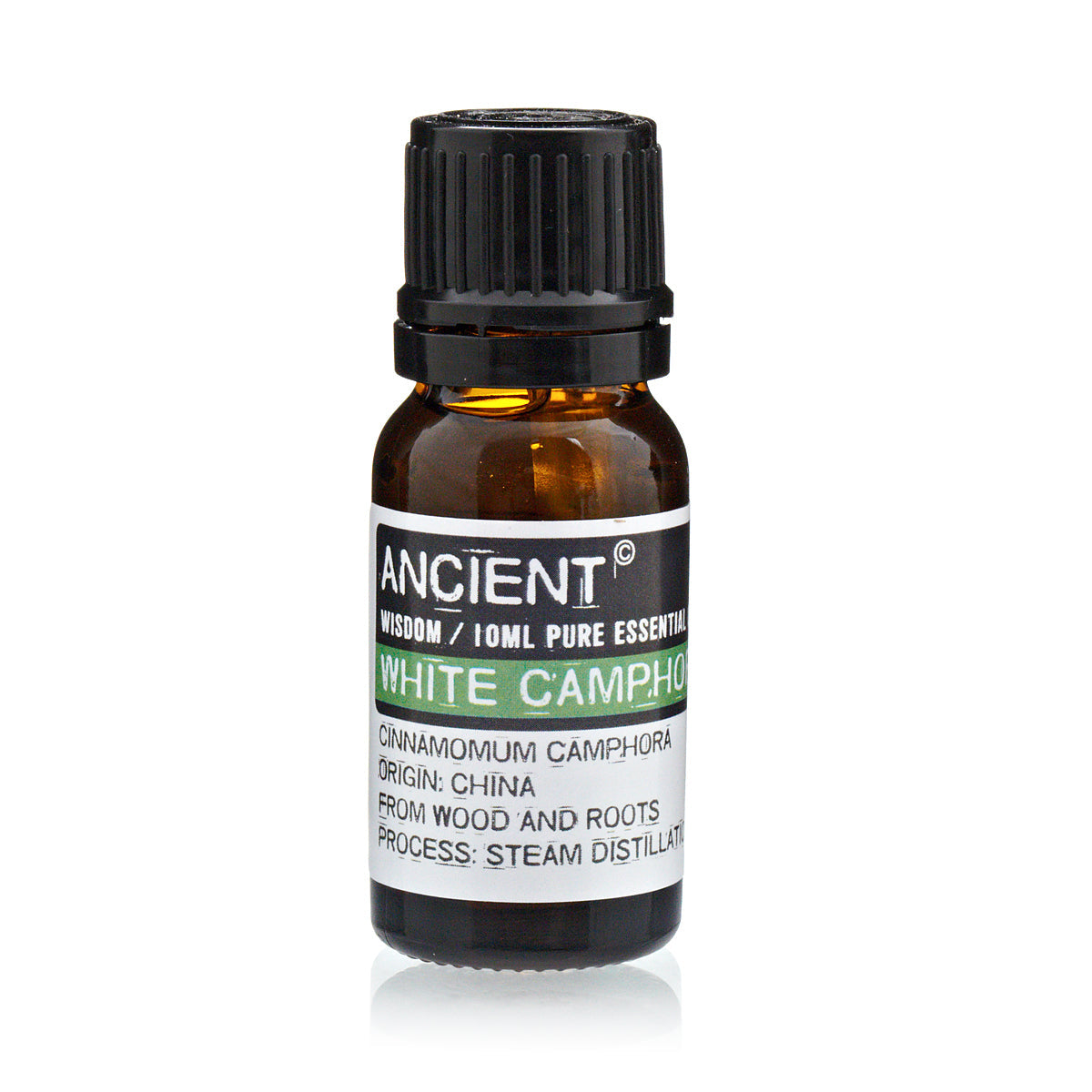
White Camphor Essential Oil: Crystal‑Clear Focus, Fresh Energy
Intro
White Camphor essential oil delivers a brisk, crystalline aroma that cuts through cluttered air and thinking alike. Distilled from the wood of the camphor tree (Cinnamomum camphora), this is the classic “clean, camphoraceous” note loved for freshening rooms, sharpening diffuser blends, and lending an ultra‑tidy character to home care recipes. Used thoughtfully, its cooling lift can transform a space from stuffy to sparkling in minutes.
Quick Facts
– Botanical name: Cinnamomum camphora (white camphor chemotype)
– Plant part: Wood
– Extraction: Steam distillation
– Aroma: Sharp, cooling, penetrating; airy and ultra‑clean
– Note/strength: Strong top note; a little goes a long way
– Blends with: Eucalyptus, Rosemary, Pine, Tea Tree, Lemon, Peppermint, Cedarwood, Grapefruit
Aroma Profile
White Camphor opens with an invigorating snap — think crisp winter air or a freshly laundered room with the windows flung wide. That immediate menthol‑like clarity is anchored by dry, woody facets that keep the aroma tidy rather than sweet. In blends, White Camphor behaves like a spotlight: it slices through muddled accords, adds definition, and pulls the entire composition into focus. If a mix feels heavy or sleepy, one small drop is often enough to brighten and lift it. Because the profile is assertive, restraint is key; pairing with rounded woods (Cedarwood Virginian) or sunny citrus (Lemon, Grapefruit) preserves freshness without turning austere.
How to Use
– Diffuser reset (home office or hallway): 2–3 drops in a 100–200 ml water diffuser for 15–30 minutes. This short, ventilated session clears the air and leaves a crisp, orderly ambience.
– Steam bowl (simple spa moment): Add 1 drop to a bowl of warm water. Tent with a towel and inhale gently for up to a minute, eyes closed. Take breaks and keep sessions brief; potency matters.
– Post‑workout cool down oil: In 10 ml carrier oil, combine 1 drop White Camphor, 3 drops Peppermint, 2 drops Lavender. Massage into the back of the neck and shoulders after exercise. Avoid the face and broken skin.
– Fresh‑linen spray: In a 100 ml glass spray bottle, add 10 ml alcohol (or solubiliser), 6 drops White Camphor, 8 drops Lemon, 4 drops Petitgrain. Top with distilled water, shake well, and mist curtains or hallway runners lightly. Patch‑test textiles first.
– Shoe cupboard refresher: Add 1–2 drops to a cotton pad, place out of direct contact with materials, and refresh weekly.
Blends Well With
– Crystal Air: White Camphor 1, Eucalyptus 2, Lemon 2 — bright, tidy and energising.
– Forest Corridor: White Camphor 1, Pine 2, Cedarwood 2 — cool woodland freshness with calm, woody depth.
– Study Focus: White Camphor 1, Rosemary 2, Grapefruit 2 — a clean, lively accord for attention.
– Laundry Day: White Camphor 1, Lavender 2, Petitgrain 2 — crisp yet comforting; ideal for hallway diffusers.
Safety & Dilution
White Camphor is a powerful material; a conservative approach ensures comfort.
– General topical dilution: 0.5–1% total essential oils in a leave‑on product. For 10 ml carrier, that is 1–2 total drops across the whole blend.
– Children and pregnancy: Avoid. Choose gentler alternatives and seek professional guidance where needed.
– Diffusion: Keep to short, ventilated sessions. If anyone in the room experiences discomfort, stop diffusion and increase airflow.
– Skin: Do not apply undiluted. Avoid on broken or irritated skin, the face, and mucous membranes.
– Storage: Cap tightly and store away from heat and direct sunlight to preserve freshness.
Home Ideas
– Entryway clarity: Blend White Camphor with Pine and Lemon for a “just‑cleaned” welcome without synthetic fragrance.
– Clearing after cooking: A brief diffusion of White Camphor with Grapefruit helps move on lingering kitchen notes.
– Post‑gym kit: Keep a small spray (see recipe above) for bags and trainer outers — spot test, spray lightly, and allow to dry.
Sourcing & Quality
“White camphor” refers to a camphor‑type chemotype of Cinnamomum camphora, distinct from linalool‑rich “ho wood” and safrole‑heavy leaf oils. The oil’s composition varies with origin and plant part but typically features d‑camphor alongside other oxygenated monoterpenes that account for its penetrating freshness. Responsible producers prioritise clean distillation, appropriate storage, and traceability to maintain that crisp profile from still to bottle.
Shop CTA
Ready to bring this crystal‑clear freshness into your space? Explore White Camphor Essential Oil (10 ml) here:
https://shop.vividaromas.uk/products/10-ml-white-camphor-essential-oil
Frequently Asked Questions
– Is White Camphor the same as camphor blocks? No. White Camphor essential oil is an aromatic oil from steam‑distilled wood; camphor “blocks” are crystals of the compound camphor. Do not substitute one for the other in recipes.
– Can I blend it at night? Many people find the aroma quite stimulating. If you’re scent‑sensitive in the evening, keep diffusion brief or choose softer notes.
– What if the aroma feels too sharp? Pair with rounded woods (Cedarwood), calm florals (Lavender), or juicy citrus (Orange, Grapefruit) to soften the edges.
Why Choose White Camphor vs. Ho Wood
Both come from Cinnamomum camphora, but they behave differently in blends. White Camphor is brisk, cooling and linear — excellent for cutting through heavy aromas or refreshing a space quickly. Ho Wood is silky and floral‑woody thanks to its higher linalool content; it softens edges and reads more cocooning than bracing. If you want an energising, crystal‑clear lift, choose White Camphor. If you prefer a calm, spa‑like roundness, reach for Ho Wood.
Crafting with Percentages (Guidance)
– Room sprays (with solubiliser): 0.5–1% total essential oils; keep White Camphor at the lower end and pair with citrus or woods.
– Pulse‑point oils (leave‑on): 0.5% total essential oils as a typical ceiling for comfort.
– Shower steamers: A few drops per steamer can feel intense; trial small batches and ventilate bathrooms well.
These are general, conservative figures for home fragrancing, not medical guidance.
Troubleshooting Your Scent
– Feels too sharp? Add a rounded base (Cedarwood, Amyris) or mellow floral (Lavender). One extra drop of Lemon can also “sunlight” the profile without adding weight.
– Disappears too fast? White Camphor is a top note; anchor it with mid/base notes (Petitgrain, Cedarwood, Patchouli) so the impression lasts longer.
– Overpowered by Tea Tree? Reduce Tea Tree and add Pine or Eucalyptus for clarity without medicinal heaviness.
Sustainability & Care
Buy from suppliers who share batch information and storage practices; oxygenated monoterpenes benefit from good handling. Keep bottles tightly closed, out of sunlight, and upright. Use clean droppers to avoid contamination and label any DIY blends with dates so you can evaluate freshness over time.
Disclaimer
No medical claims are made. Essential oils are for aromatherapy and home fragrancing. Always follow safe‑use guidance and consult a qualified professional for individual concerns.

- Solid Shampoo vs Liquid Shampoo: Which Is Better for Your Hair and the Environment?
 Switch to a more sustainable hair care routine with our premium solid shampoo bars , designed to cleanse, nourish, and protect your hair—without the waste of tr… Our solid shampoos are carefully crafted using… Read more: Solid Shampoo vs Liquid Shampoo: Which Is Better for Your Hair and the Environment?
 - Basil Essential Oil: The Clarifying Oil for Focus, Fatigue, and Muscle Relief
 Basil essential oil is one of the most underrated oils in aromatherapy. While it is universally recognised as a culinary herb, its essential oil has a distinct … Basil essential oil is steam-distilled from… Read more: Basil Essential Oil: The Clarifying Oil for Focus, Fatigue, and Muscle Relief
 - Lavender Essential Oil: The Complete Guide
 Lavender is where most people begin their aromatherapy journey — and for good reason. It is the most researched, most versatile, and most widely used essential … Lavender essential oil is steam-distilled from the… Read more: Lavender Essential Oil: The Complete Guide
 - Fennel Essential Oil: The Digestive Oil for Bloating, Hormones, and Detox
 Fennel has been used medicinally for thousands of years — by the ancient Egyptians, Greeks, Romans, and Chinese — primarily for its remarkable digestive propert… Fennel essential oil is steam-distilled from the crushed seeds… Read more: Fennel Essential Oil: The Digestive Oil for Bloating, Hormones, and Detox
 - Patchouli Essential Oil: The Earthy Oil for Grounding, Skin, and Sensuality
 Few essential oils provoke as strong a reaction as patchouli. Its deep, earthy, slightly sweet scent is immediately recognisable — and deeply divisive. Those wh… Patchouli essential oil is steam-distilled from the dried, fermented… Read more: Patchouli Essential Oil: The Earthy Oil for Grounding, Skin, and Sensuality
 - Peppermint Essential Oil: Energise, Focus, and Refresh
 If lavender is the oil of calm, peppermint is the oil of clarity. Sharp, cool, and instantly recognisable, peppermint essential oil is one of the most effective… Peppermint essential oil is steam-distilled from the… Read more: Peppermint Essential Oil: Energise, Focus, and Refresh