Intro
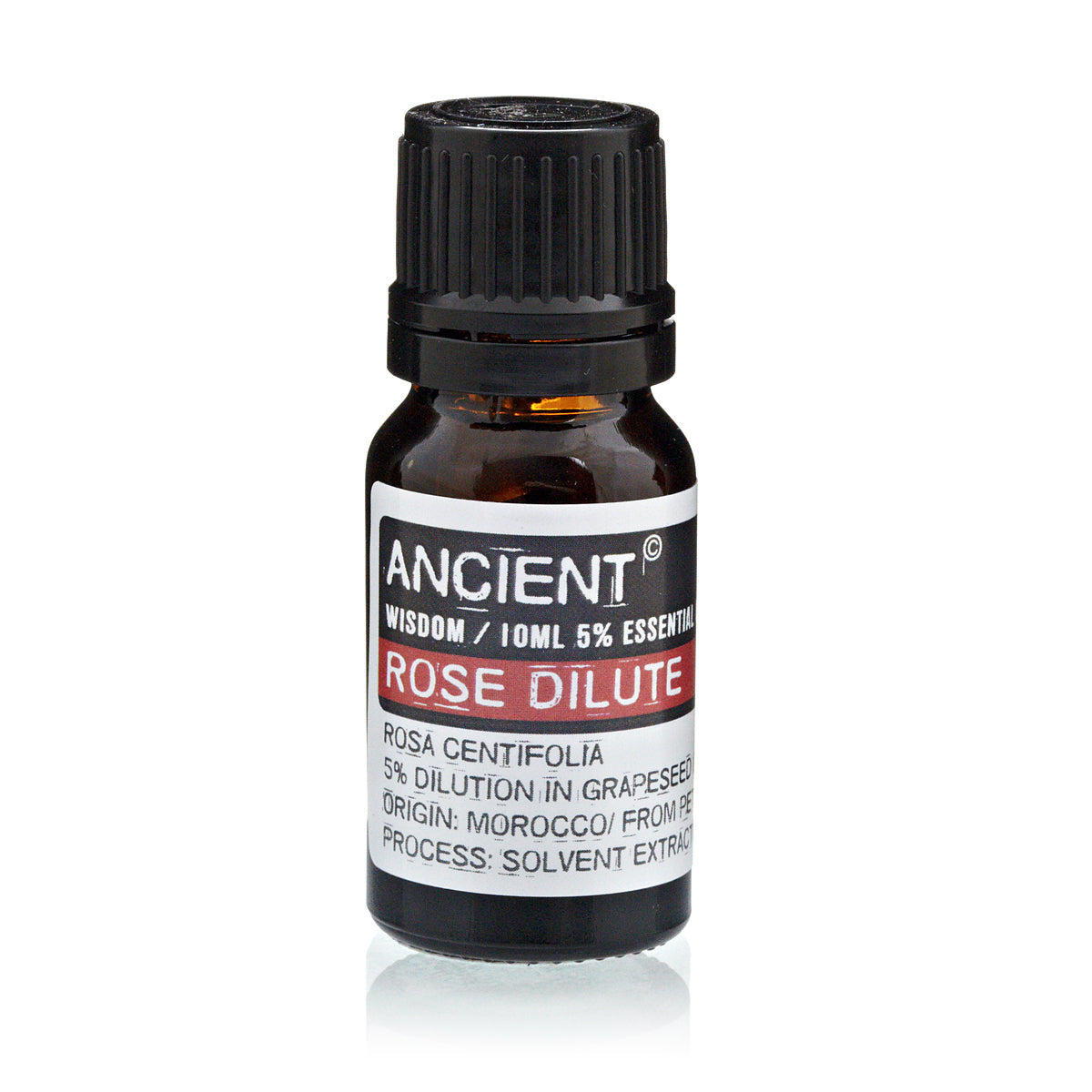
Softly floral and effortlessly elegant, Rose Dilute Essential Oil captures the classic romance of rose in an easy, ready‑to‑use format. By blending a concentrated rose essence into a gentle carrier, you get the unmistakable rosy bloom without the intensity of a pure concentrate—ideal for daily self‑care, simple perfumery, and calm, comforting home aromas.
Quick facts
- Botanical: Rosa damascena (common) or Rosa centifolia (varies by source)
- Type: Rose essence pre‑diluted in a cosmetic‑grade carrier for convenience
- Aroma family: Floral (honey‑rose, dewy, gently spicy)
- Note: Heart (soft tenacity from the carrier)
- Great for: Wearable aromatics, evening wind‑downs, romantic blends, mindful moments
- Pairs with: Citrus (bergamot FCF, mandarin), woods (sandalwood, cedarwood), resins (frankincense), spices (cardamom), florals (geranium, jasmine)
Aroma profile
Think morning petals and warm tea: nuanced, velvety, and radiant rather than loud. Dilution rounds the sparkling honeyed top and smooths the plush heart, making it easy to place in simple blends. Where a pure rose can dominate, a ready‑diluted version slips into everyday rituals—on a pulse point, in a bedtime diffuser, or whisked into a body oil—bringing a gentle sense of poise.
How to use
- Pulse‑point perfume: Dab a tiny amount to wrists, neck, or behind ears. Layer over sandalwood for depth or bergamot (FCF) for lift.
- Evening wind‑down: 4–6 total diffuser drops; try 2 rose dilute + 2 sandalwood + 1 frankincense for a cozy floral glow.
- Body oil: Stir 10–12 total drops of essential oils into 30 mL (1 oz) carrier; a touch of rose dilute plus vanilla/benzoin (low) gives a plush finish.
- Bath (dispersed): Mix oils first into 1 Tbsp carrier + 1 tsp solubilizer before adding to a filled tub; avoid neat oils in water.
- Linen card: 1–2 drops on a blotter tucked in a drawer for a gentle wardrobe flourish (avoid direct contact with fabrics).
Blends well with
- Bright lift: bergamot (FCF), mandarin, grapefruit
- Silky depth: sandalwood, cedarwood atlas/virginian, patchouli (low)
- Sacred glow: frankincense, myrrh (very low), labdanum (trace)
- Floral harmony: geranium, jasmine (low), ylang ylang
- Spice warmth: cardamom, pink pepper (trace), coriander seed
Safety & dilution
- Topical: This product is pre‑diluted for convenience. If blending further, keep total essential‑oil concentration modest and always patch test (inner forearm; check after 24h).
- General: Do not ingest essential oils. Avoid eyes and mucous membranes. Store tightly capped away from heat and light. Discontinue use if irritation occurs.
- Families & pets: Diffuse lightly in ventilated rooms; keep oils and blends out of reach of children and animals.
Origins & extraction
Roses have been cherished for centuries in perfumery and ritual. Depending on origin and method, rose essences are produced by steam distillation (rose otto) or solvent extraction (rose absolute). A “dilute” presentation blends a concentrated rose aromatic into a neutral carrier so you can enjoy the beauty of rose without measuring tiny, potent drops—approachable, elegant, and ideal for daily use.
Quality & sourcing notes
Good rose smells clear and rounded—dewy petal, soft honey, a hint of spice. Because natural rose is complex and precious, reputable suppliers track lots and label clearly so you know what you’re using. Store bottles upright with caps firmly closed; like most aromatics, rose keeps best away from light, heat, and air.
Blend ideas to try
- Bright bouquet: 2 drops rose dilute + 2 drops bergamot (FCF) + 1 drop grapefruit.
- Silk & sandalwood: 2 drops rose dilute + 2 drops sandalwood + 1 drop vanilla/benzoin (very low).
- Evening hush: 2 drops rose dilute + 1 drop frankincense + 1 drop cedarwood atlas.
Pro tips
Scent layering: A whisper of rose over sandalwood turns a simple base into something quietly luxurious. For day, brighten with mandarin; for night, add a trace of vanilla.
Diffuser rhythm: Ventilate rooms and diffuse in short sessions (20–40 minutes) with breaks, especially around children and sensitive individuals.
Shop
Explore Vivid Aromas Rose Dilute Essential Oil (10 mL) and add a touch of everyday luxury to your rituals:
https://shop.vividaromas.uk/discount/MainSite4?redirect=/products/10-ml-rose-dilute-essential-oil

- Solid Shampoo vs Liquid Shampoo: Which Is Better for Your Hair and the Environment?
 Switch to a more sustainable hair care routine with our premium solid shampoo bars , designed to cleanse, nourish, and protect your hair—without the waste of tr… Our solid shampoos are carefully crafted using… Read more: Solid Shampoo vs Liquid Shampoo: Which Is Better for Your Hair and the Environment?
 - Basil Essential Oil: The Clarifying Oil for Focus, Fatigue, and Muscle Relief
 Basil essential oil is one of the most underrated oils in aromatherapy. While it is universally recognised as a culinary herb, its essential oil has a distinct … Basil essential oil is steam-distilled from… Read more: Basil Essential Oil: The Clarifying Oil for Focus, Fatigue, and Muscle Relief
 - Lavender Essential Oil: The Complete Guide
 Lavender is where most people begin their aromatherapy journey — and for good reason. It is the most researched, most versatile, and most widely used essential … Lavender essential oil is steam-distilled from the… Read more: Lavender Essential Oil: The Complete Guide
 - Fennel Essential Oil: The Digestive Oil for Bloating, Hormones, and Detox
 Fennel has been used medicinally for thousands of years — by the ancient Egyptians, Greeks, Romans, and Chinese — primarily for its remarkable digestive propert… Fennel essential oil is steam-distilled from the crushed seeds… Read more: Fennel Essential Oil: The Digestive Oil for Bloating, Hormones, and Detox
 - Patchouli Essential Oil: The Earthy Oil for Grounding, Skin, and Sensuality
 Few essential oils provoke as strong a reaction as patchouli. Its deep, earthy, slightly sweet scent is immediately recognisable — and deeply divisive. Those wh… Patchouli essential oil is steam-distilled from the dried, fermented… Read more: Patchouli Essential Oil: The Earthy Oil for Grounding, Skin, and Sensuality
 - Peppermint Essential Oil: Energise, Focus, and Refresh
 If lavender is the oil of calm, peppermint is the oil of clarity. Sharp, cool, and instantly recognisable, peppermint essential oil is one of the most effective… Peppermint essential oil is steam-distilled from the… Read more: Peppermint Essential Oil: Energise, Focus, and Refresh
Really helpful guide, thank you — looking forward to more like this!